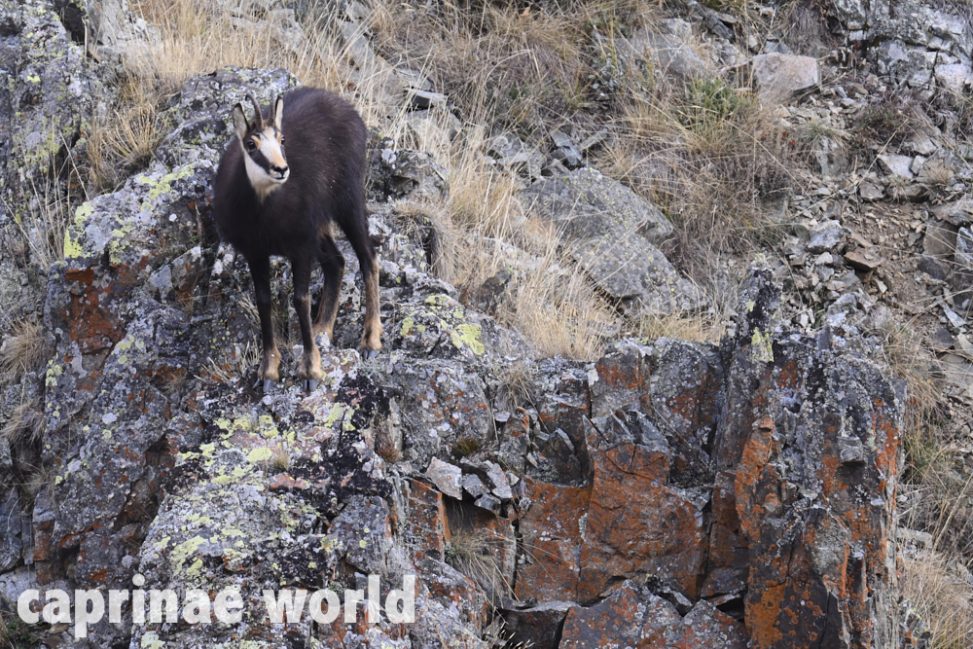
In November 2025, I traveled again to Kacgar Dagi, Türkiye, to get a firsthand impression.
There are no longer any problems with poaching and hunting in Kastamonu (Western Pontic Mountains), the Bitlis Mountains (Bitlis Dağları), the Hakkari Mountains (Hakkari Dağları), or on Mount Hüdavendigar (Hüdavendigar Dağı). In all these parts of the Anatolian Highlands, the chamois has completely disappeared. A comparison between the IUCN distribution maps from 1997 (Shackelton, 1997) and the IUCN Red List (assessed 2020) shows that the situation for the Anatolian chamois has deteriorated dramatically in about 20 years.
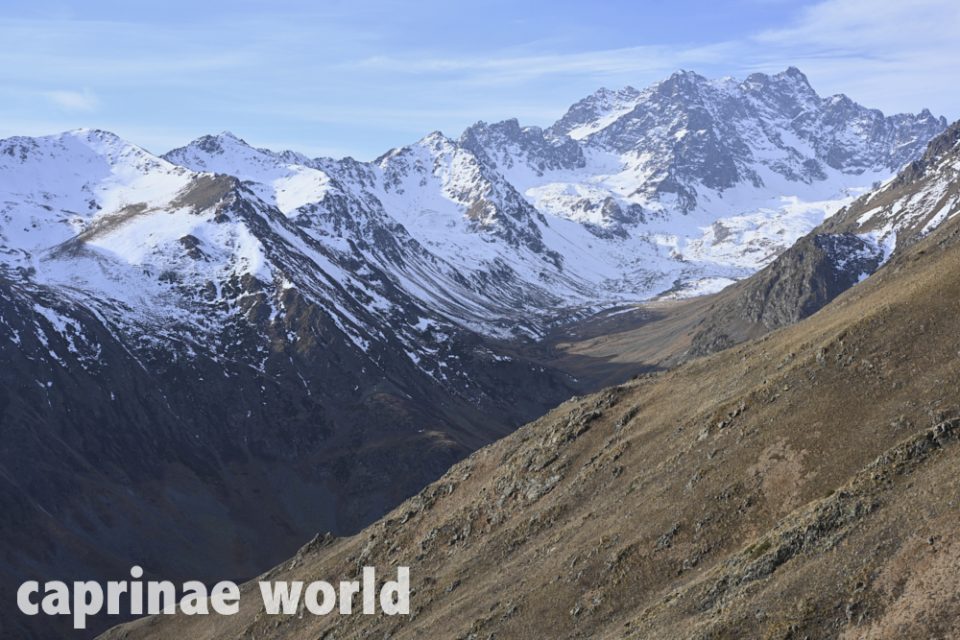
The best insight into the world of the Anatolian chamois probably comes from Dr. Huseyin Ambarli, Professor at Düzce University. He calculated the total population size in Türkiye to be between 500 and 750 chamois. At Kaçkar Mountains, he observed that group sizes decreased significantly from 40 to 50 individuals in the 1990s to a maximum of 25 individuals (but mostly only 3 to 7) between 2006 and 2012 during mating-time observations (Ambarli 2014).
I traveled to Kaçkar Mountains in November 2025 to get a firsthand impression of the situation. I flew to Rize on the Black Sea and took a bus to Yusufeli, the last major town with 7,000 inhabitants (2022). From here, the road climbs 50 kilometres up a valley, at the end of which lies Yaylalar, the last permanently inhabited settlement. This is where I’m staying. First of all, I’m interested in the population development in the area.
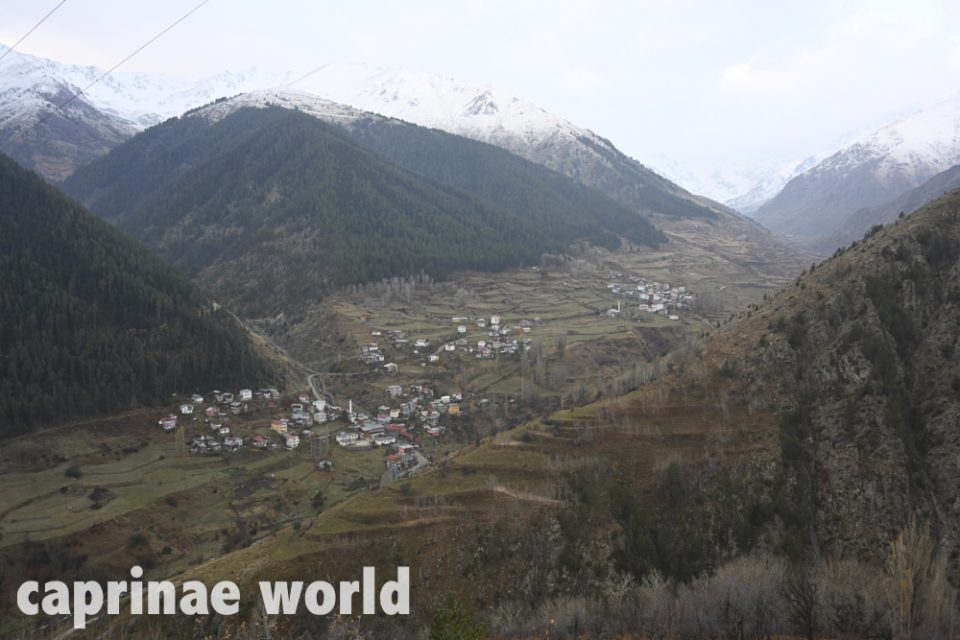
According to my host, 400 people still live in Yaylalar in the summer – the average age is around 60. During the snowy winter months, only 25 people remain. Another three kilometres further on lies the hamlet of Olgunlar. It’s still active in summer, but the last winter resident stayed there in 2010. My host’s grandfather was one of those people. In winter, he would shovel a path between his house and the stable. That was about the furthest he could go in the snowy region.
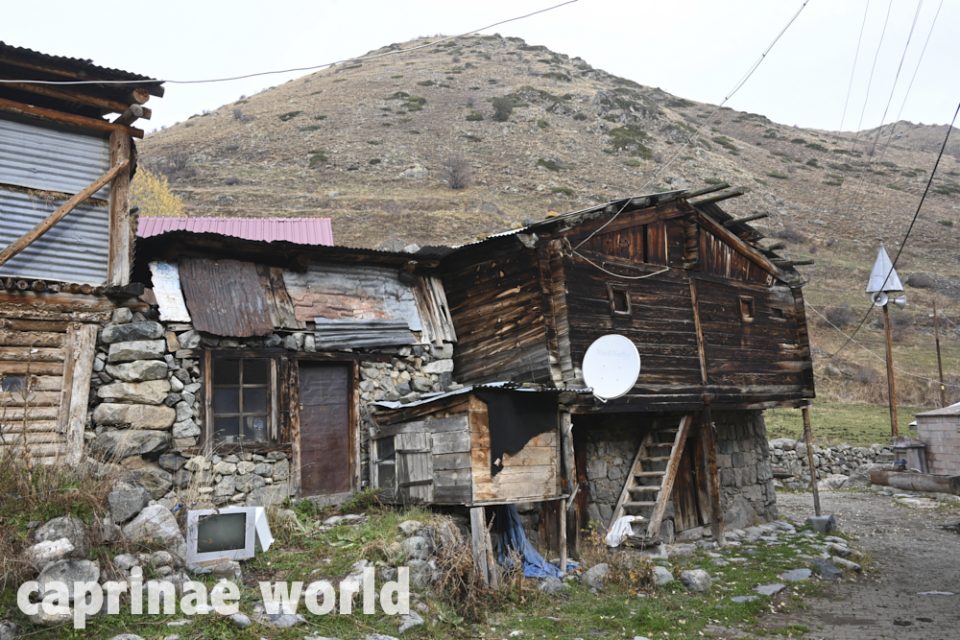
If you take the valley north from Olgunlar, you reach the ruins of Dibe Y., a former shepherd’s camp, after just under two kilometres. As recently as 30 years ago, I am told, 60 families lived here in the summer. They brought 150 cows with them; 200 bulls and 300 to 400 sheep and goats. You can imagine what it was like here in the remotest corners of the Pontic Mountains. There wasn’t much room left for wild animals.
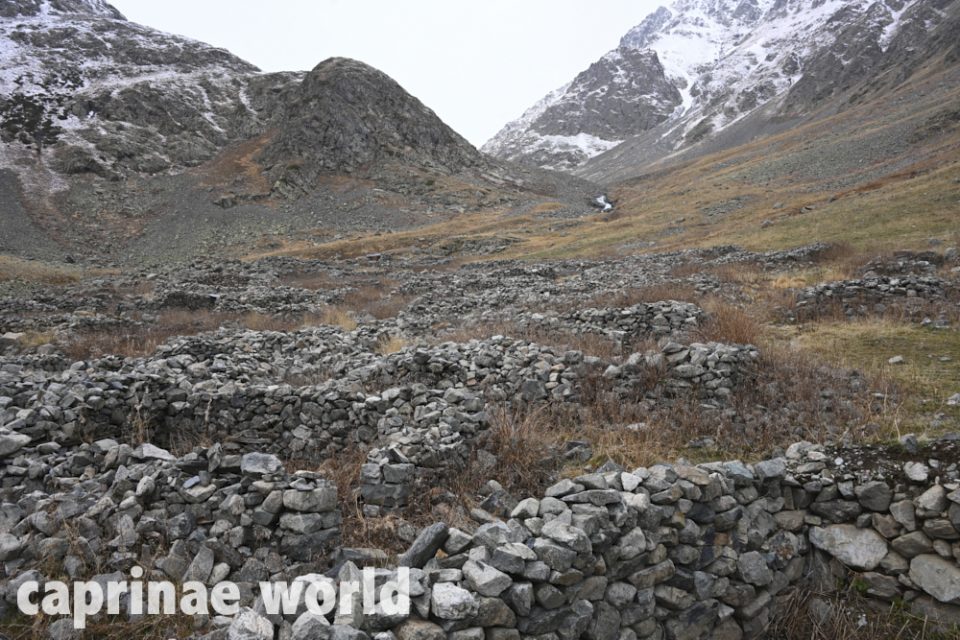
It used to be a tradition for the inhabitants to go hunting at the end of the season, once the livestock had been brought back to their stables and the winter provisions gathered. Besides chamois, there are also wild goats in this region. Usually, one hunter shot one animal, and the meat was then shared with the neighbours.
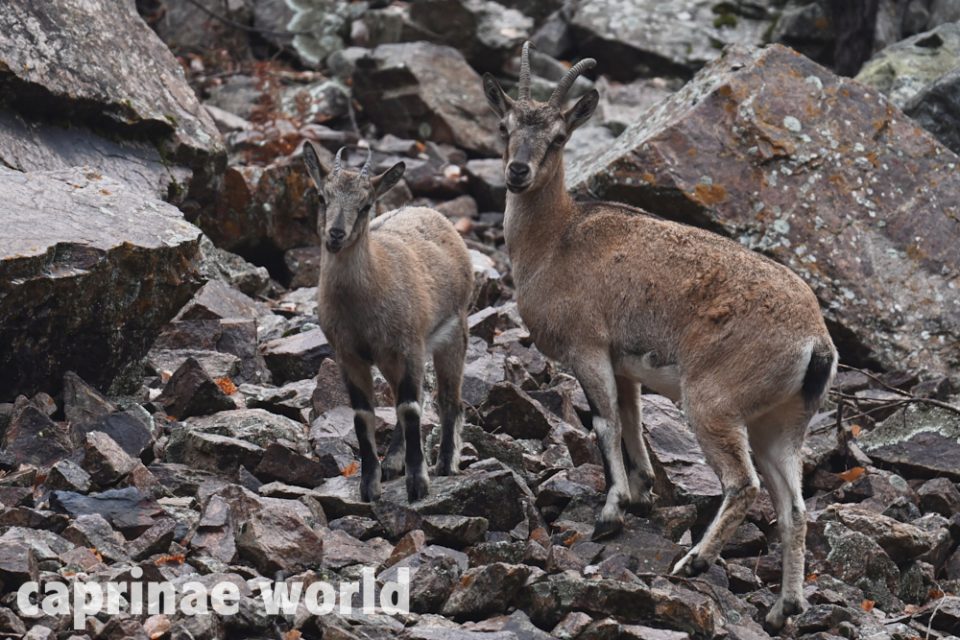
In recent decades, the population has retreated down the valley. One would assume that this is good news for the chamois in the region. But that’s not the case. They’re still not doing well. My host counts the chamois in the area. The largest herd he’s ever seen here – that was 15 years ago – numbered 60 animals. This year, on October 23, 2025, there were only 23. Poaching and poorly organised trophy hunting are to be blamed for the decline.
Hunting chamois is now forbidden for the local people. Parts of their territory have been designated a national park. Some still go hunting anyway. In the village they may have discussions about it. But nobody would go to the police. The village sticks together.
One man left the village – let’s call him Ömer (I spoke to him, but do not want to make his name public). He made a career as an entrepreneur in Samsun. He hasn’t forgotten his village, nor the fact that people here used to take the right to hunt. He doesn’t want to give that up, so he comes back to shoot a chamois. The last stretch of the valley road, the three kilometers between Yaylalar and Olgunlar, has recently been paved. That’s good news for Ömer.
The change of habitat hasn’t suited Ömer well. He’s gained weight and doesn’t look like he’d enjoy climbing a mountain. At least his camouflage suit still fits. Dressed in it, he lets a colleque drive him up and down the newly paved village road in a Mercedes C-Class. Every few hundred metres, they stop and scan the slopes with binoculars. C-Class hunters.
What other hunters think about „car stalking“
Schnidrig-Petrig, R. and Salm, u.p., 2009: Die Gemse – Bioglogie und jagd. Salm Verlag, Bern
„One of the most problematic phenomena in chamois hunting is the unregulated or disregarded use of cars for hunting purposes. Anyone still driving their off-road vehicle on the most remote alpine tracks on a ‚car stalk‘ simply has no understanding of hunting, let alone chamois hunting. Vehicle use must be limited to the absolute minimum.“
„Eine der misslichsten Erscheinungen auf der Gemsjagd ist der ungeregelte oder der die Regelung missachtende Gebrauch des Autos zu jadgdlichen Zwecken. Wer noch auf dem hintersten Alpsträßlein mit dem Geländewagen auf „Autopirsch“ fährt, hat von Jagd und gar von Gemsjagd einfach nichts begriffen. Der Fahrzeuggebrauch ist aufs Notwendigste zu beschränken.“
See also the Chamois Hunting Etiquette
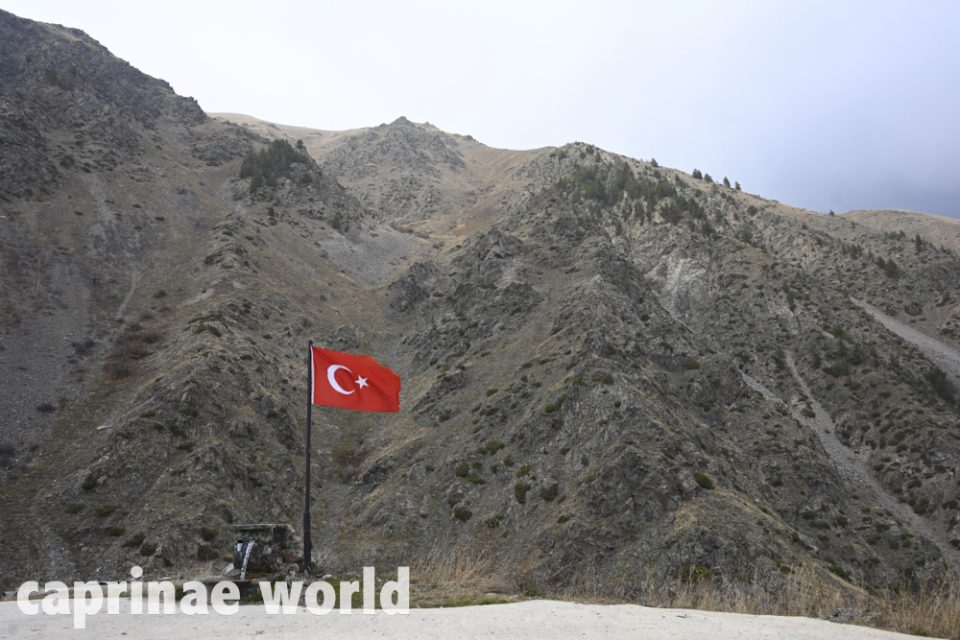
One day, a Russian hunter stays in the area, having booked an official trophy hunt. He lands in Erzurum in the morning, is driven the 200 kilometers to Yaylalar, is taken by car to where the chamois are, shoots, and is back in Russia by nightfall. A day’s hunting – for 30,000 euros. If the Russian only wants to go hunting for one day without having time to enjoy the area and get to know the local culture, that’s his business. But 30,000 euros: that’s a lot of money – with great potential for species conservation. Elsewhere in the world, it works that a portion of the hunting fee is spent on game wardens who ensure that hunting is sustainable and that poaching stops. Clearly not here. I don’t meet a ranger. Not during the entire week I’ve been here. Something has to change. Quickly. And there is not a single zoo in the world that keeps Anatolian chamois as a backup population. If the Anatolian Chamois is gone, it will be gone for ever.
Sources
Anderwald, P., Ambarli, H., Avramov, S., Ciach, M., Corlatti, L., Farkas, A., Jovanovic, M., Papaioannou, H., Peters, W., Sarasa, M., Šprem, N., Weinberg, P. & Willisch, C. 2021. Rupicapra rupicapra (amended version of 2020 assessment). The IUCN Red List of Threatened Species 2021: e.T39255A195863093. https://dx.doi.org/10.2305/IUCN.UK.2021-1.RLTS.T39255A195863093.en. Accessed on 22 December 2025.
Schnidrig-Petrig, R. and Salm, U. P., 2009: Die Gemse – Biologie und Jagd. Salm Verlag, Bern
Shackleton, D. M. (editor) and the IUCN/SSC Caprinae Specialist Group, 1997: Wild Sheep and Goats and their Relatives. Status Survey and Conservation Action Plan for Caprinae. IUCN, Gland, Switzerland and Cambridge, UK. 390 + vii pp.
Schreibe einen Kommentar