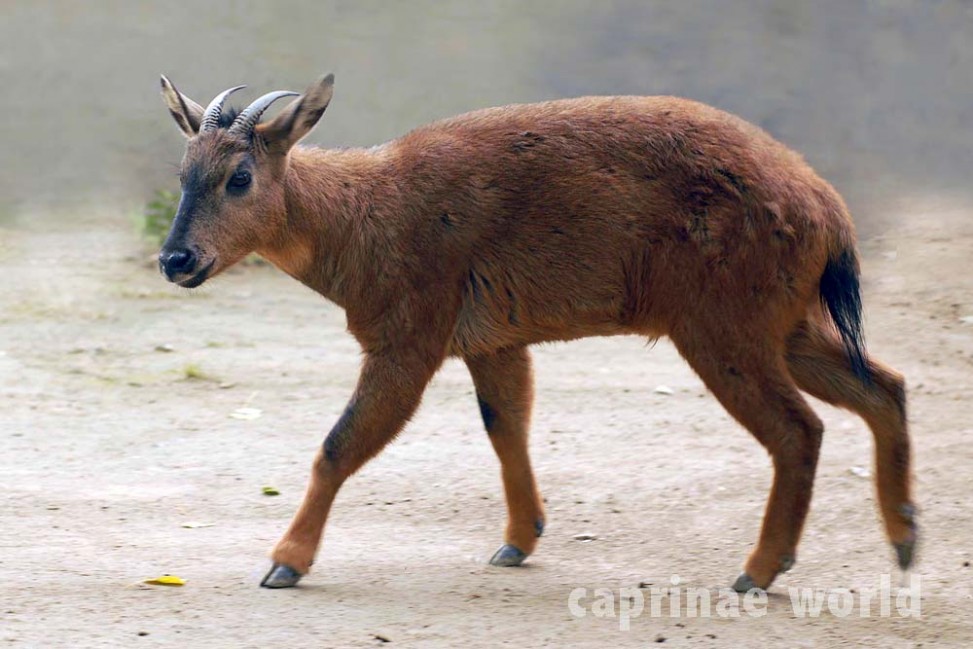
The Red Goral is more an alpine species than other gorals. It generally occurs at higher elevations and is small in size. Its systematic status has still not been definitively clarified. Last assessed: 2026-05-19
Names
English common name: Red Goral [3]
Burmese: Taung hseik [5]
Czech: goral červený [7]
Chinese: 红斑羚 (wikipedia) – chì ban líng
German: Roter Goral [1], Tibet-Goral [3]
French: Goral rouge [3]
Russian: Тибетский горал [Wikipedia]
Spanish: Goral rojo [3]
Tibetan: རྒྱ་རྒོ་ར། (Wikipedia) – Ra-mar [5]
The generic name was originally spelled Naemorhedus. But the spelling Nemorhaedus, despite being an unjustified emendation, is in „prevailing“ usage [3]. Here, we adhere to the original spelling, which is also used by the IUCN (red list, 2026-05-18).
Taxonomy / type locality
Nemorhaedus baileyi, Pocock, 1914. Dre, Yigrong Tso, Po Me / Tibet, 9000 ft. [4]
Nemorhaedus cranbrooki, Hayman, 1961. Adung Valley, Upper Burma / Myanmar, 8000 ft. [4]
The range of the Red Goral separates the range of the Himalayan Brown Goral (N. goral) in the Himalayas from those of the Chinese goral (N. griseus) in eastern China. According to Wilson, D. E. and Mittermeier, R. A. (2011) the Red Goral has been previously classified as N. goral baileyi or N. g. cranbrooki [3]. Groves, Colin and Grubb, Peter (2011) concluded: „Considering … the improbability of there being two red gorals living so close to each other in the Tibet / Yunnan / Burma borderlands, we think it is most likely that the type of N. baileyi and the syntypes of N. cranbrooki represent one and the same taxon, in its summer and winter coats, respectively.“ [4] However, upon comparing mitogenomic sequences, Li et al. (2020) determined that N. baileyi and N. cranbrooki are distinct species, rather than synonyms [8]. Due to a lack of other available data, we treat the two taxa predominantly as one and the same species throughout the remainder of this chapter.
The distribution of N. cranbrooki and N. bailey is not solved: Li et al. (2020) write: „We propose that … Naemorhedus baileyi is isolated by the Yarlung Tsangpo–Brahmaputra River, and Naemorhedus cranbrooki is restricted to Northern Myanmar.“ However there are „Red Gorals“ between Northern Myanmar and the Tsangpo-Brahmaputra, for example in India / Mishmi Hills / Dibang Wildlife Sanctuary. Red Gorals from this area are not separated from the Northern Myanmar subpopulation by the Yarlung Tsangpo–Brahmaputra.
Moreover, the study by Li et al. (2020) is based on merely two „bailey“ specimens and six „cranbrooki“ specimens. Red Gorals from other parts of China and India were not examined. Therefore, claiming that „cranbrooki“ is restricted to Northern Myanmar is unsubstantiated. As long as the genetic identity of the Indian and Chinese Red Gorals found east and south of the Tsangpo-Brahmaputra River remains unresolved, I label specimens from these regions accordingly as „Naemorhedus bailey/cranbrooki“.
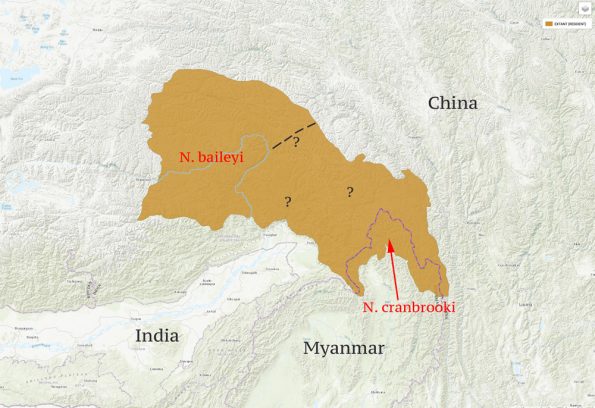
Range of Red Goral (according to IUCN red list; brown area) and assumed distribution of N. baileyi and N. cranbrooki based on Li et al. (2020). The light blue line represents the course of the Yarlung Tsangpo River–Brahmaputra. The purple line on brown background marks the border between China and Myanmar within the Red Goral range. Li et al. (2020) propose that „Naemorhedus baileyi is isolated by the Yarlung Tsangpo–Brahmaputra River, and Naemorhedus cranbrooki is restricted to Northern Myanmar“. However, the Yarlung Tsangpo does not entirely bisect the distribution range of the Red Goral; rather, it merely skirts it. Which Red Goral taxon might be distributed east of the river remains an open question. As for N. cranbrooki being restricted to Northern Myanmar: Animals do not recognise political borders.
Distribution
Border regions of China, India and Myanmar: Southwest China (Southeast Xizang, Northwest Yunnan); Northeast India (Arunachal Pradesh, close to both frontiers); North Myanmar (high mountains of Kachin).
Naemorhedus baileyi has the most restricted range of all goral species being confined to the temperate mountains of northern Myanmar, China (southeast Tibet and Yunnan), and Northeast India (Arunachal Pradesh, near the Chinese and Burmese borders) (Grubb 2005, Singh 2002) [10]. Recent studies have found N. baileyi to be the only goral species in its range, contrary to previous accounts of range overlap with other goral species (Hayman 1961, Rabinowtiz and Khaing 1998, Nijhawan 2018) [10].
In India’s Arunachal Pradesh, Red Goral presence has been confirmed from eastern part of the state including the districts of Upper Siang (Karthik Teegalapalli pers. comm. 2020), Dibang Valley (Nijhawan 2018), Lower Dibang Valley, Anjaw, Lohit (Nijhawan unpublished data 2019) and Changlang (Namdapha Tiger Reserve and the community forests beyond Vijaynagar bordering Myanmar). In Changlang, the species, locally known as Si, is commonly seen according to the local Lisu community. Recently conducted interviews with local hunters indicated that the species is also likely to be present in the higher catchment of Rivers Kameng. Kurung, Kumey and Subansiri (Nijhawan unpublished data 2020) in Arunachal Pradesh. However, these reports need confirmation through rigorous first-hand surveys [10].
In Myanmar, Red Goral has been confirmed only from the northern mountains of Kachin state in Putao district from Hponkanrazi Wildlife Sanctuary and Hkakaborazi National Park (Rabinowtiz and Khaing 1998, Rabinowtiz 1999, Forest Department and WCS Myanmar pers. comm. 2020). Within Hkakaborazi, N. baileyi was the only goral reported present, whereas south of Nam Tamai, where N. caudatus was reported, the Red Goral was absent (Rabinowtiz and Khaing 1998) [10].
China contains the largest distribution (in terms of area) of the species with populations confirmed from two provinces: Tibet Autonomous Region (Xizang) and Yunnan.
Tibet Autonomous Region: Nyingchi City prefecture of Tibet is reported as the primary distribution area of Red Goral with confirmed records from, but not limited to, the area around Nyingchi City, Motuo Nature Reserve, Linzhi Dongjiu Red Goral Nature Reserve, and Yarlung Zangbo Grand Canyon National Nature Reserve (Forestry Investigation and Planning Institute of the Tibet Autonomous Region 2017; Zhang Di pers. comm. 2020). According to summer surveys carried out in this region in 1987-88, the distribution area is between about 27° to 29°30’N and 96° to 98°E confined to the counties of Bome, Mainling, Bayi, Zayu, Nangxiang and Medog around the junction of the Pelung Zangbo and Yarlung Zangbo rivers (Feng et al. 1986; Zhang 1987, 1991; Rabinowitz 1999; Wang Sung et al. 1997). Recent accounts suggest that the species’ stronghold is to the south of the Sichuan-Tibet highway [10].
In Yunnan, Red Goral is known to occur in Nùjiāng Lisu Autonomous Prefecture in Gongshan Derung and Nu Autonomous county where it was reported from Gaoligongshan National Nature Reserve in the 1980s, but information is lacking on its current status in the area (Wang 2003; Zhang Di pers. comm. 2020). Its presence has also been confirmed in Baima Snow Mountain National Nature Reserve in Diqing Tibetan Autonomous Prefecture. All occurrences in Yunnan are limited to the west of Salween (Nujiang) River (Zhang Di pers. comm. 2020) The species’ range does not extend into Sichuan Province as previously believed [10].
General description
length / head-body: 90–110 cm [3]; 93–107 cm [6] – one of the smallest goral species [3]. Females tend to be slightly larger than males; otherwise there is little differences between the sexes [1]. Females larger than males: For an ungulate species, this is an extraordinary find.
shoulder height: 55–60 cm [3]; 57–61 cm [6]
weight: 20–30 kg [3, 6]
tail: 7–10 cm [3]; 8–10 cm [6]
ear: 9,5–11 (3, 6); shorter than in other goral [6]
horn length: 7,5–16 cm [1]; 9–15 cm in males; 7,5–13 cm in females [3] – see also entry below
life expectancy: 15 years [3]
diploid chromosom number: 55 [3]
Coloration / pelage
overall body colour: reddish–brown to a rather bright fox–like red [3]. Differences in colour across various parts of the body are minimal [7].
summer coat: light rust with a tint of yellow [7]. The pelage is long, soft, and rather shaggy, with each hair pale brown at the base, tipped with red [3]. Differences in colour across various parts of the body are minimal.
winter coat: almost the same as the summer one, only the tone of the coat is slightly deeper. The light patches are less evident in the long winter coat, whereas the dark patterns stand out more [7].
pelage colour variation: Hayman (1961) pointed out that N. baileyi habitat is drier than that of N. cranbrooki [9]. It cannot be ruled out that this environmental factor has an influence on fur colour. If this is the case, I would expect the fur to appear a richer/darker red in humid habitats and paler/lighter in drier habitats.
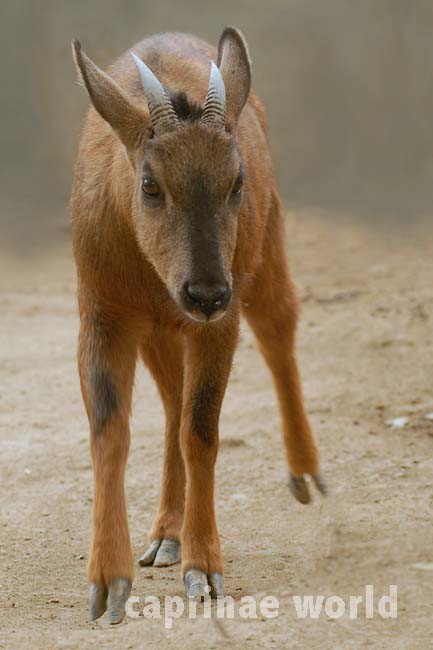
„Red Goral“ at Beijing Zoo. Note some of the species specific features: black markings above the region of the carpal joints; dark nasal strip. (The „Red Goral“ depicted here is actually a hybrid – cross of Chinese Goral, male with Red Goral, female.) Photo: Ralf Bürglin
flanks: paler [4]
underside: pale–buff [3]
legs: short, coloured like the body [4]; dark patterns can be in place on and above the „knees“ (carpal joints) of the front limbs; on the hind legs the plantar surfaces can be black to the level of the hocks. However the limbs are only rarely indicated and the black markings are regularly missing [7]. It has a somewhat lighter ochre-rusty tone around the hooves. Proximally this colouring extends up to the fetlocks [7]. The pattern on the thoracic limbs, although it occurs sporadically, is more common than the pattern on the pelvic limbs [7].
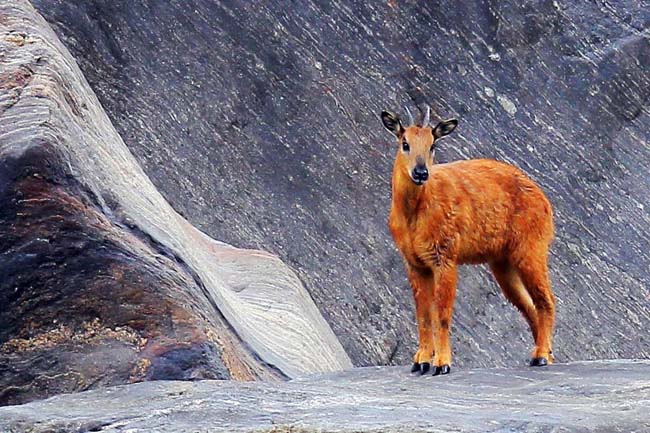
Red Goral: Black stripe on nose is short, marking on „knees“ (carpal joints) is almost absent. Note: The colour intensity in this photo may have been artificially enhanced. Photo: Wu Xiushan/TBIS/IBE
head in general: slightly more tawny coloured than the rest of the body [3]. Dark patterns in the face are very conspicuous, especially in males. Most prominent is an almost black coloured nasal stripe. More black areas are around eyes, chin and lips [7].
muzzle: The lower lip and chin are black and from here the same colouring may stretch onto the upper lip. On the upper lip there are two white crescents with dark edges. Opposite these patches there is a narrow white rim on the lower lip [7].
nasal stripe: From the rhinarium there is an almost black coloured nasal stripe stretching in a caudal direction, the black changing into a grey tone roughly half way along. At the end it gradually changes into the colour of the forehead, usually at the eye level. Often, however, it is entirely missing [7].
eyes: The eye is sometimes separated from the dorsal and ventral side by a narrow light rim. On the dorsal side of the eye a less conspicuous grey-black supraorbital stripe stretches caudally, ending roughly at the level of the horns [7].
parietal patch (German: Scheitelfleck): Very rarely adult individuals retain a pure white parietal patch, which is located just in front of the horns [7].
ears: smaller than in other goral species, whitish on the inside and fawn on the backside. [3]
throat patch: very large, light rusty-yellow with clearly defined edges, in some individuals, however, it is hardly noticeable. Very rarely there can be a pure white throat patch[7]; rich chestnut [3] or a yellower version of the body colour [4]. In some individuals, however, it is hardly noticeable. Groves and Grubb (2011) write: „The type of N. baileyi has a small but clear white patch on the throat; that of N. cranbrooki does not.“ [4]
chest: Some individuals have a black patch on their chest that may extend as a dark stripe onto the belly [3].
nuchal and dorsal stripe: relatively narrow, sometimes a mere indication of the stripe and in some cases it may even be completely missing. Some animals have a nuchal stripe but no dorsal stripe [7]. Groves and Grubb (2011) write: „There is only a trace of a dorsal stripe in the N. baileyi skin; this is much clearer in the type and paratypes of N. cranbrooki and in the San Diego Zoo animal, and strikingly clearly marked in the Kunming specimen form Gongshan.“ [4]
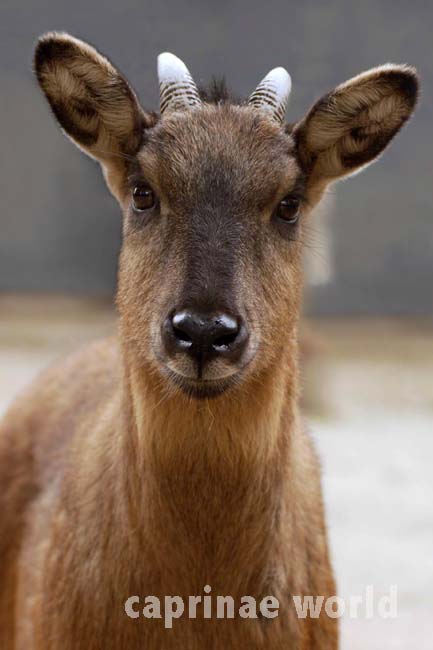
Portrait of a „Red Goral“ at Beijing Zoo. Note the white crescents on the upper lip and the large, yellowish, but hardly visible throat patch. (The „Red Goral“ depicted here is actually a hybrid – cross of Chinese Goral, male with Red Goral, female.) Photo: Ralf Bürglin
pubic region: cream in colour; this light colour extends to the perineal region (german: Dammregion) and the medial surfaces of the pelvic limbs, where it ends roughly at the level of the hocks. [7]
scrotum: cream-coloured [7]
tail: short, the tuft occupying half the length [4]; usually it is the same colour as the body for half to two-thirds of its length, while a dark brown to black stripe runs along the medial plane. Its tip is always dark brown to black and it is often extended into a terminal tuft [7]. The tuft may double its apparent length.
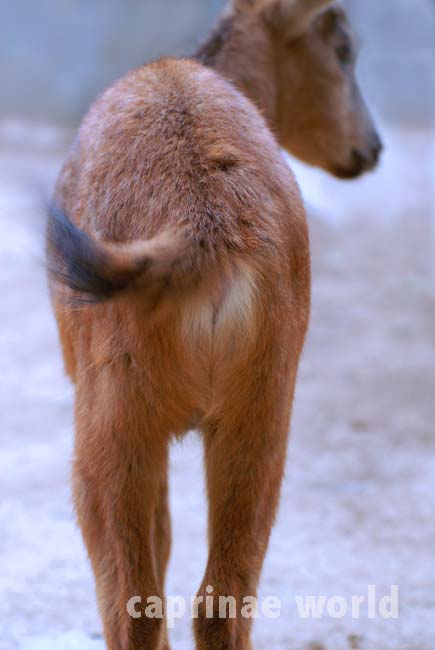
Rump view of a „Red Goral“ at Beijing Zoo. Note the upper half of the tail it is the same colour as the body , while the tip is black and extended into a terminal tuft. (The „Red Goral“ depicted here is actually a hybrid – cross of Chinese Goral, male with Red Goral, female.) Photo: Ralf Bürglin
Pelage colour in young
The pelage colour and the distribution of the patterns in the young are virtually identical to the adult animals. The only exception is the white patch on the crown of the head, which is very common in the young and for some individuals can cover practically the entire area between the auricles; it is made up of elongated hairs and forms a conspicuous crest on the crown of the head. In contrast, young are born without this crest, but their incidence is less frequent [7].
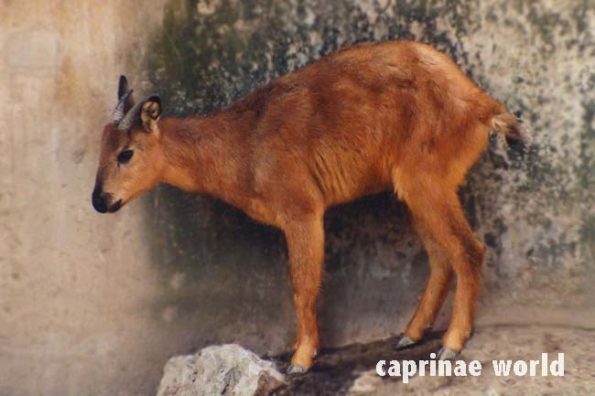
Red Goral – presumably a male –, Shanghai Zoo. Photo: Dr. Siegfried Czernay
Horns
Horns of both sexes are rather small; they are black and curve backward to a greater degree than those of the Himalayan Brown Goral. [3] Horn lengths for both sexes typically fall within the range of 7,5 to 16 cm [1]; males show a range from 9–15 cm, females from 7,5–13 cm [3]. But the horns in males are rarely longer than 12 cm, females’ are mostly just 10 cm. [7] Males‘ horns also tend to be thicker, more curved and wider spaced. The basal cirmumferemce of the horns ranges between 4,3 and 9,4 cm. The horns bear transverse ridges along most of their length [1]. The horns of males are more clearly ribbed, mostly with 10 grooves. The number of grooves for females is not higher than 6 [7]. The tips of the horns are smooth and sharp. [1]
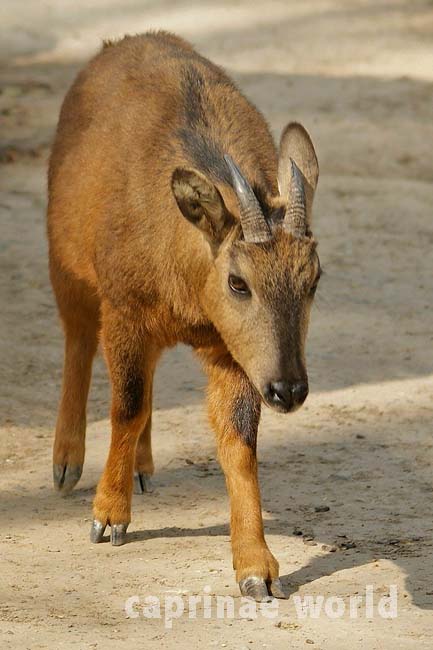
Male „Red Goral“ at Beijing Zoo. The horns of males are in general more clearly ribbed than in females, but can be scuffed through excessive rubbing. (The „Red Goral“ depicted here is actually a hybrid – cross of Chinese Goral, male with Red Goral, female.) Photo: Wolfgang Dreier
Habitat
The Red Goral inhabits forest, ragged crags, scrub and meadows from 2.000 m up to 4.500 m in summer, which is higher than any other goral species (Smith and Xie 2008). The elevation and range where Red Goral is found supports one of the largest tracts of primary coniferous woodland in Asia, which along with its rocky outcrops, form the species‘ primary habitat (Zhang 1987, Wang 1998, Sheng et al. 1999). Most areas in its range receive abundant rainfall (2.000 mm annually) most of which falls in the summer months of April to August (Zhang 1987) [10]. Hayman (1961) pointed out that N. baileyi habitat is drier than that of N. cranbrooki – another consideration to distinguish the two taxa. [9]
Red Gorals migrate seasonally, moving in the winter (typically, November through to March) to lower–elevation mixed deciduous and coniferous forests or glades and thickets below the snow line (Zhang 1987, Wang, 1998, Sheng et al. 1999, Rabinowitz 1999). Locals report that Red Gorals are most frequently observed at lower elevations during winter, returning to higher altitudes in April (Rabinowitz 1999). [10]
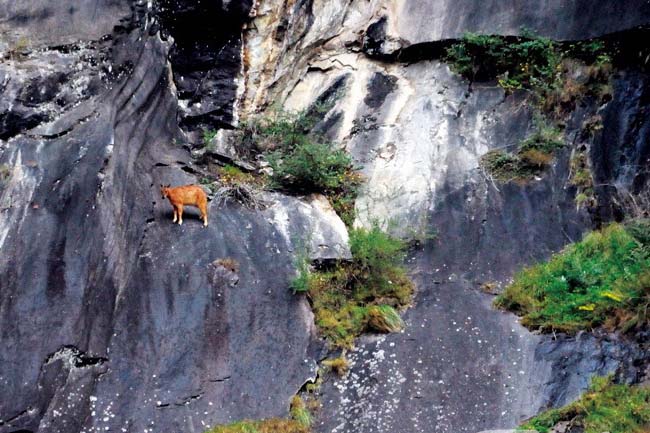
Red Goral habitat near Gyalha Sengtak, Southern Tibet. Note the lighter patches above the hooves. Photo: china pictorial
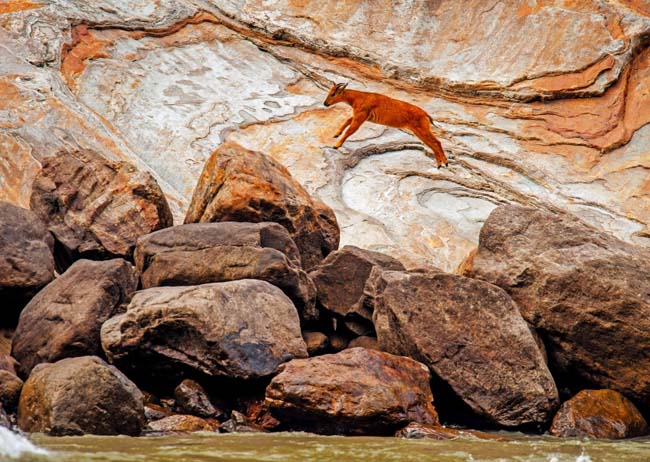
Red Goral along the Yarlung Tsangpo River, Tibet. Note: The colour intensity in this photo may have been artificially enhanced. Photo: Guo Liang/TBIS/IBE, Chinese National Geography
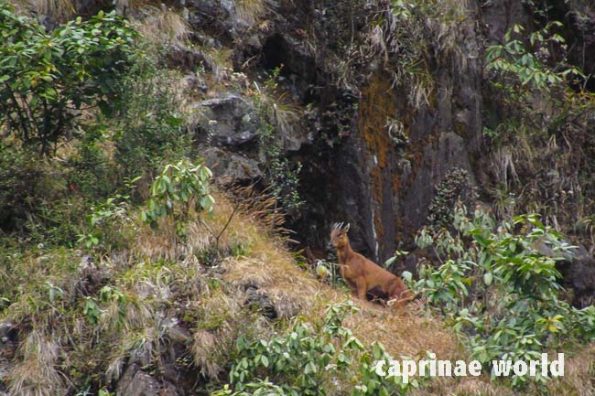
Red Goral near Mayodia Pass, Arunachal-Pradesh, India. January 2011. Photo: Rahul R. Rao
Food and feeding
Although there are no long–term studies on Red Goral’s diet selection, Zhang (1987) and Sheng et al. (1999) note that the diet consists primarily of lichens, but it also feeds on grasses, weeds, tender stems, leaves, and twigs from shrubs [10]. Apparently Usnea (Old man’s Beard), is a main food source of the Red Goral [3].
Breeding
sexual maturity: Captive females have been observed to reach sexual maturity at 1,5 years of age, giving birth at 2, while males start to demonstrate rutting behaviour at 3 years. [10]
estrous cycle: 17–23 days; estrous lasts: 6–72 hours [3]
mating: September–December [3]; December [10]
mating-season activity: males attract females with a „ze–ze–ze“ call. Females also use a loud whistling call when a male approaches, audible to humans up to 500 m. A mature male follows a female closely, frequently checking her genital area and displaying lip curls. If a female is not ready to breed, she will flee or head-butt the male. When she is ready to breed, she will stand still with her tail raised. They repeatedly copulate (10–20 times). [3]
territoriality: During rut males hold territories of 22–25 ha. [3]
gestation: 180 days [3]
parturition: June–July [3]; June [10]
young per birth: single offspring is typical [3]
weaning in captivity: 3,5 month
life span: up to 15 years (Duckworth and MacKinnon 2008) [10]
Activity patterns
Red Gorals are diurnal, and are most active in the early morning and late evening, but can be active throughout on overcast days (Sheng et al. 1999). They graze on sunny slopes, retreating to steep rocky cliffs and sheltered ledges at night (Zhang 1987) [10]. Red Goral are very agile and move fast and easily through rough terrain [1]. They are supposedly rather tame [6]. In summer, Red Gorals move up in elevation, often above timberline to alpine meadows and thickets. From November through March, they move down slope to avoid snow, returning to higher elevations in April [3].
Movements, home range and social organisation
The Red Goral is typically solitary, but small groups of 2–3, typically a female and her offspring, sometimes accompanied with a male, or an offspring from the previous two years, are not uncommon (Zhang 1987, Sheng et al. 1999, Nijhawan 2020 unpub. data) [10]. Group home range size is around 40 hectares, but males occupy marked territories of 22–25 hectares during the mating season (Duckworth and MacKinnon 2008) [10].
Conservation Status
Red Goral is listed as Vulnerable because its population size is estimated to number fewer than 10.000 mature individuals and there is probably continuing decline in the number of mature individuals of at least 10 % over three generations (set at 21 years) [10].
Population
The Red Goral remains poorly studied throughout its range and recent population estimates are generally unavailable. The species appears to occur at low densities throughout its range [10].
In a camera trap study conducted over 450 km² in Dibang Valley of Arunachal Pradesh, India, Nijhawan (2018) encountered 51 independent photographic detections of Red Goral over 7.631 trap nights. The Red Goral is easily sighted in some parts of Dibang Valley, often in pairs on steep rocky outcrops in the temperate zone above 2.000 meters, (Nijhawan 2020, unpub. data). Eastern Arunachal Pradesh is likely to contain a significant population of the species particularly in the Siang, Dibang and Lohit river basins and upstream areas of the Noa-Dihing river in Changlang district [10].
Sporadic camera trapping conducted by the Myanmar Forest Department and WCS in Hponkanrazi and Hkakaborazi areas in 2003–05 and 2015–16 recorded a total of 17 independent detection of Red Goral (Forest Department and WCS Myanmar, unpub. data). Rabinowitz and Khaing (1998) reported that despite hunting pressure, Red Goral was common to abundant in the mountains surrounding Hkakaborazi Protected Area, north of Nam Tamai River, although more recently, Than Zaw and W. Duckworth (pers. comm. 2006) suggested that the species is rare in Myanmar because of its naturally restricted range, compounded by the effects of trade-driven hunting [10].
In random sampling conducted in Tibet (Xizang), China during the summer of 1987–88, Zhang (1991) estimated between 810 and 1.370 individuals in the area, distributed as follows: 120 to 180 for Nyingchi, 60 to 220 for Bome, 320 to 380 for Zayu, 220 to 450 Medog, and 90 to 140 for Mainling. Wang (1998) suggested that total numbers in China were less than 1.500 [10].
While it is difficult to accurately estimate the global population size of Red Goral given the paucity of systematic data, the total population size is probably under 8.000–10.000 mature individuals [10].
Field reports confirm that the species continues to face threats from hunting and habitat destruction from infrastructure development. For example, in Arunachal Pradesh’s Dibang Valley, the species has nearly disappeared from a few locations because of road construction and an associated spike in illegal hunting. However, given that this species occurs in very challenging and inaccessible terrain, which has given it natural protection from overexploitation, the estimated decline is likely to be around 10 % [10].
Threats
Illegal hunting and habitat loss caused by infrastructure development and expansion of monoculture forestry are major threats throughout the species’ range (Duckworth and MacKinnon 2008). Since the opening up of and the economic reforms in Tibet, large–scale hunting has had a major negative impact on the population of Red Goral. This is due primarily to the increasing number of immigrants and modern weapons (Duckworth and MacKinnon 2008). Although hunting bans have been enforced from time to time in some areas, poaching is still common especially when animals move down to their winter ranges (Zhang 1991) [10]. Horns are valued in Chinese traditional medicine [1].
Unsustainable illegal hunting is the major threat to the species in Myanmar too (Than Zaw pers. comm. 2020), where Rabinowitz (1999) reports that it is one of the most heavily hunted ungulates in its range. The meat is consumed locally, and the skins are sold to traders. Horns are valued medicinally in China (Than Zaw pers. comm. 2020). During Rabinowitz’s expedition to the mountains north of Putao in 1997, the village of Gawai claimed kills of up to 50 red gorals a year, while Tahawndam village estimated an annual offtake of 20–30 Red Gorals. Despite the hunting pressure, Rabinowitz and Khaing (1998) reported that Red Goral was one of the most common large mammals in the region at that time [10].
In Arunachal Pradesh / India too, unsustainable illegal hunting, particularly for commercial sale, is a significant threat. Many hunters in Arunachal Pradesh, as well as in Northern Myanmar, claim to depend on the meat of Red Goral for their long hunting journeys for musk deer. Sale of musk deer pods is not only an important source of livelihood for the rural poor of this region; it also holds immense cultural value for most local communities (Nijhawan 2018). In Dibang Valley, Red Goral is a frequent bycatch in the traps set for musk deer (Nijhawan unpublished data) [10].
Conservation actions
The Red Goral is listed on Appendix I of CITES. It is protected as a Class I Protected Species in China. It received complete legal protection in 1987 (Zhang 1991). Populations are currently known from at least five protected areas in Tibet and Yunnan. A small herd has been breeding successfully in Shanghai Zoo [10].
Duckworth and MacKinnon (2008) proposed the following conservation measures for Red Goral populations in China: 1) Enforce the existing protection laws for this species. 2) Establish two proposed protected areas that have not yet been acted on by the government of Tibet Autonomous Region (TAR): a) an area of 200 km diameter, with its centre at “big turning point of Yarlung Zangbo Jiang” (Zhang 1987); and b) an “International Mountain Research Centre” in Yegon county with eight nature reserves in the area surrounding Nanjabarva Peak (Mountaineering and Scientific Expedition, Chinese Academy of Sciences, 1985). These reserves would contain the core range of Red Goral, an area that is relatively pristine and has a widespread mountain ecosystem that supports high levels of biodiversity (Duckworth and MacKinnon 2008) [10].
In India, the Red Goral is legally protected under Schedule I (revised March 1987) of the Wildlife Protection Act (1972). While it is still hunted illegally, its hunting is naturally restricted owing to the inaccessibility of the terrain in which it exists [10].
This species is largely within protected areas in Myanmar, notably the Hponkanrazi Wildlife Sanctuary and the Hkakaborazi National Park (Duckworth and MacKinnon 2008) [10].
legal trophy hunting
not conducted.
Ecotourism
Red Gorals are very rarely documented and, to this day, hardly constitute a tourist attraction. As of May 18, 2026, only nine observations have been recorded on iNaturalist: five in the greater Nyingtri (also known as Nyingchi) / Yarlong River National Park area in China, and four in the Dibang Valley, India.
For Westerners traveling to Nyingtri, it is reportedly mandatory to arrange the trip through a local travel agency. Nyingtri is accessible both via the Sichuan–Tibet Railway and by air.
The Dibang Valley in India can be reached with the assistance of a local driver. The nearest airport is Dibrugarh. Tourist facilities are scarce; however, accommodation options are available – for instance, at the Mayodia Coffee House and the Circuit House in Hunli. See also my trip report.
From the Yunnan side of China, it should be possible to spot a Red Goral within the Baima Snow Mountain National Nature Reserve in the Diqing Tibetan Autonomous Prefecture. The nearest airport is Diqing Shangri–La Airport (DIG). From there, you can take a bus to Deqin, a journey that takes approximately 4,5 to 6 hours. Potential Red Goral habitat can be reached via day hikes (though no records or photographs from this specific region are currently available).
A second option for Yunnan is in and around Gaoligongshan National Nature Reserve. Jon Hall writes in his Yunnan-2026-report: „Though rumours abound about places in Yunnan being closed to foreigners – or to everyone – all of the places we visited were open to foreigners and we didn’t have any issues. So far as I can tell, the restricted areas are mainly in the core areas of national parks or some areas very close to the border. We passed through multiple checkpoints close to the border. All of them took a careful interest in my documentation but then waved us on.“
The Red Goral territory in Myanmar remains accessible only via an extremely arduous long–distance trek. According to mcs-myanmartravel, the journey requires 25 days. Anyone seriously considering embarking on this adventure is recommended to read the following book: Alan Rabinowitz, 2001: Beyond the Last Village: A Journey of Discovery in Asia’s Forbidden Wilderness. Island Press / Shearwater Books, Washington, Covelo, London.
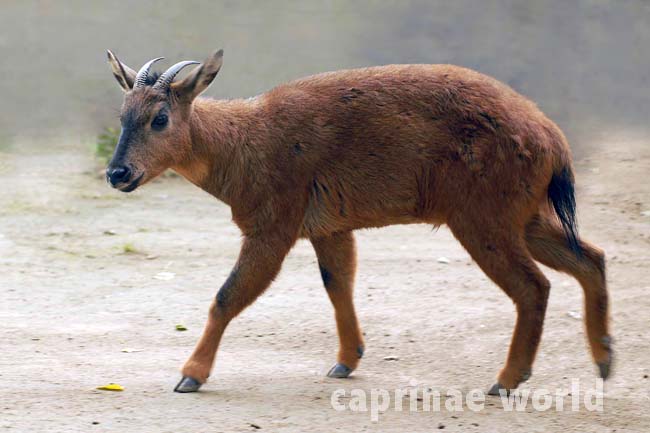
Male „Red Goral“ at Beijing Zoo. Males‘ horns tend to be thicker, more curved and wider spaced at the tips. Photo: Ralf Bürglin
Gallery
Following photos were taken near Mayodia Pass, Arunachal–Pradesh, India at the end of October 2017 (Copyright by Ralf Bürglin)
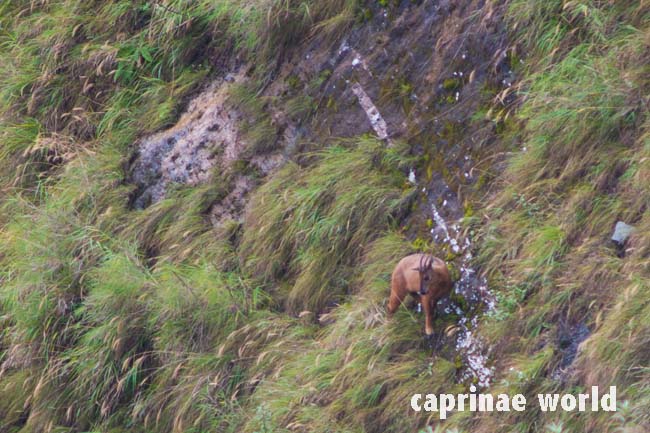
Male Red Goral – recognisable by the relatively longer, more strongly curved horns
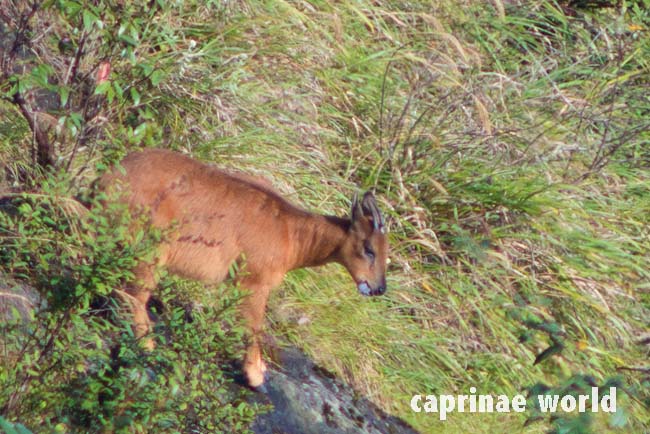
Female Red Goral – recognisable by the relatively shorter, less strongly curved horns. Also note: purple-greyish tongue, light areas above hooves, black muzzle. Otherwise differences in colours across various parts of the body are minimal.

Mother and young of the year dashing down the hill.
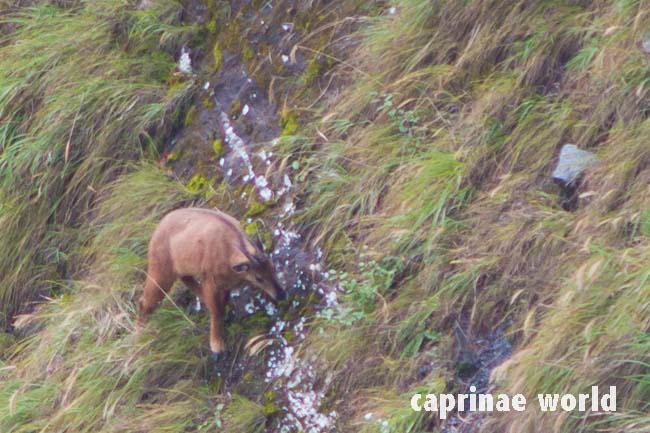
Male: Note dorsal stripe and light area above hoof.
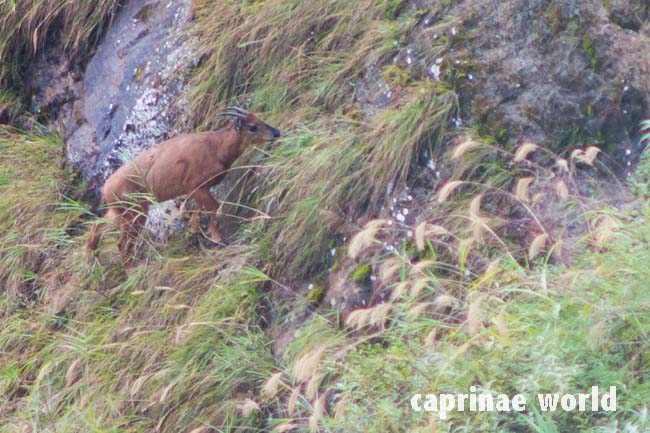
Same male: Note length of horns.
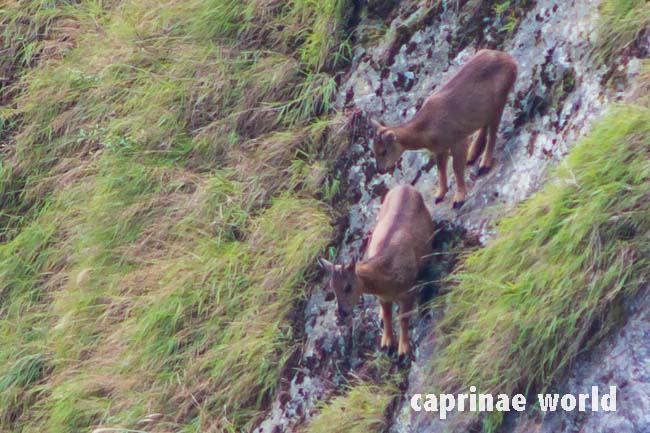
Female (front) and yearling
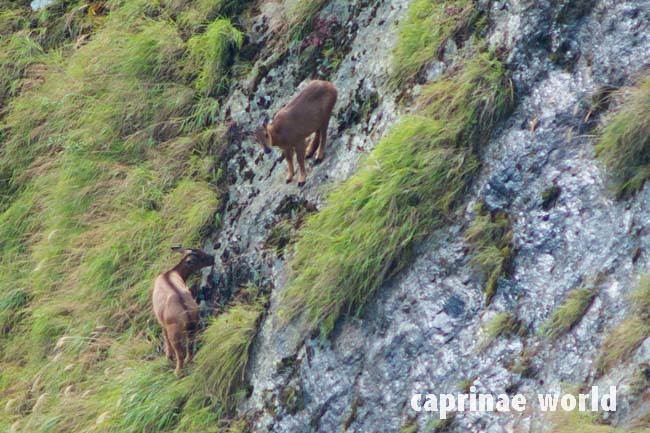
Female (below) and young. Female feeds on plants growing on the rocks.
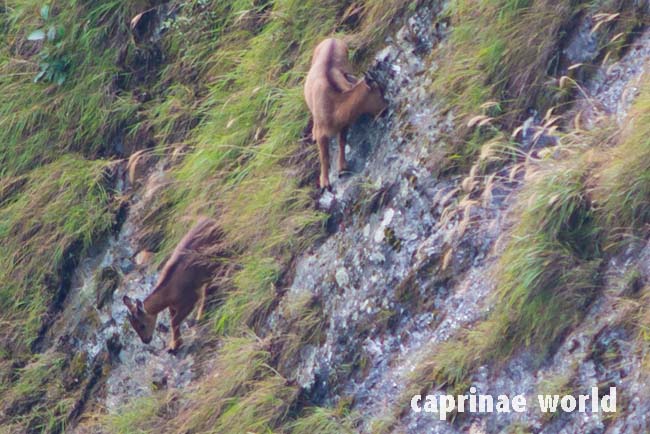
Female (above) and yearling
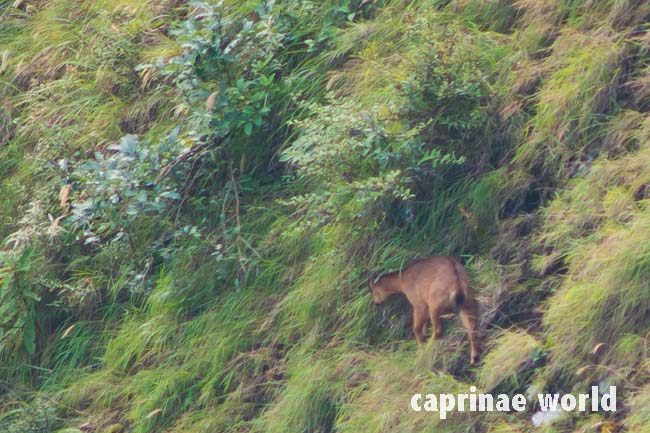
Young / yearling?: Note light patches on both sides of black tail.
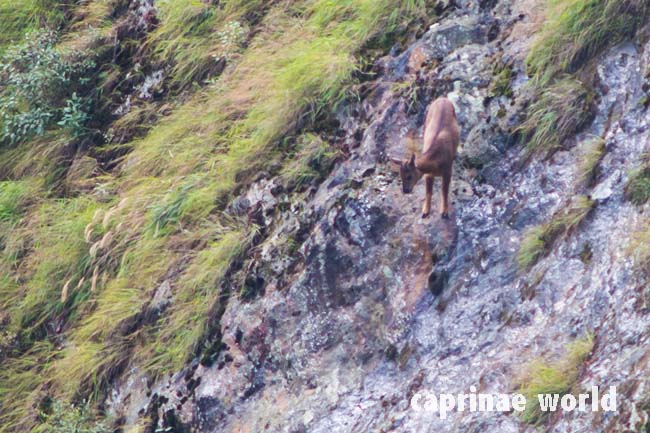
Yearling: Note dorsal line
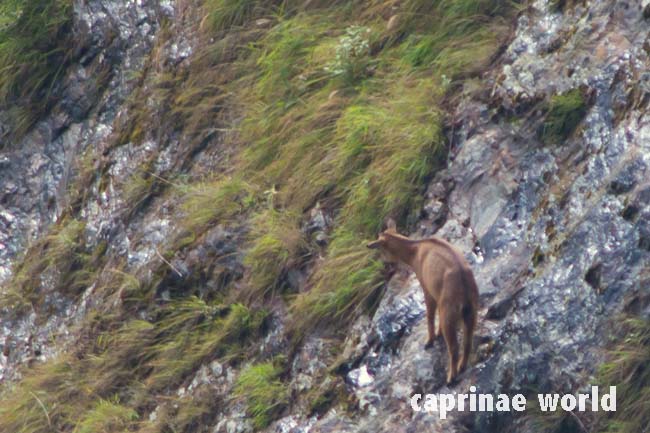
Yearling? Note poor nutritional status
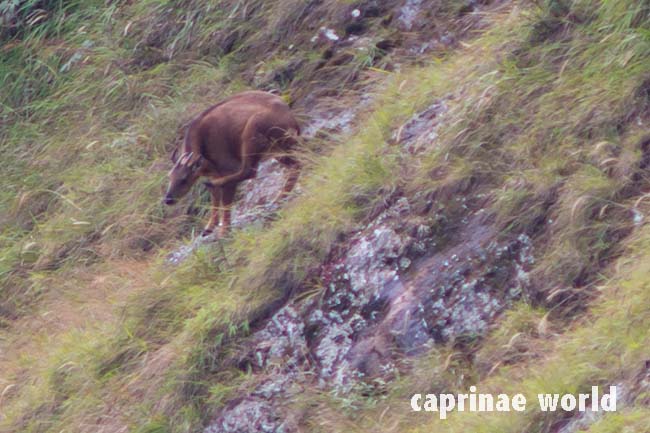
Female Red Goral scratching
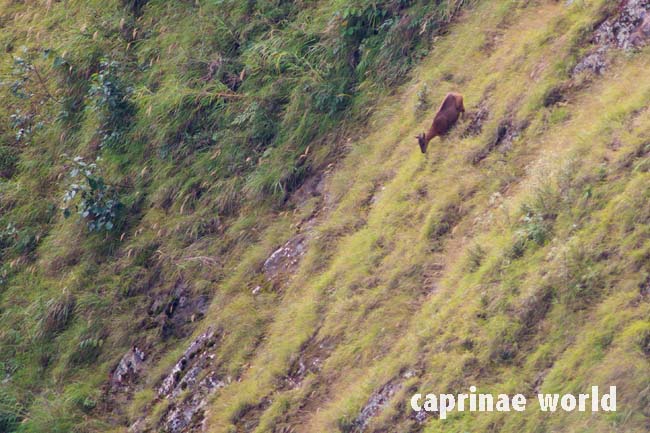
Red Goral in its habitat

Young (below) and female moving downhill. The young taking the lead.
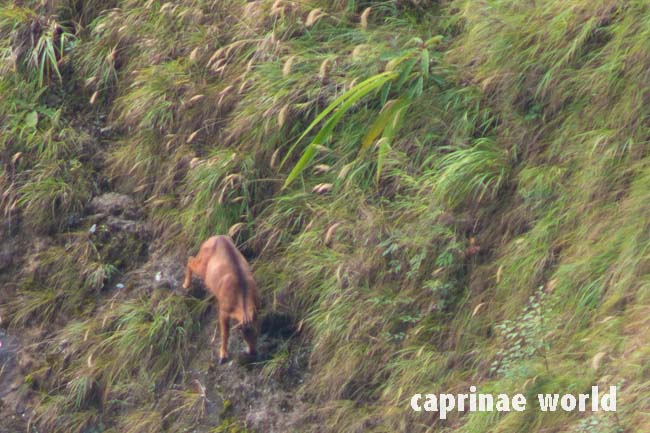
Female descending a hill, using a game path.
Literature Cited
[5] Castelló, José R., 2016: Bovids of the World – Antelopes, Gazelles, Cattle, Goats, Sheep, and Relatives. Princton University Press.
[1] Damm, Gerhard R. and Franco, Nicolás, 2014: The CIC Caprinae Atlas of the World – CIC International Council for Game and Wildlife Conservation, Budakeszi, Hungary in cooperation with Rowland Ward Publications RSA (Pty) Ltd., Johannesburg, South Africa.
[2] Duckworth, J.W. & MacKinnon, J. 2008. Naemorhedus baileyi. The IUCN Red List of Threatened Species 2008: e.T14294A4429442. http://dx.doi.org/10.2305/IUCN.UK.2008.RLTS.T14294A4429442.en. Downloaded on 31 January 2017.
[4] Groves, Colin and Grubb, Peter, 2011: Ungulate Taxonomy. The John Hopkins University Press.
[9] Hayman, R. W., 1961: The red goral of the north–east frontier region. Journal of Zoology 136: 317–323.
[7] Hrabina, Petr, 2015: „A new insight into the taxonomy and zoogeography of recent species of goral (Nemorhaedus, Bovidae, Ruminantia)“, Gazella 42, 2015, Zoo Praha
[8] Li, Guogang et al., 2020: Phylogenetic reassessment of gorals with new evidence from northern Myanmar reveals five distinct species. Mammal Review ISSN 0305–1838
[10] Nijhawan, S. 2020. Naemorhedus baileyi (amended version of 2020 assessment). The IUCN Red List of Threatened Species 2020: e.T14294A179947455. https://dx.doi.org/10.2305/IUCN.UK.2020-3.RLTS.T14294A179947455.en. Accessed on 18 May 2026.
[6] Smith, Andrew T. and Xie, Yan, 2008: A Guide to the Mammals of China. Princeton University Press.
[3] Wilson, D. E. and Mittermeier, R. A., 2011: Handbook of the Mammals of the World. Vol. 2. Hoofed Mammals. Lynx Edicions, Barcelona.