My wife Anja and I traveled through central Thailand between February 15th and March 5th, 2026, to discover the local fauna, which is dauntingly diverse. Thailand is easy to travel in. The hardest part was ultimately to come up with this silly tongue-twister of a headline.
I’ve wanted to travel to Thailand for a long time. For the past few years, I’ve mainly focused on documenting chamois and have now seen all ten subspecies. The Indochinese serow is one of the chamois’s closest relatives, so this was my target species for this trip. As always I was also very excited to see other wildlife. Mammalwatching.com has numerous good trip reports describing general travel conditions. I will refrain from repeating what others have already perfectly compiled.
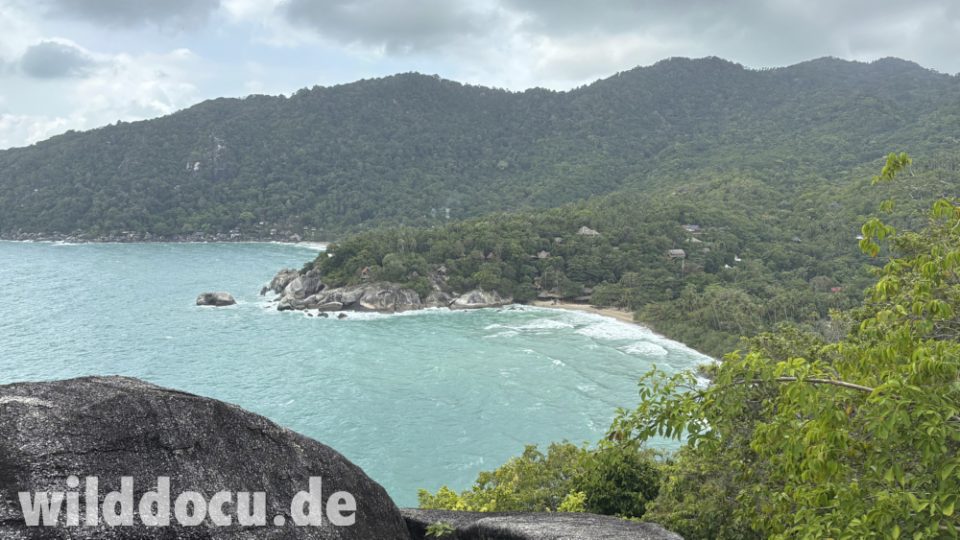
Our first destination is Ko Pha-ngan, a tropical island located at 9 degrees northern latitude. It is probably not a first class mammal watching destination. My wife wanted to go there to relax, do some yoga and Thai massage at a retreat (The Sanctuary). She thought it would be good for me too. She said a massage could prevent neck strain from hours of looking up into treetops with a thermal camera. And practicing proper breathing techniques wouldn’t hurt in the next ammonia-filled bat cave either. Okay, fine …
The climate on Ko Pha-ngan is tropical monsoon, with rain falling throughout the year. The average temperature is 28°C, with May being the hottest month at an average of 33°C, and December and January being the coolest months at an average of 24°C. Annual rainfall is 1848 mm. February is the driest month with 38 mm, while November is the wettest with an average of 428 mm. We actually got more rain than expected, but because of the hot temperatures it was no problem at all. Just make sure you always have a waterproof bag for your electronics with you.
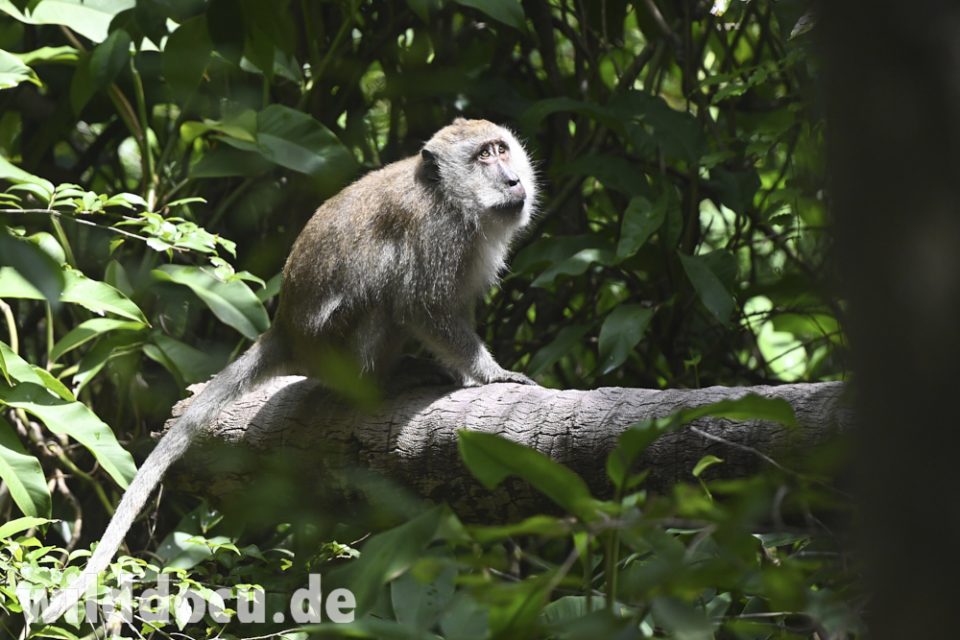
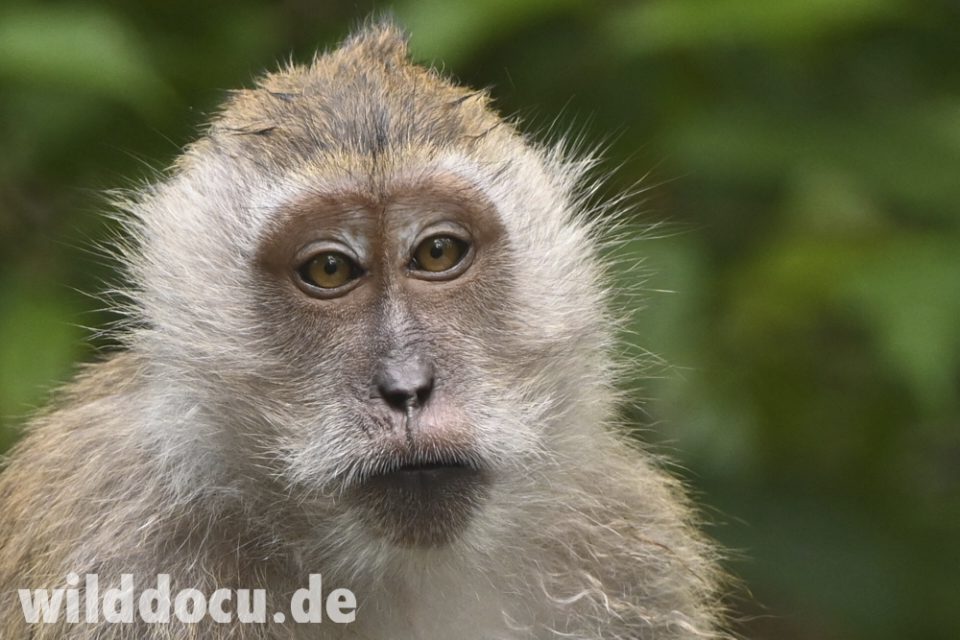
The first mammal species of the trip is the Long-tailed Macaque (Macacca fascicularis) – Langschwanzmakak, Javaneraffe. I had four different encounters on Ko Pha-ngan. I was quite surprised to read that this island form is not in its own subspecies. There are ten subspecies of long-tailed macaques. Eight of these are found on islands. However, the long-tailed macaques of Ko Pha-ngan appear to belong to the most widespread subspecies, fascicularis. They may have migrated from the Thai mainland during the Ice Age, when lower sea levels exposed the Sunda Shelf. Introduction by humans is also likely. I was puzzled by the fact that the subspecies fascicularis is depicted with yellow cheek hairs in the Handbook of the Mammals of the World. However, all the Long-tailed Macaques I photographed on Ko Pha-ngan had whitish-grey cheek hairs.
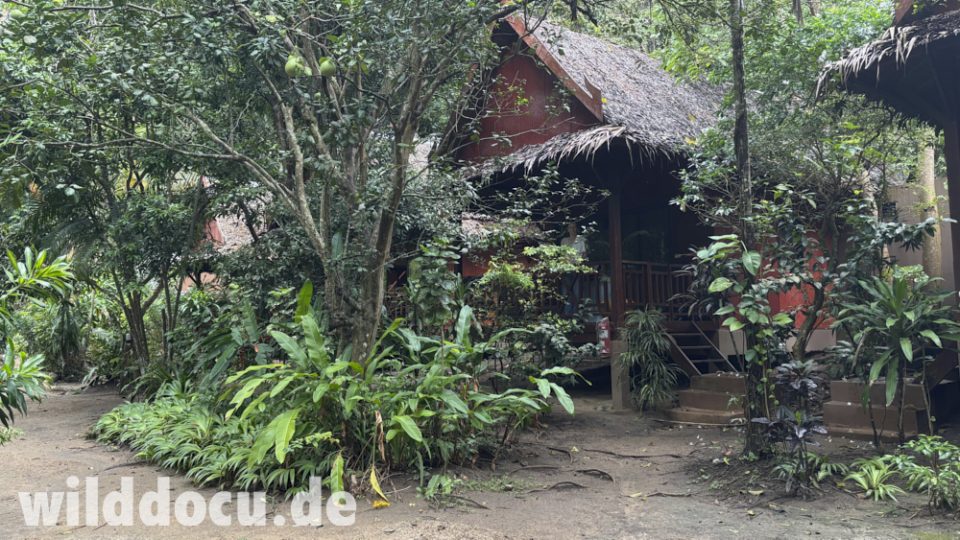
The conditions for nighttime thermal imaging tours weren’t ideal. While The Sanctuary’s garden is beautifully landscaped, the gardeners here seem to think – as is so often the case –, that they have to plant „popular,“ large-flowered garden cosmopolitans like heliconia, bougainvillea, and frangipani. These plants are enchanting, but rarely help the local fauna. Therefore, my nighttime haul is zero.
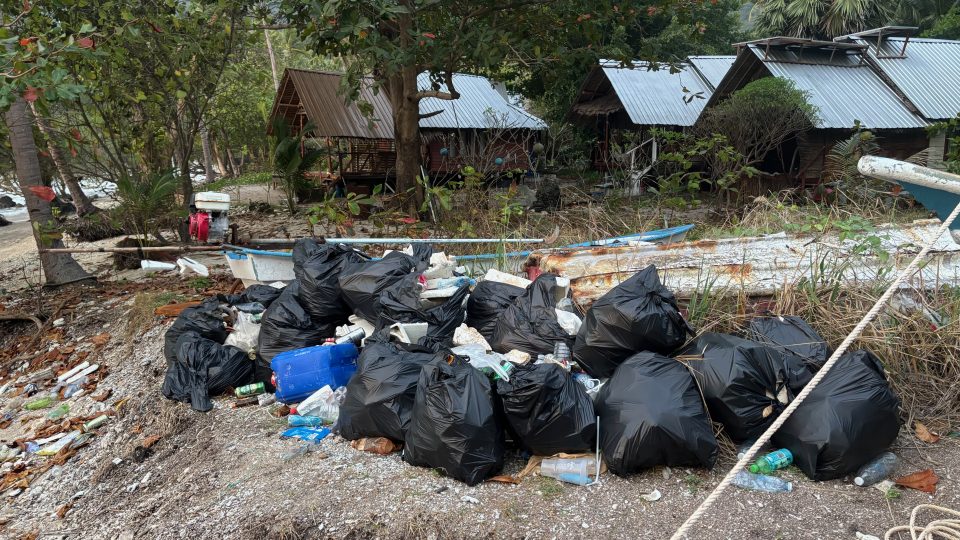
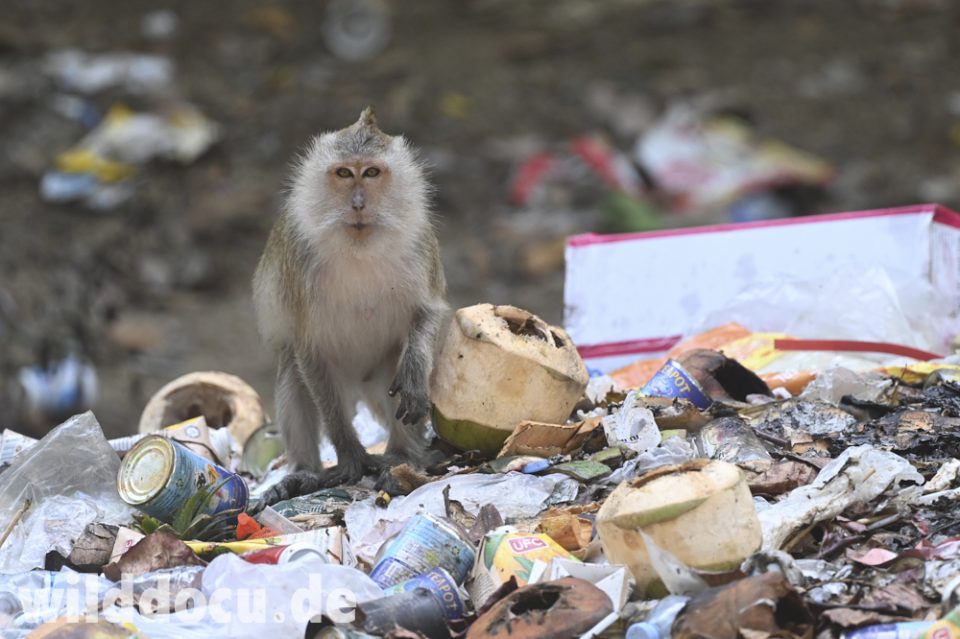
I could have gone for a walk on a forest path outside the grounds to find, for example, a Slow Loris (Nycticebus sp.) – Plumplori. But that didn’t work either because my yoga teacher from the retreat couldn’t get through to me with his philosophy. He’d said I should simply be in the here and now and concentrate on one thing. Concerning mammal watching, that would probably have meant focusing entirely on finding animals – and ignoring all the trash along the way. I can’t do that anymore and wish to have a beautiful, unspoiled environment for my mammal watching.
After our stay at the „Sanctuary,“ we move to a new accommodation. We could have gone to the „Santhiya“, a sprawling resort surrounded by lush greenery. However, upon inquiring, we learn that they regularly spray insecticides there – a common practice in tropical resorts. The idea behind this is to reduce the mosquito population and thus protect guests from disease. But it’s also a fact that fogging endangers non-target organisms (such as other insects, birds, and mammals) because it disrupts food chains. Furthermore, the constant fogging leads to mosquitoes developing resistance to the chemicals used. I want to experience biodiversity in the places where I stay and prefer to protect myself from mosquitoes individually. So, no „Santhiya“ for us.
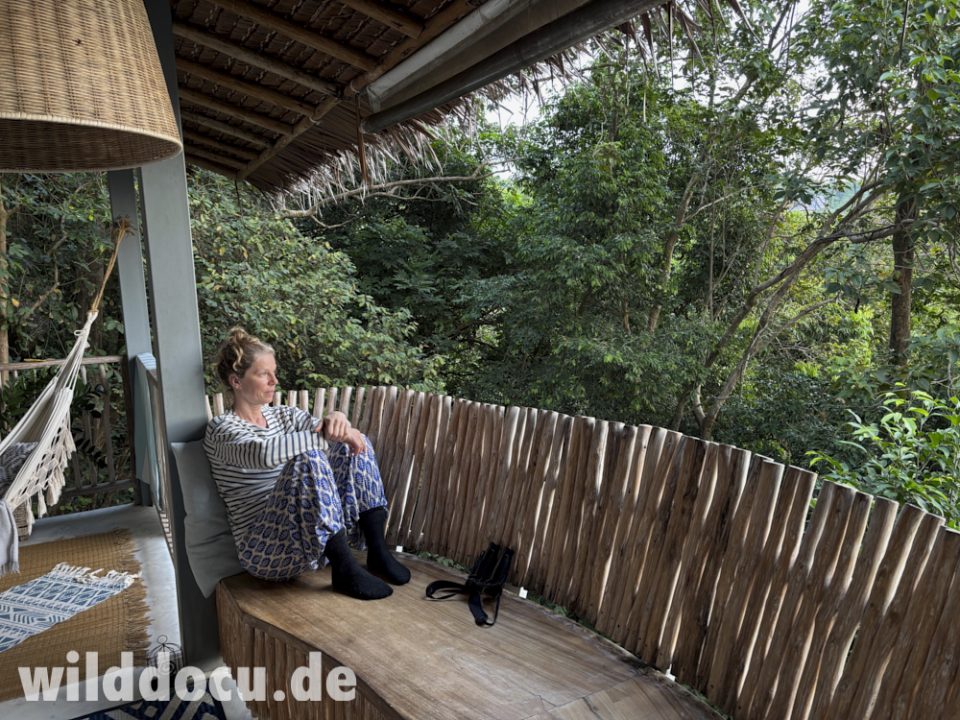
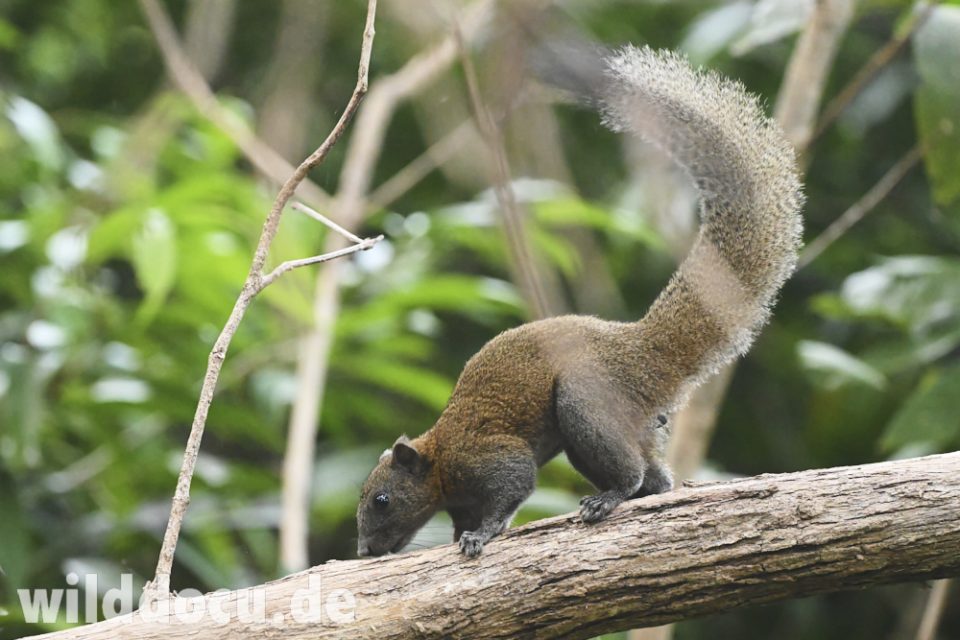
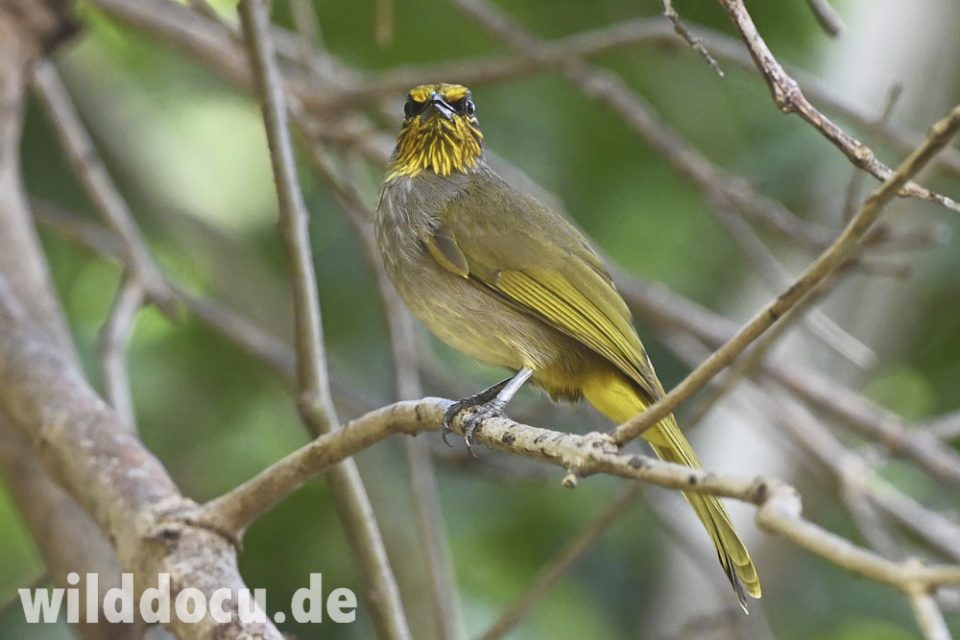
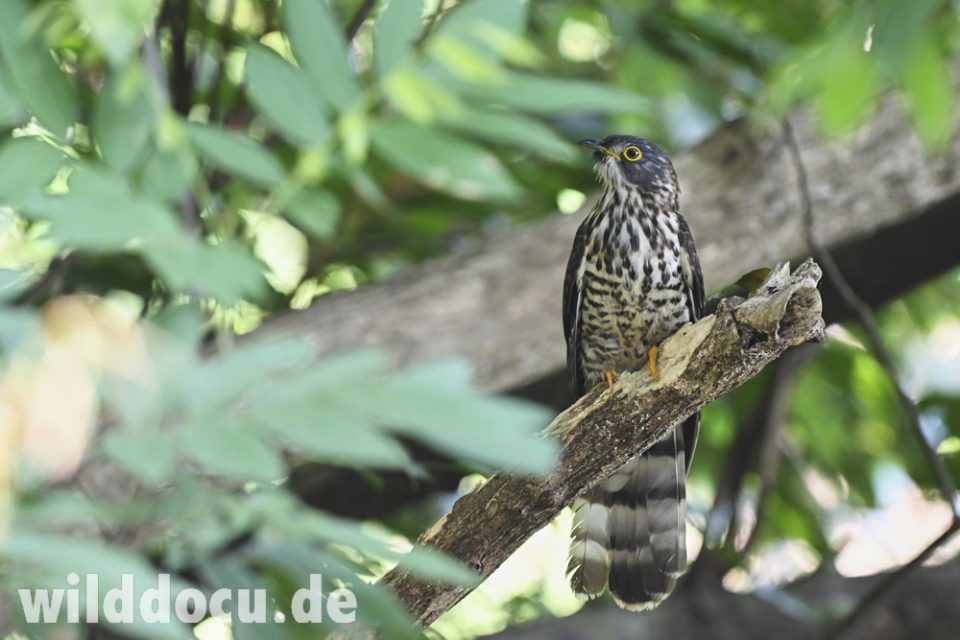
Instead we move to the Fah Sai Treetop Retreat. They fog the rooms too, but at least not the garden. You can simply lie in a hammock and wait for the Large Hawk-Cuckoo, the Asian Koel, the Stripe-throated Bulbuls, and Grey-bellied Squirrels (Callosciurus caniceps) – Graubauchhörnchen – to come by.
We escape the „Full Moon Party“, which the island is famous for (attracts up to 30.000! visitors) and explore Than Sadet Ko Pha-ngan instead. This small national park covers 43 km2 mostly on the island Pha-ngan, also including a few smaller islands. A local had told me that the Ko Pha-ngan Spectacled Langur (Trachypithecus obscurus seimundi) – Ko Pha-ngan Brillenlangur – can still be observed at higher elevations of the park. So let’s go!
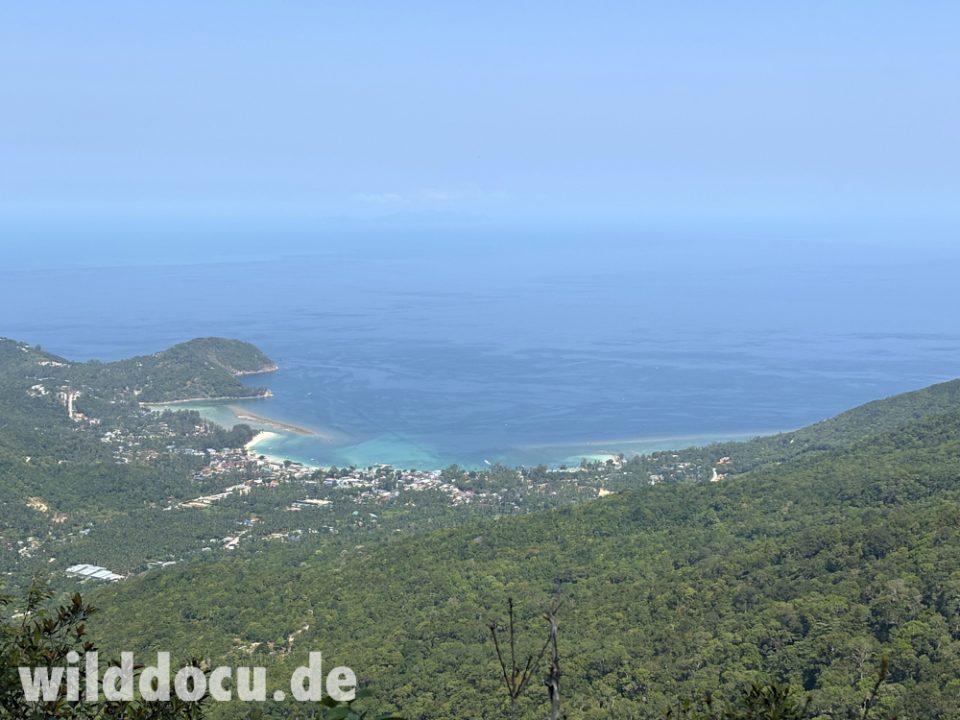
Khao Ra is both the highest point of the park as well as of the whole island of Pha-ngan, peaking at 635 m above sea level. We start at dusk from our apartment on the east side of the island and still have to drive with our scooter around the island and park at 09°44′54.22″N 100°00′37.98″E near the Khao Ra Waterfall. There is a kiosk, where you register for the trail and pay a small fee. We are second. An Australian couple is in front of us (we meet them later). It takes you around two hours to reach the top. And it is absolutely worth it.
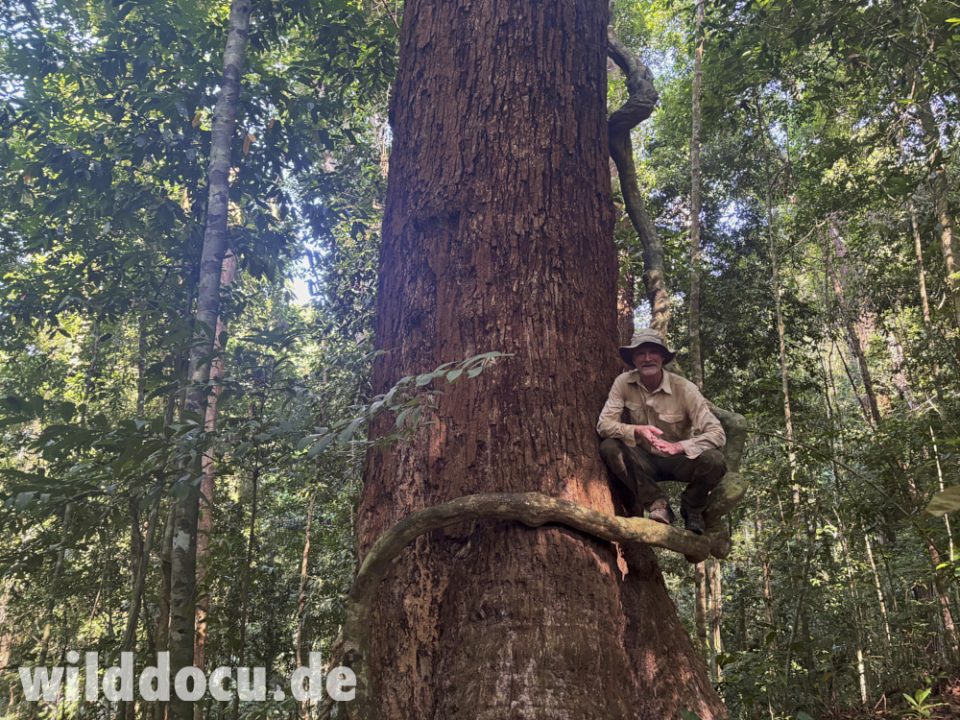
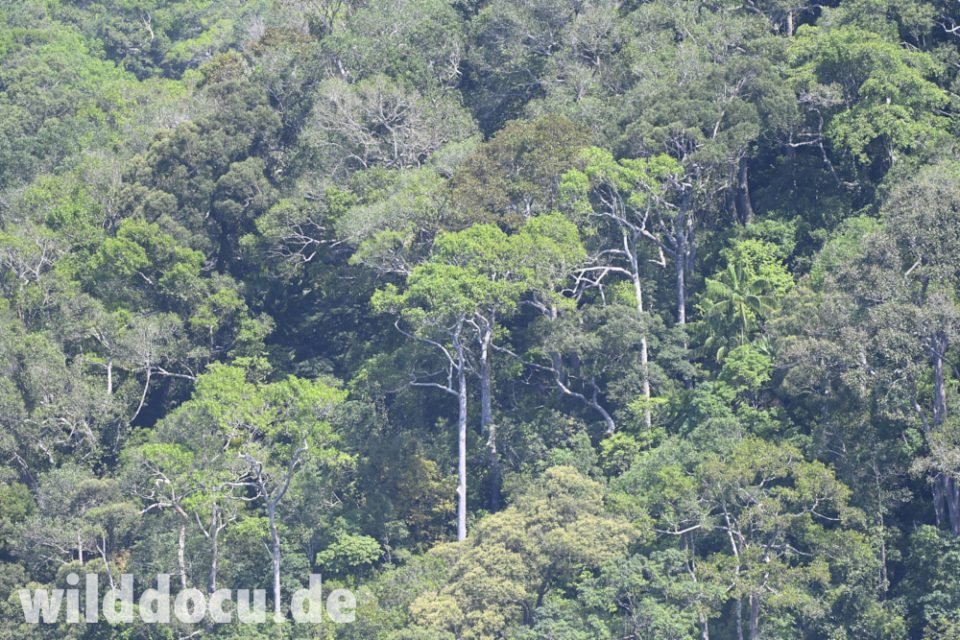
It takes a while before you leave the secondary forest behind and get into a belt that could well be old-growth forest with some impressive giant trees, overloaded with epiphytic plants. The first mammal of the day is again a Grey-bellied Squirrel (Callosciurus caniceps), followed by a lonely Long-tailed Macaque (Macaca fascicularis). After having seen habituated individuals of this species near Phasawan viewpoint and at Bottle Beach the day before, it is really impressive to see this monkey now in a wild environment. Further up tree heights get smaller, but the vegetation in general is even more lush. Fantastic! But the acoustic backdrop can certainly drive you insane.
Already in the upper third, we meet the Australians, who are already on their way back. They tell us about some monkeys further up. The langurs! I dash up. Nothing. Anja calls me and I run back. She tells me, she could hear something, what should be the monkeys. I leave the trail and try to follow. But beyond the ridge it gets quite steep. No chance to progress. Missed by minutes. Rats!
We reach the top, the trail becomes busier, we descent. Around midway down Anja, who is just 20 metres in front of me, calls me again: “Something black with a light belly, running up the tree.” A Black giant Squirrel (Ratufa bicolor) – Schwarzes Riesenhörnchen. But I am again too late. So shy! Missed by seconds. Argh!
I have seen Black giant Squirrels before. I wonder what subspecies occurs on the island. The fact that they are so shy here, can only mean that they are still being poached. They weigh up to 2,3 kg. That’s a lot of bush meat …

Wie spend two nights in Bangkok. For mammalwatchers I recommend the Phranakorn Nornlen.
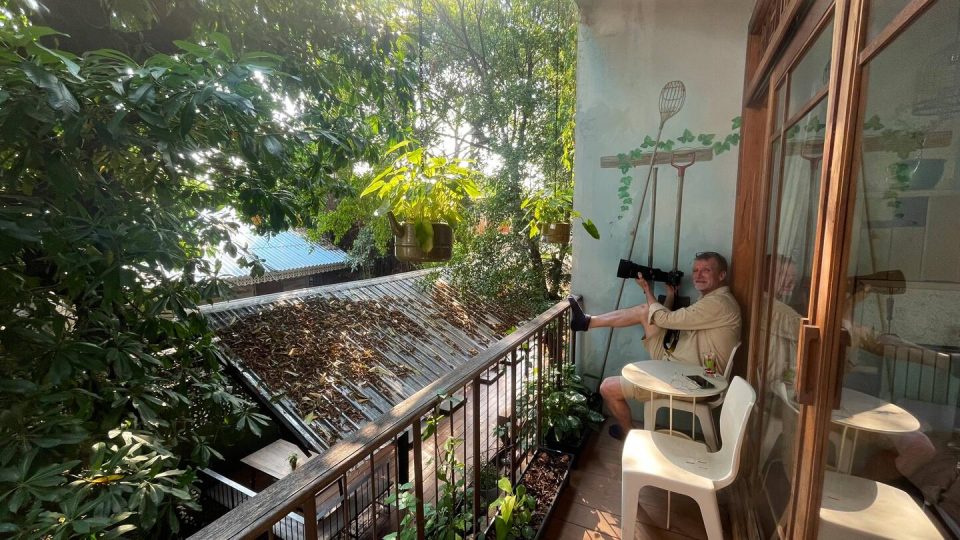
This guesthouse in the heart of Bangkok is quite quiet, has good food and big trees in front of the building. Get a room in the first floor with a balcony facing the trees. You will see Northern Treeshrews (Tupaia belangeri) – Nördliches Spitzhörnchen and Finlayson’s Squirrels (Callosciurus finlaysonii) – Finlayson-Hörnchen. Both species are easy to see elsewhere in Thailand, but it’s nice to have them in the middle of a megacity.
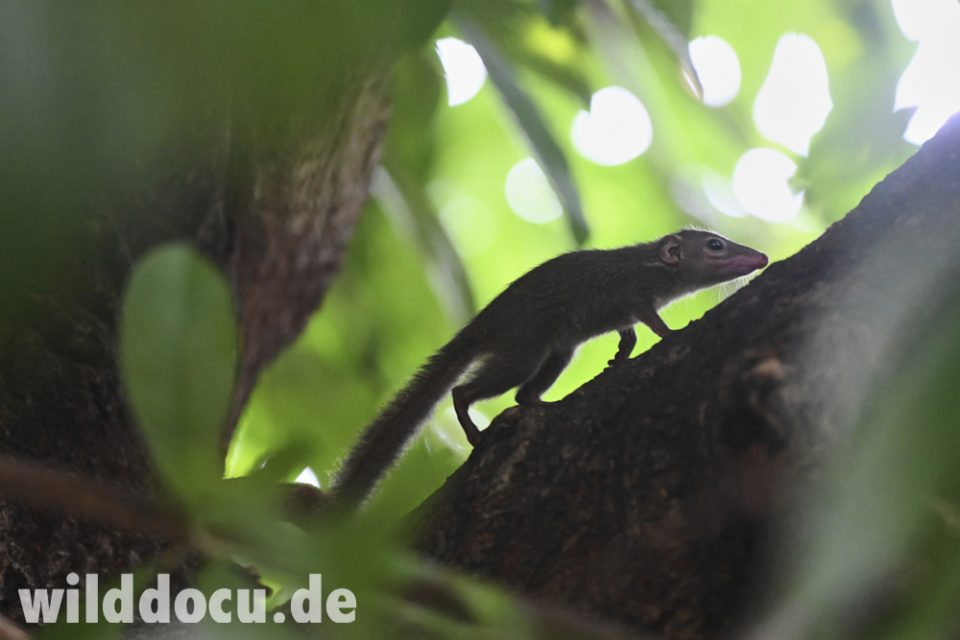
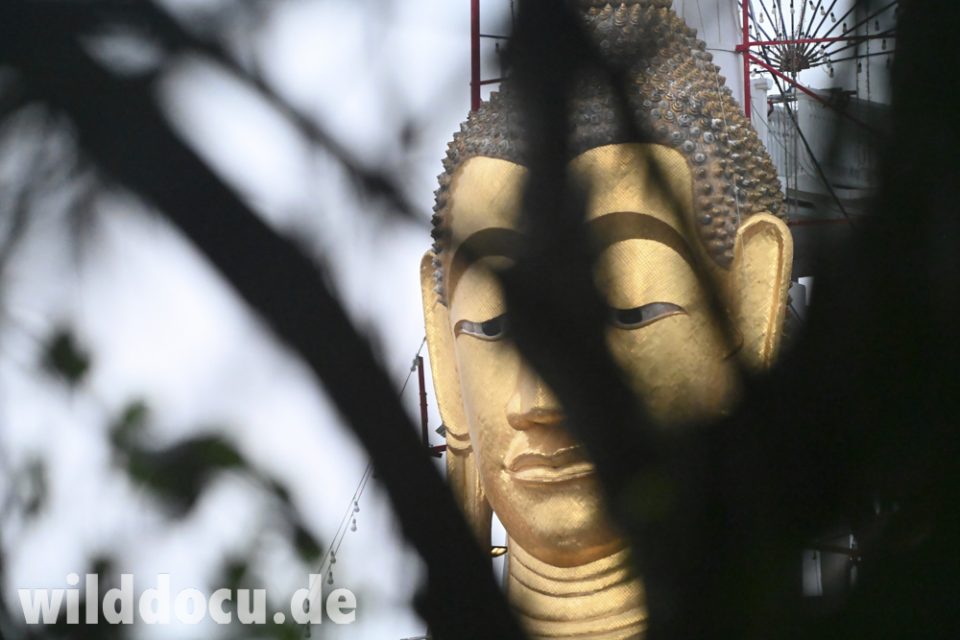
Next destination: Khao Yai national park, just two hours northeast of Bangkok. We stay at the Lala Mukha Tented Resort. Just a few car minutes from there is Pak Chong and a possibility to see serow. The site is outside the park, and since serows are among the most heavily poached animals in Thailand, I don’t want to disclose the exact location here.
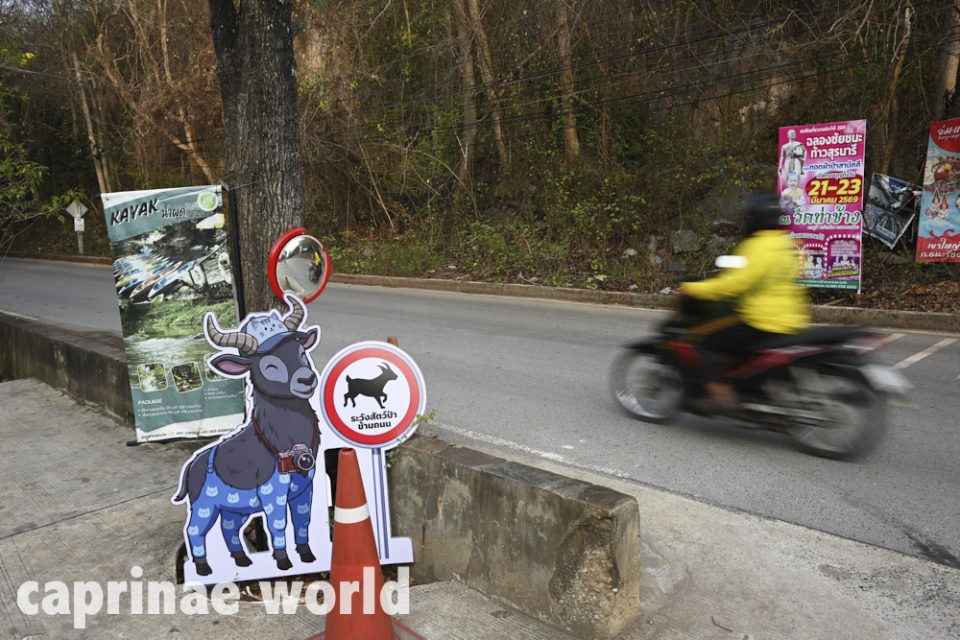
But although the place is probably the most reliable site in 2026 to see Indochinese Serow, and although I go there three times in the morning, I miss them – on the last day by half an hour. I still gather as much information as possible and make my own conclusions to better understand the biology of serows. You can find this very specific piece of information in the caprinae world section of my website.
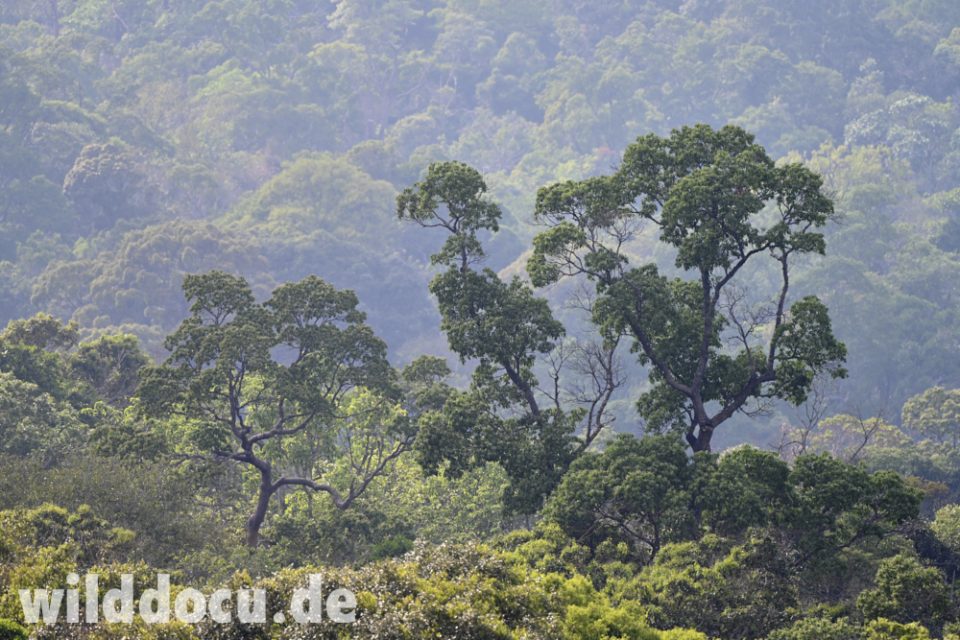
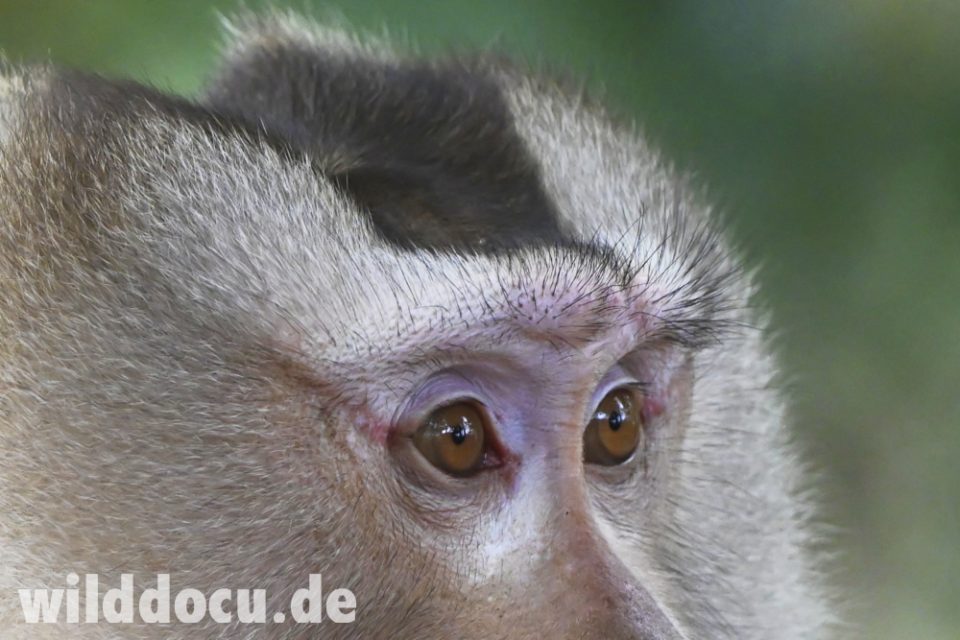
We enter Khao Yai National Park and meet the first monkeys. They are Pig-tailed Macaques – Schweinsaffen. But there are two different species in Thailand, a „Northern“ (Macaca leonina) and a „Southern“ one (Macaca nemestrina). The boundary between the two species runs approximately in the area of the Isthmus of Kra. We are north of that area, but you never know. Better have a closer look at your specimens: Both species are recognised by a dark pelage patch, that is found on the centre of their crowns.
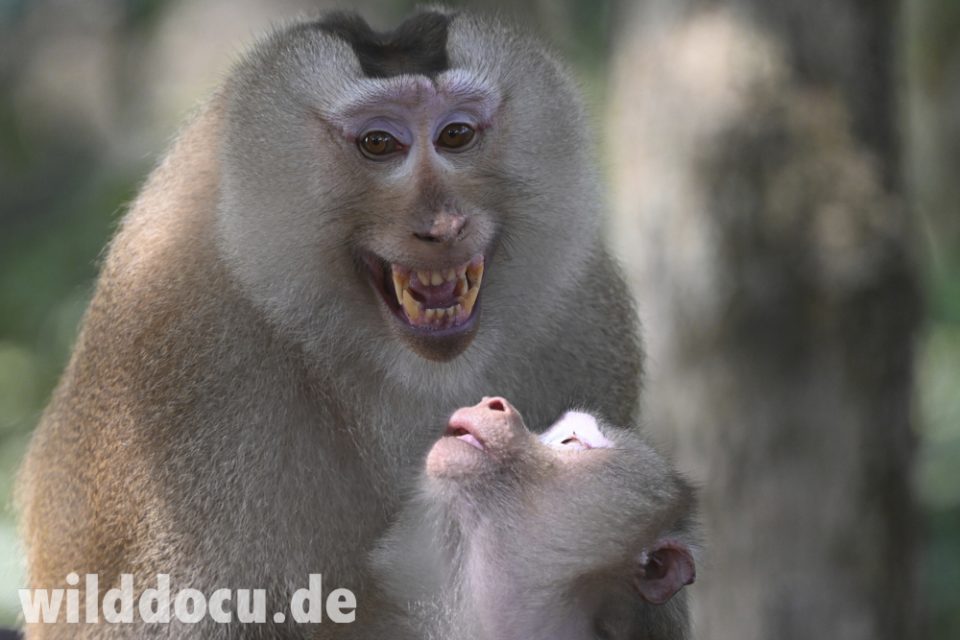
The Northern Pig-tailed Macaques (Macaca leonina) – Nördlicher Schweinsaffe – has a red stripe at each exterior corner of their eye. It looks like an inflamation, but it is their identifying mark.
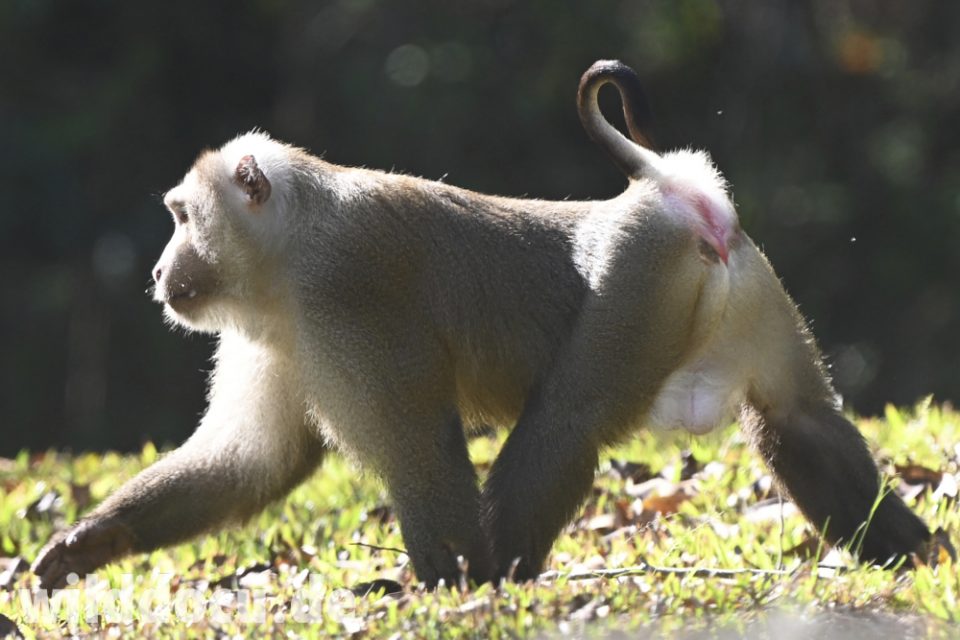
And while the Northern Pig-tailed Macaque holds its tail curved back, the Southern form often holds it curved forwards. Isn’t that cool!?!
Soon after we run in our first Sambar Deer (Rusa unicolor) – and I learn about the weirdest fact about a deer I can imagine: the “sore spot”.
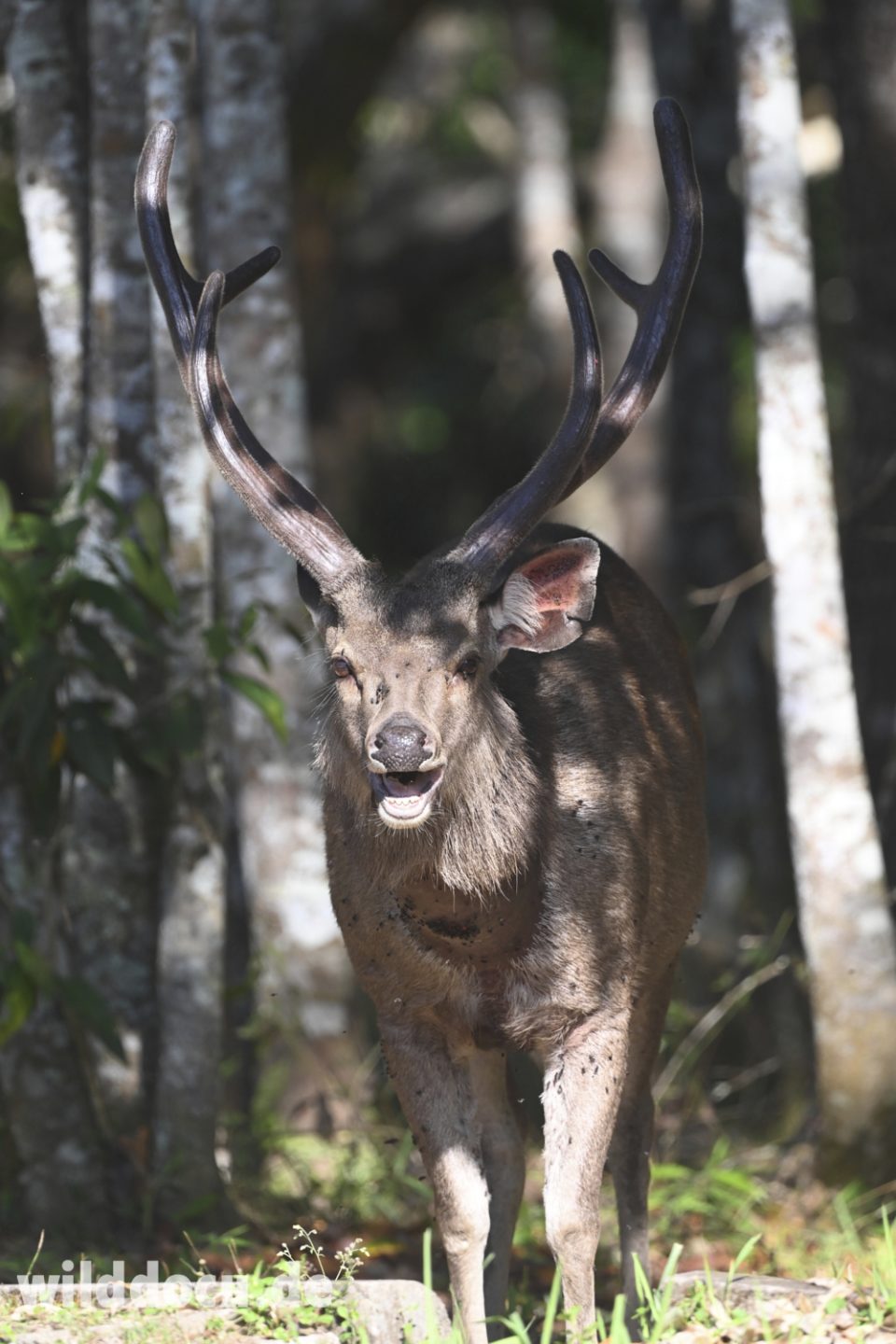
This is what Geist (1999) wrote about it: „Indian sambars have a unique gland on the lower neck, the „sore spot.“ It is as if the skin ruptures into an ulceration some 20 x 12 cm in size, the hair drops out, and a secretion is discharged that brushes all vegetation that the deer touches while moving.
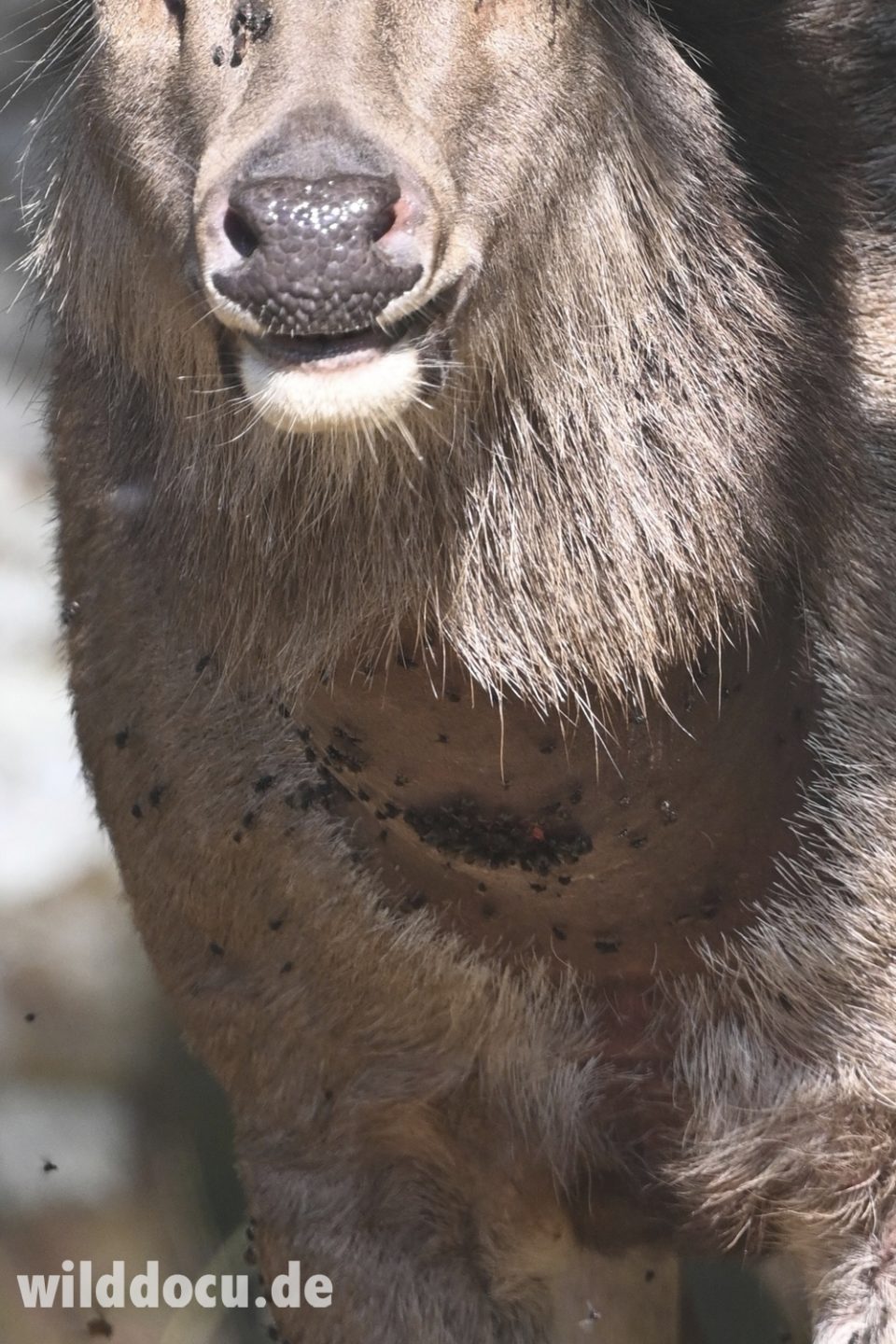
This spot appears in hard-antlered stags during the rut, and, significantly, in females during late pregnancy and lactation. The „sore spots“ heal after the rut and leave an area of black skin, soon to be covered by hair (Bemmel 1950; Schaller 1967; Johnsing 1980).“
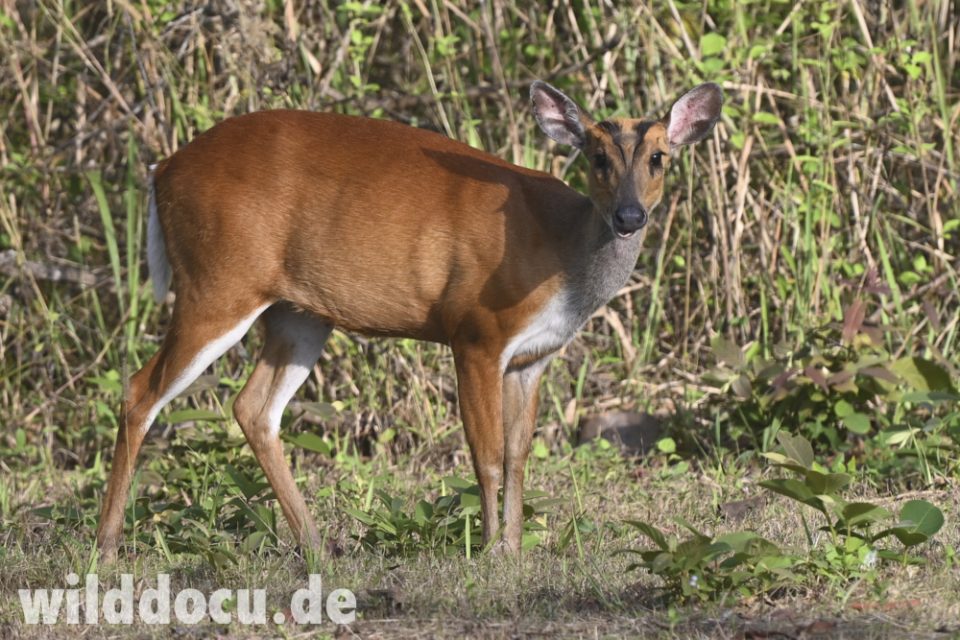
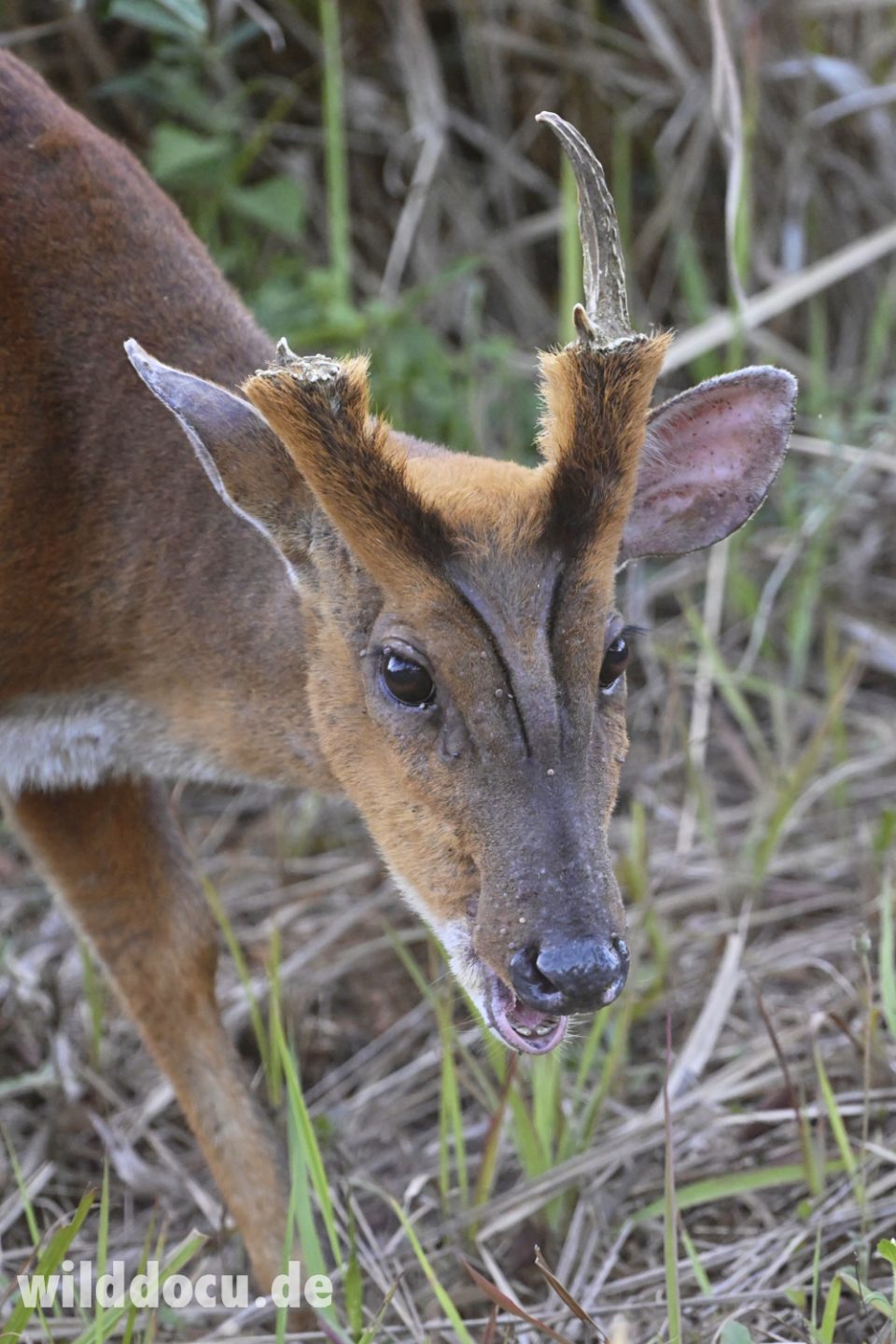
The second deer species we encounter is a Southern red Muntjac (Muntiacus muntjak). While traveling in Khao, we see them along the road and near buildings.
Next day we get up at 4 a.m. to be at the entrance of the Khao Yai National Park by 5 a.m. We’re even a little early and, after the paperwork is done, we’re the first ones inside the park. The road winds its way up the jungle mountains, sometimes in tight curves. At one point, there’s a sign: „Steep curve.“ I’m amused because it’s the only sign of its kind, and the road is almost entirely curves.
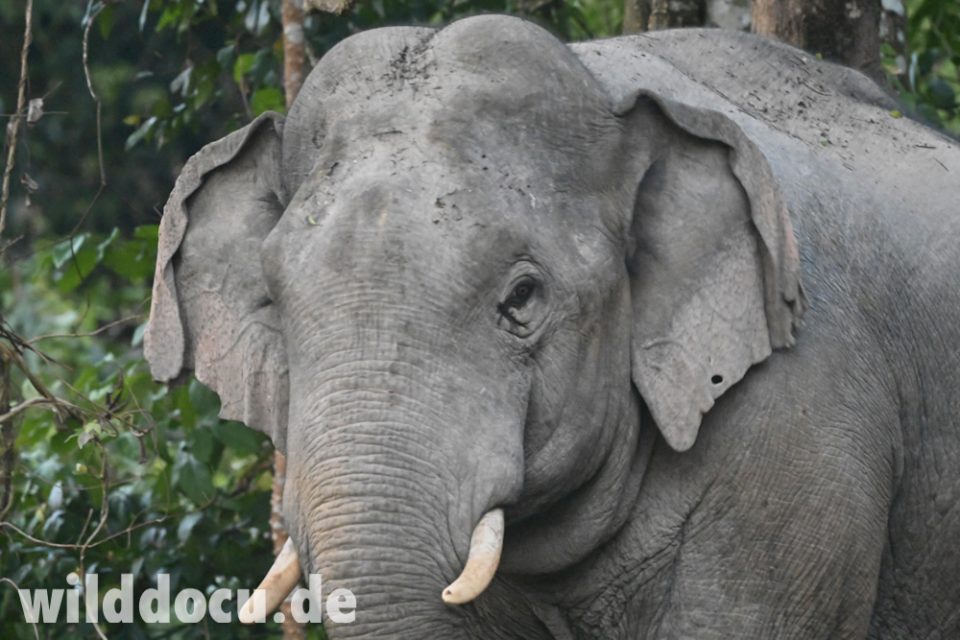
A second later, I don’t need a sign to slow down even more: there’s an Asian elephant (Elephas maximus) – Asiatischer Elefant – standing by the roadside. I come to a stop and roll down the window. The elephant seems restless. Maybe I stop in an awkward position, lower in the back, so he’s getting the light from my headlights. I stay put for a moment; he’s standing behind a concrete barrier which is about a metre high. But he doesn’t like the situation he is in. He pricks up his ears and trumpets. I have to decide: back up or accelerate. I go forward! It works out.
Khao Yai doesn’t seem to be a good place to observe Asian Elephants. The forests are dense, most elephants are seen on the road. We never observe them in the open areas. And since there is quite some traffic, cars and drivers sometimes get stuck between elephants and the cars behind them. That’s inconvenient … We’re glad that other drivers aren’t blocking the road for us so early in the morning.
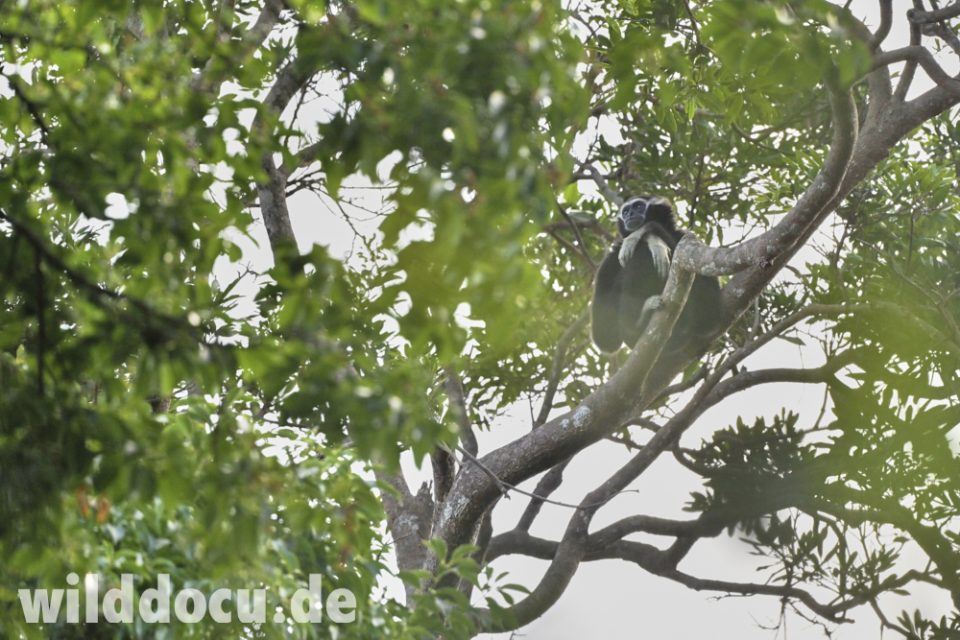
Our mode of travelling is to drive slowly along the road with the window open and stop when the sounds of the jungle seem very close. Walking in the Khao Yai rainforest before sunrise is too dangerous (mainly because of the elephants). The most striking sight we make is a Pileated Gibbon (Hylobates pileatus) – Kappengibbon.
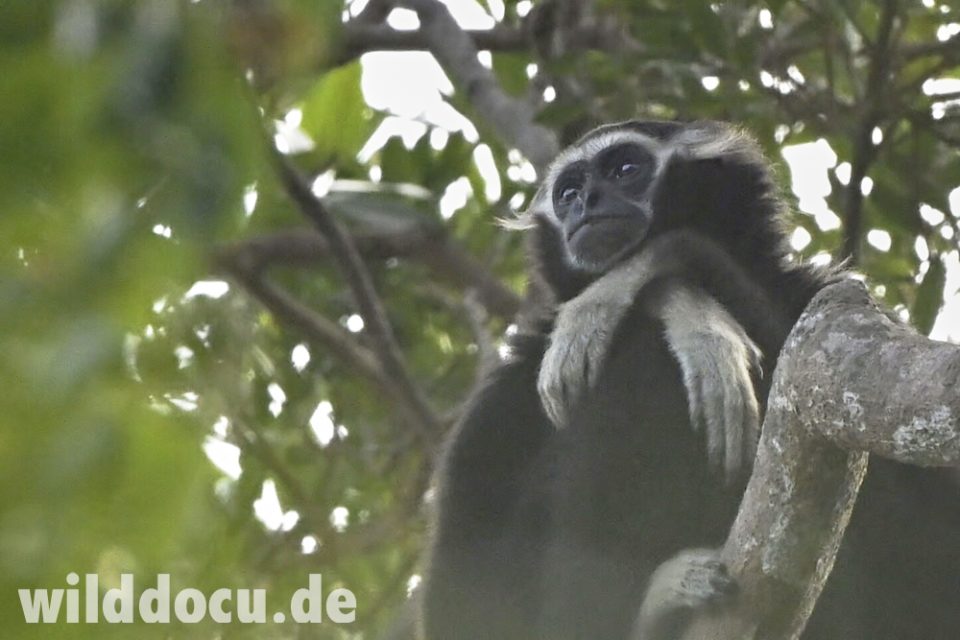
Their calls are incredibly impressive, reportedly audible from one to two kilometers away. They are ubiquitous, but we only get one chance, for a few seconds, to observe a single male up close. Adult males are almost entirely black, except for their hands and feet, a whitish facial ring, and long, light-colored fringes on their temples. A particularly striking feature is the hair on their heads, which is fanned out backward in this species (19 species in total). Among the backing vocalists are:
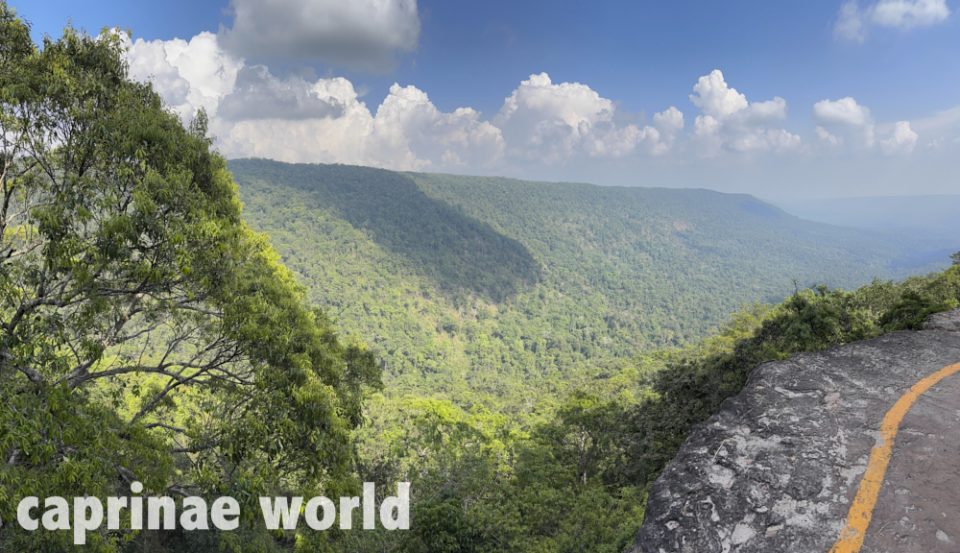
The Pha Diew Dai cliff – also spelled “Pha Dieu Dai” and in some other variations – is one of three known places in Thailand where serows are occasionally sighted. The cliff is accessible by a 446 metre loop-trail and board walk that will take 30 minutes to complete. We come here three times, but have no luck concerning the serows.
We stop at the Khao Yai National Park Visitor Centre and go for a short walk along the river. We detect a group of Smooth-coated Otters (Lutrogale perspicillata) – Glattotter.
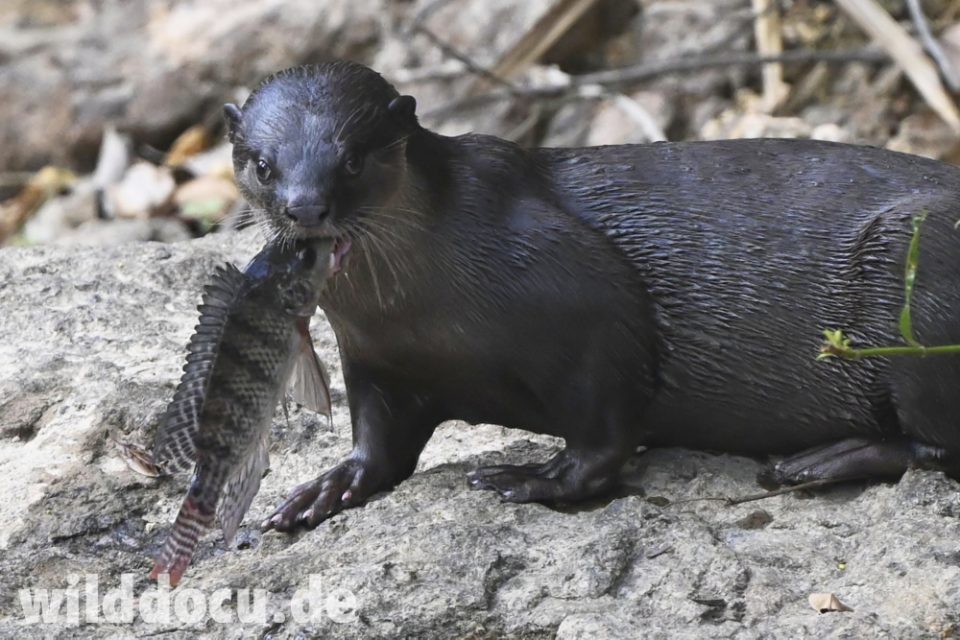
There are four otter species in Thailand. To distinguish the “Smooth Otter” from the other species look for distribution, a more rounded head, a hairless nose, and the feet bearing strong and sharp claws.
Lam Ta Khong Campground in Khao Yai, Thailand, is a great place to see Malayan Porcupines (Hystrix brachyura) – Malaiisches Stachelschwein oder Kurzschwanz-Stachelschwein. As soon as it gets dark, you’ll encounter several individuals among the tents. Their scientific name, „brachyura,“ refers to the length of their tail (brachys = short, oura = tail). In fact, the tail is no shorter than that of the crested porcupines (H. cristata, H. africaeaustralis, H. indica). The tail length measurements should be considered in comparison to the Asian Brush-tailed Porcupine (Atherurus macrourus), which is also found in Thailand and does indeed have a long tail.
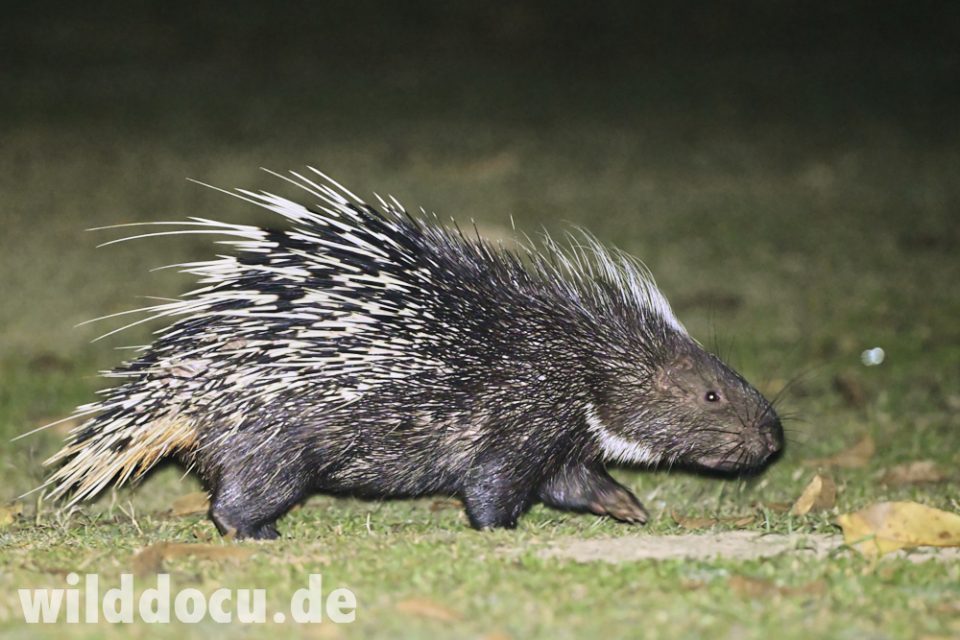
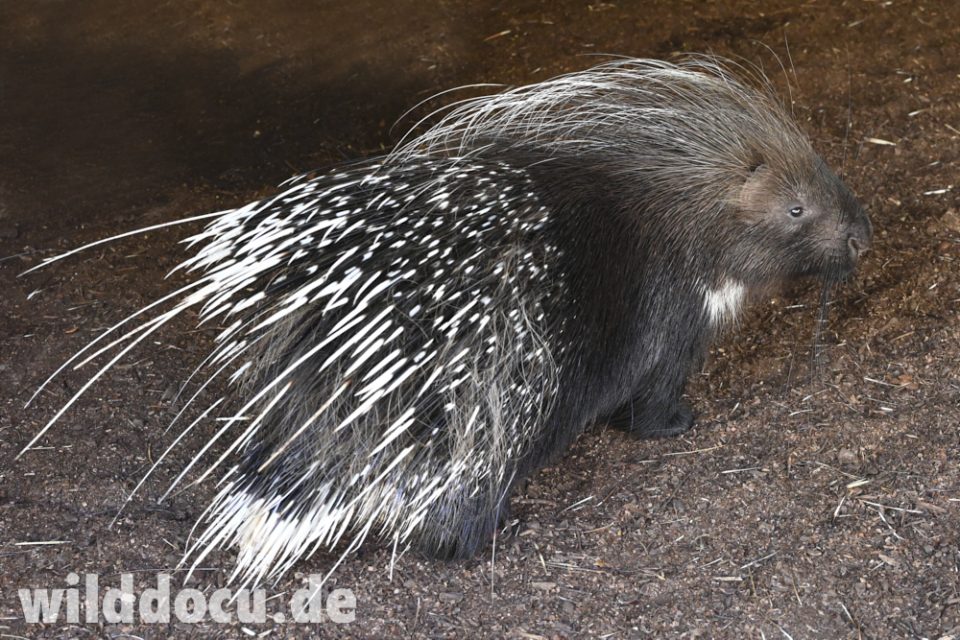
To appreciate the unique characteristics of the Malayan porcupine, observe its head fur. A crest like that of the Crested Porcupine is only rudimentary or entirely absent; the quills are predominantly white with a single dark band (instead of several short ones); and the head is flatter than that of the Crested Porcupine.
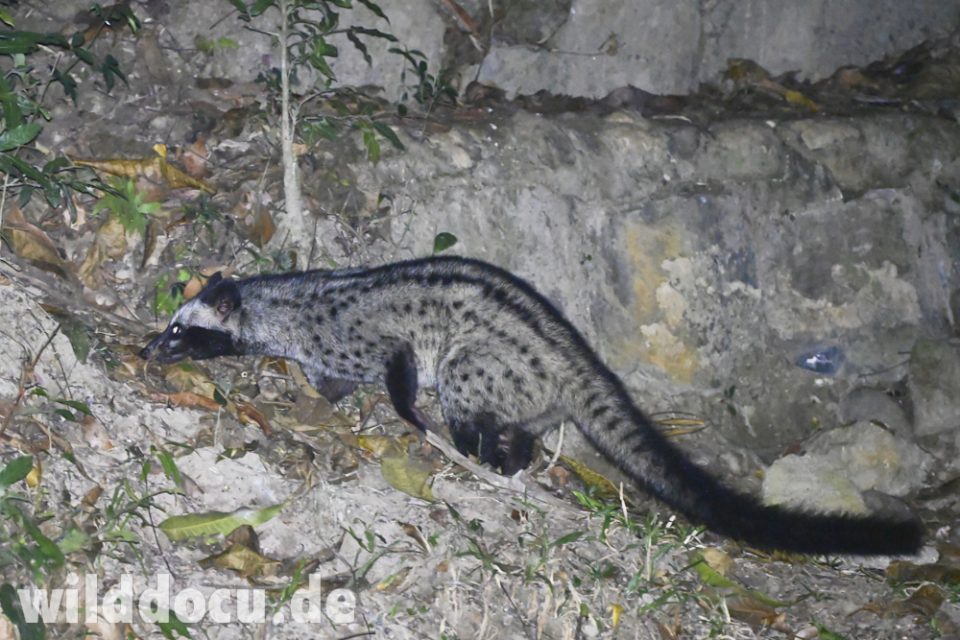
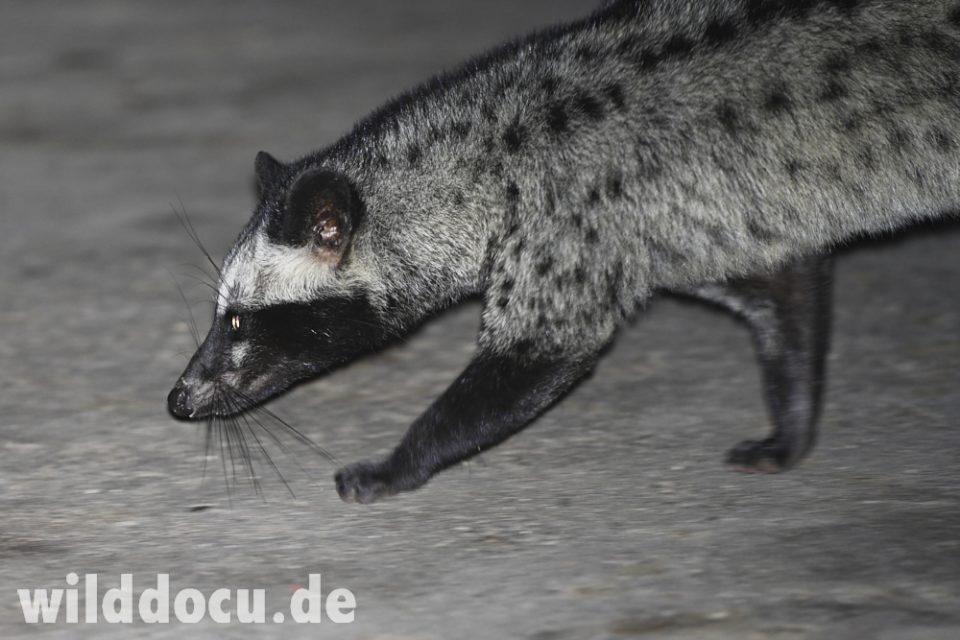
Another campground visitor at Lam Ta Khong is the Asian palm Civet (Paradoxurus hermaphroditus) – Fleckenmusang. I follow one individual across the camping site, see it enter buildings, crawl under cars, checking garbage and climbing trees – a very adapted animal.
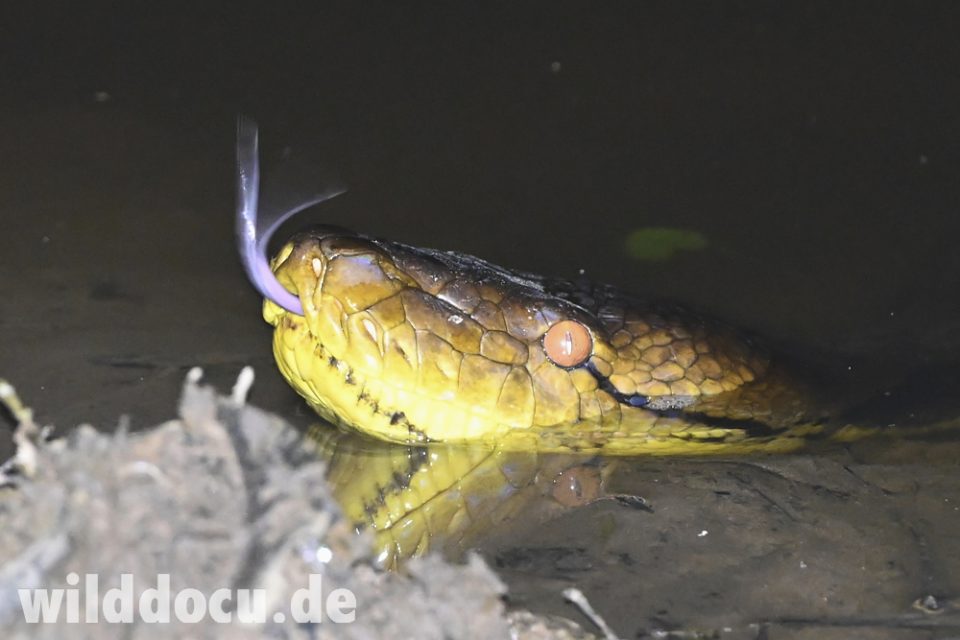
A beautiful Reticulated Python (Malayopython reticulatus) – Netzpython – is also on the move. It could be that guests walking their small dog should keep a distance …
During our time in Khao Yai, we go on two night safaris. These guided tours are pretty crazy. Entire convoys of vehicles are packed tightly together on the road. You can’t really call it enjoying nature anymore. I’m less worried about the animals. Sambar Deer, Malayan Porcupines, and Golden Jackals (Canis aureus) – Goldschakal – seem relatively unfazed by the hordes of people.
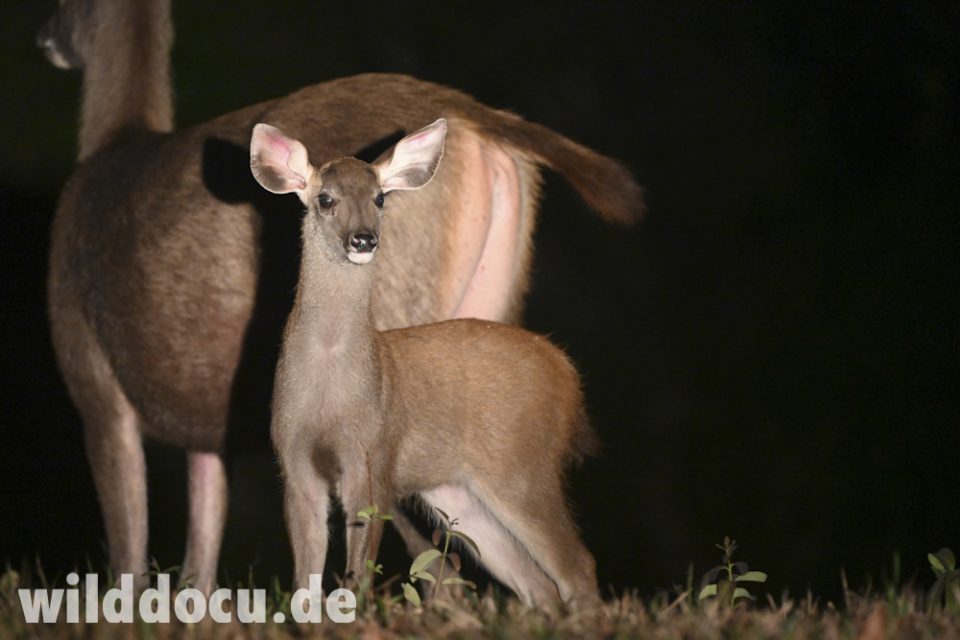
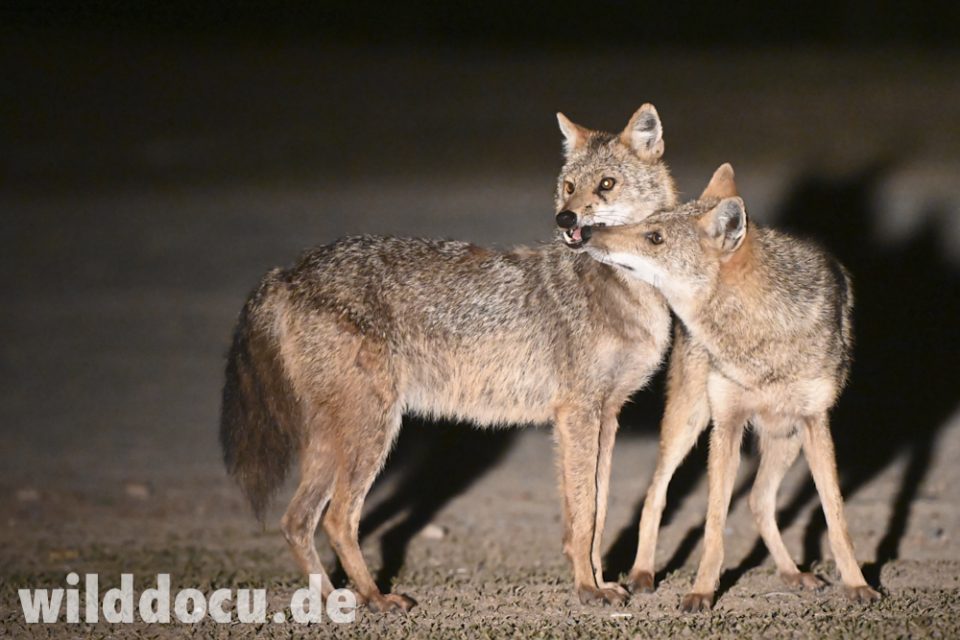
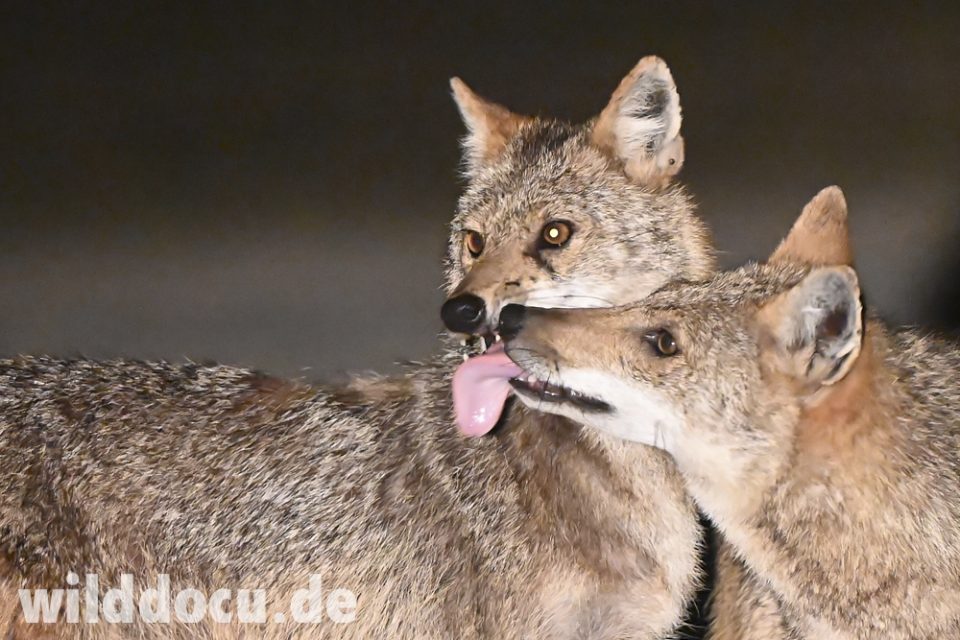
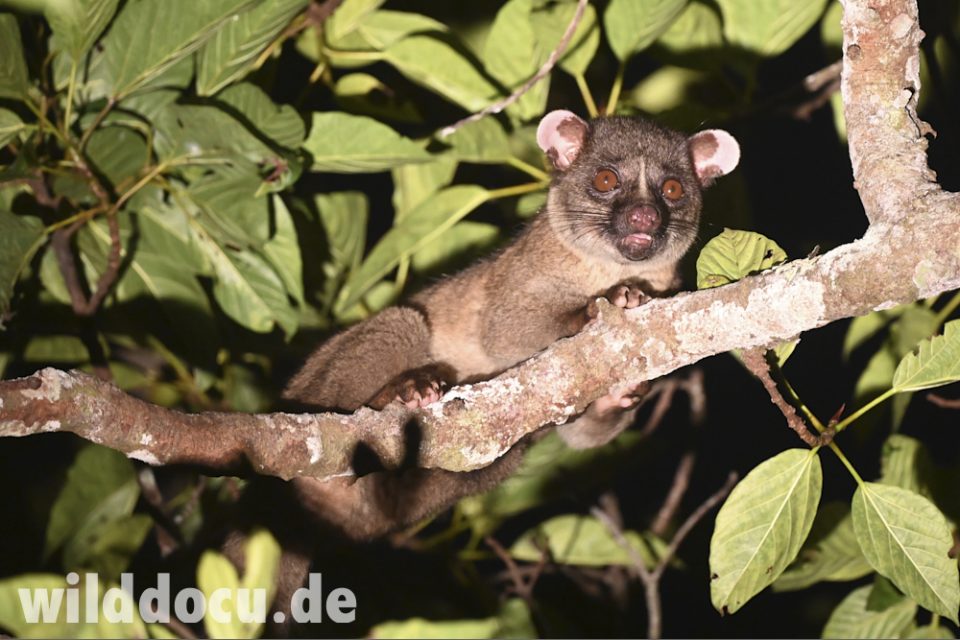
Despite all the commotion, I can still make some very interesting observations. My personal highlight is a Small-toothed palm Civet (Arctogalidia trivirgata) – Streifenroller – that clambers through the treetops above the road, eating figs.
Nest destination: Khao Sam Roi Yot. Khao Sam Roi Yot is a national park in the Kui Buri District, southwest of Bangkok. It covers nearly 100 km2, of which 21 km2 are marine areas. It also includes Thailand’s largest freshwater marsh and some limestone hills.
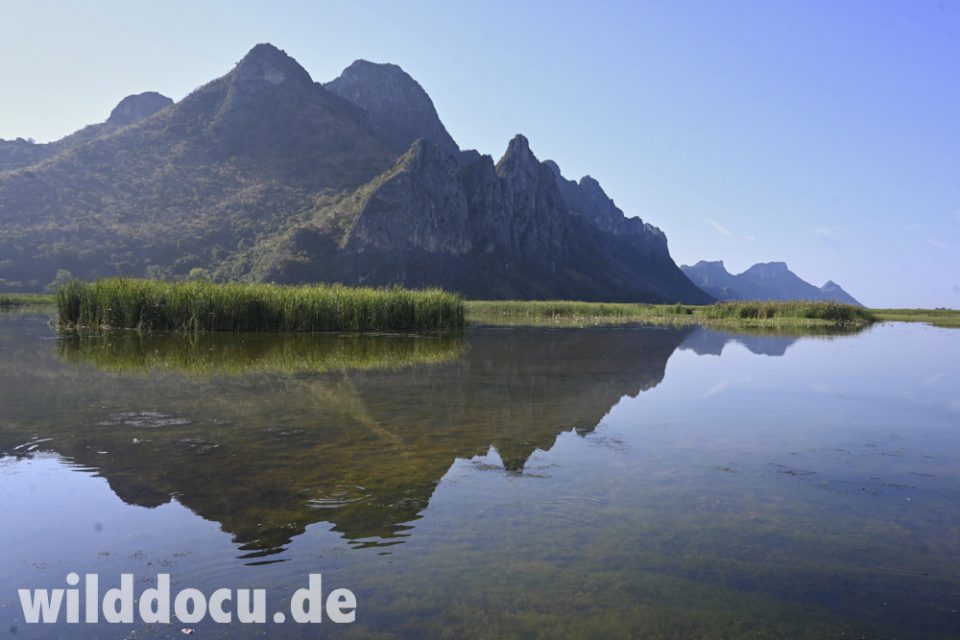
The main reason for my visit is to look for Indochinese Serow. The park is also home to Long-tailed Macaques, Southern Spectacled Langurs, and Irrawaddy Dolphins. Other rare animal species that have been spotted here include the Bengal Slow Loris, Leopard, and Banded Linsang. We check into a homestay (Lung Cha) and book a boat trip for the next morning.
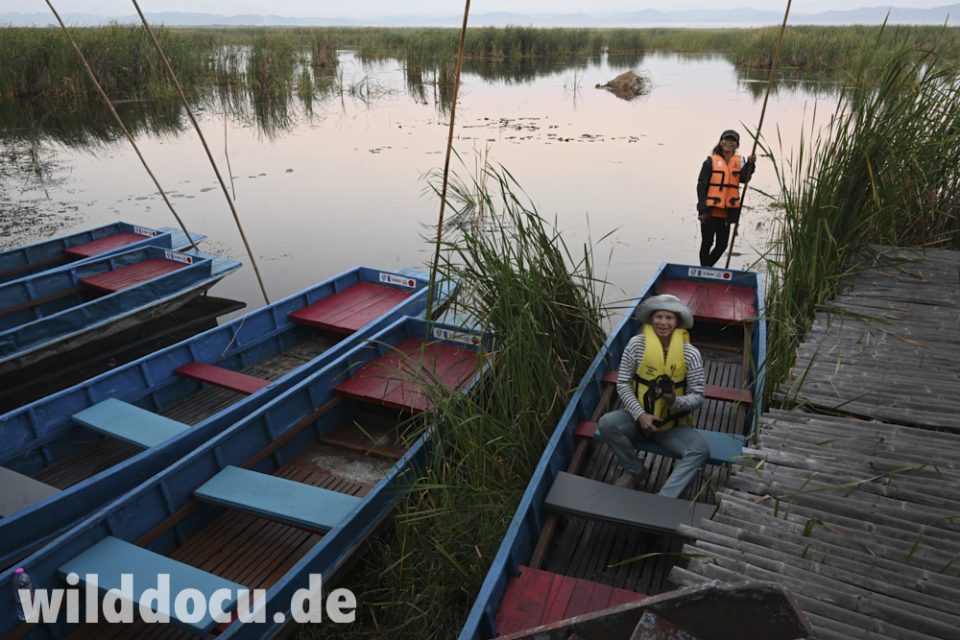
We head towards the limestone cliffs and learn that the guides only get to see the serows every few weeks. We are at sea level; the „serow hills“ are around 500 meters high, densely vegetated, but also interspersed with rocks. This shows once again that serows don’t necessarily need high-altitude mountains, but rather forested areas on steep terrain where they can retreat among inaccessible rocks.
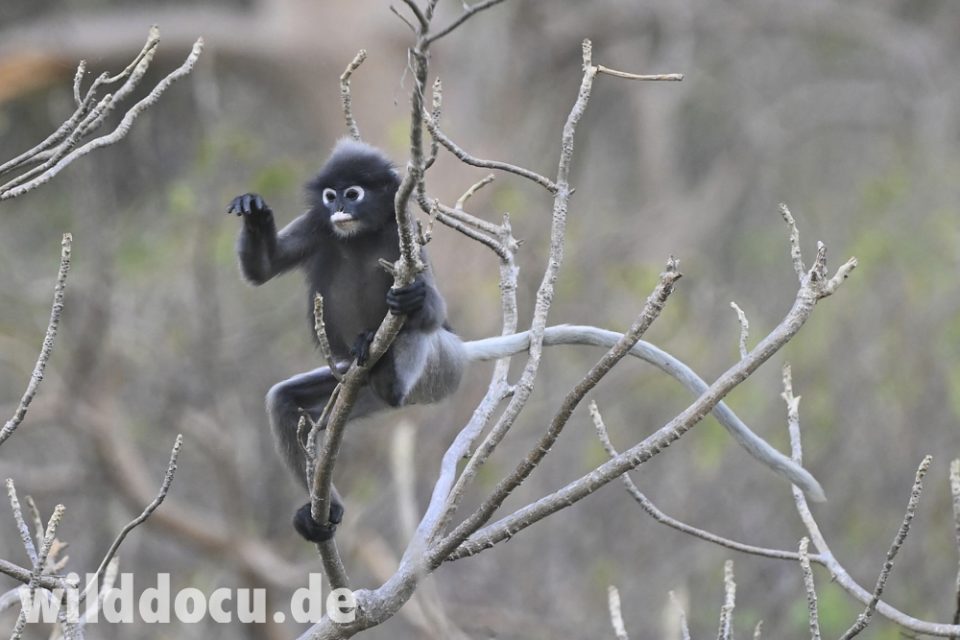
The terrain also suits Spectacled Langurs (Trachypithecus abscurus) – Brillenlangur –, which we can observe from the boat at the foot of the cliffs. According to the range map in the “Handbook of the Mammals of the World” they should be Blond-tailed spectacled Langurs (Trachypithecus obscurus flavicauda) – (kein deutscher Name verfügbar; Gelbschwanz-Brillenlangur wäre angemessen.) However, neither the fur on the tail nor that on the hind legs is yellowish. The individuals here more closely resemble the subspecies obscurus. But according to the distribution map, this subspecies occurs much further south. Taxon and maps need further revision.
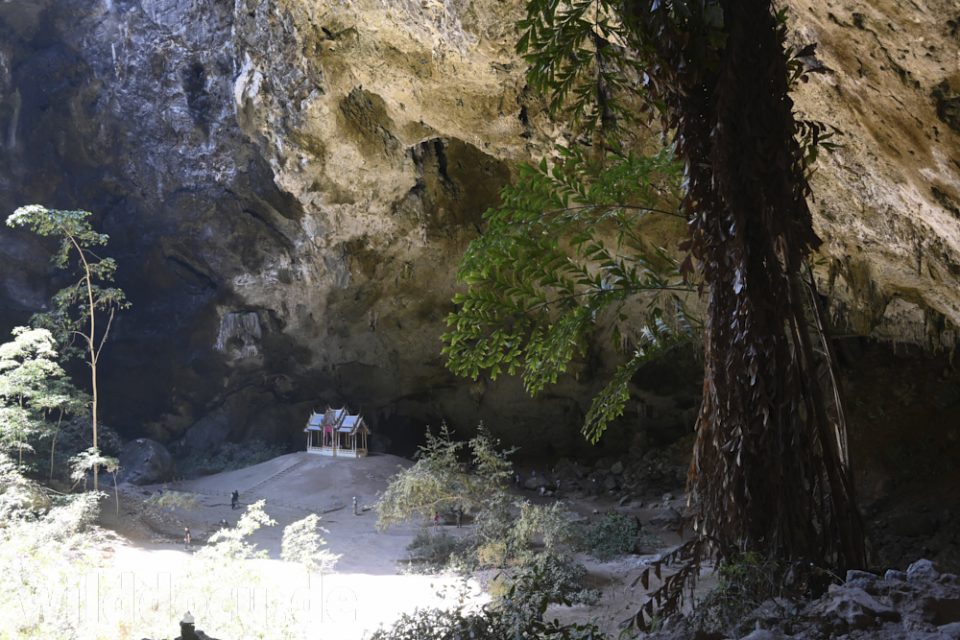
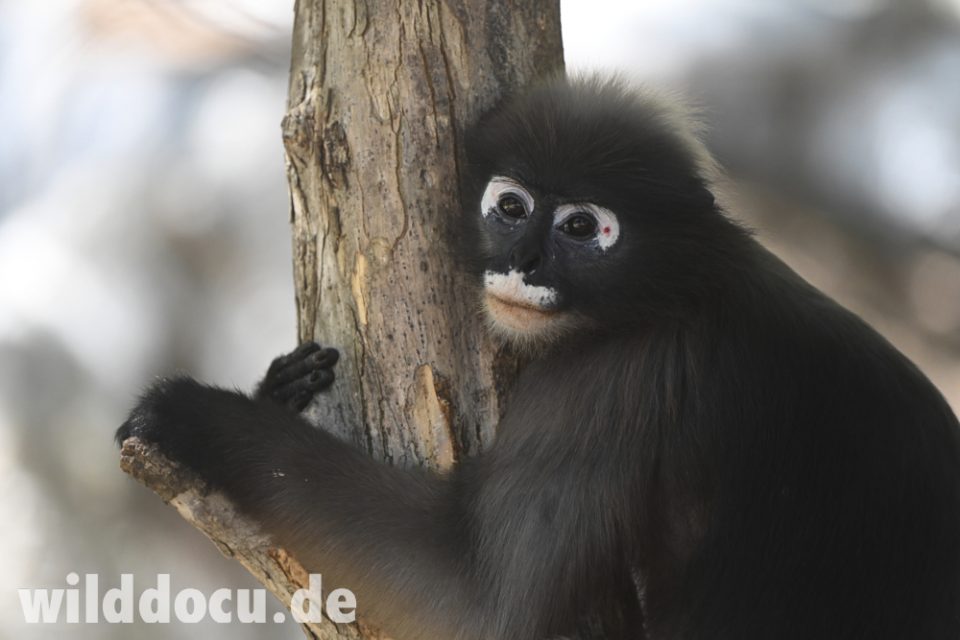
We visit Phraya Nakhon Cave, one of the area’s main attractions. The cave is accessible via a popular hike that starts at Laem Sala Beach. There, we see more Spectacled Langurs, which are very tame – perfect for close-up photos. The cave consists of two chambers. In one is the Kuha Karuhas Pavilion, which is supposedly one of the most photographed places in Thailand. It would be even more amazing if there were bats. I can’t detect any.
We finally reach the Kaeng Krachan area, where we’re staying at the Baan Maka Lodge. I’m absolutely thrilled with the lodge owners‘ concept: the grounds are so spacious and natural that you can already observe animals in various habitats right there.
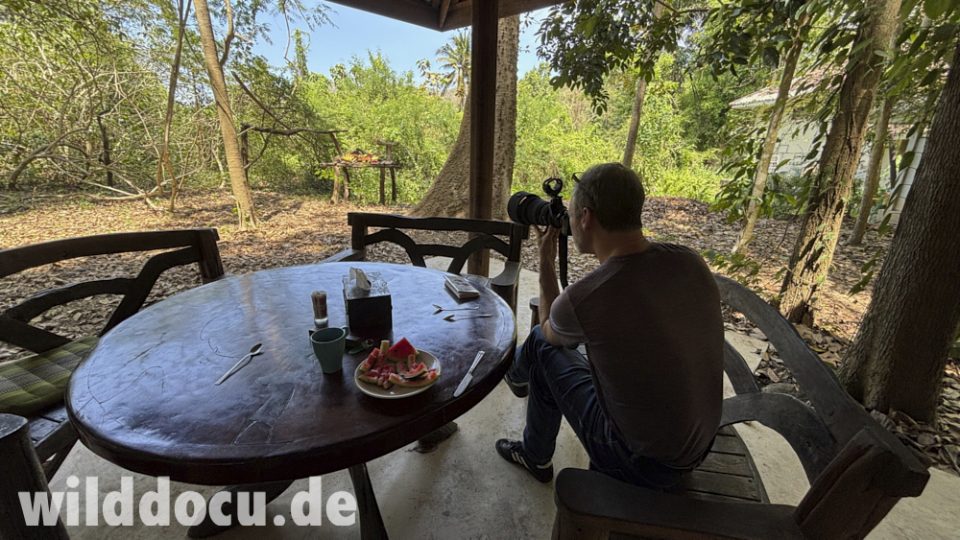
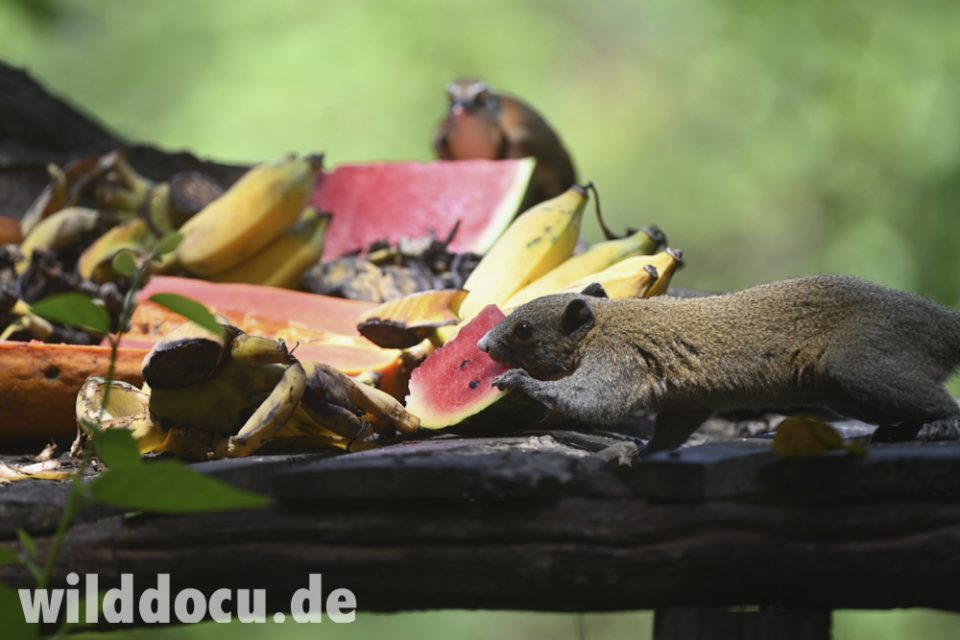
The Lodge people grow their own produce, some of which is served to guests and used to stock feeding stations, so you can spot squirrels, tupaias, and birds right next to your breakfast table.
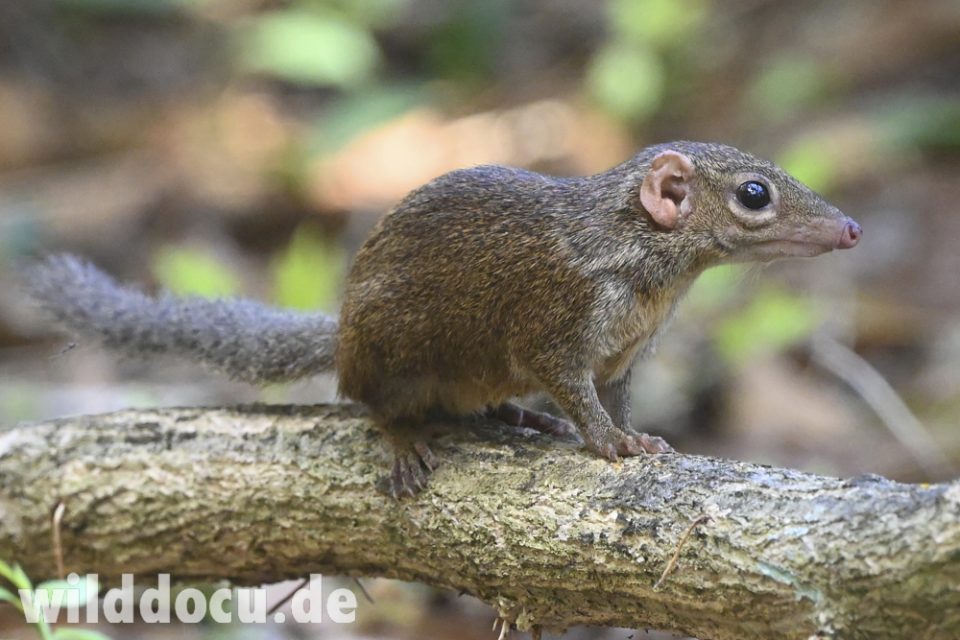
There are also additional wildlife hides in the surrounding area, maintained by locals and bookable through the lodge. Fantastic!
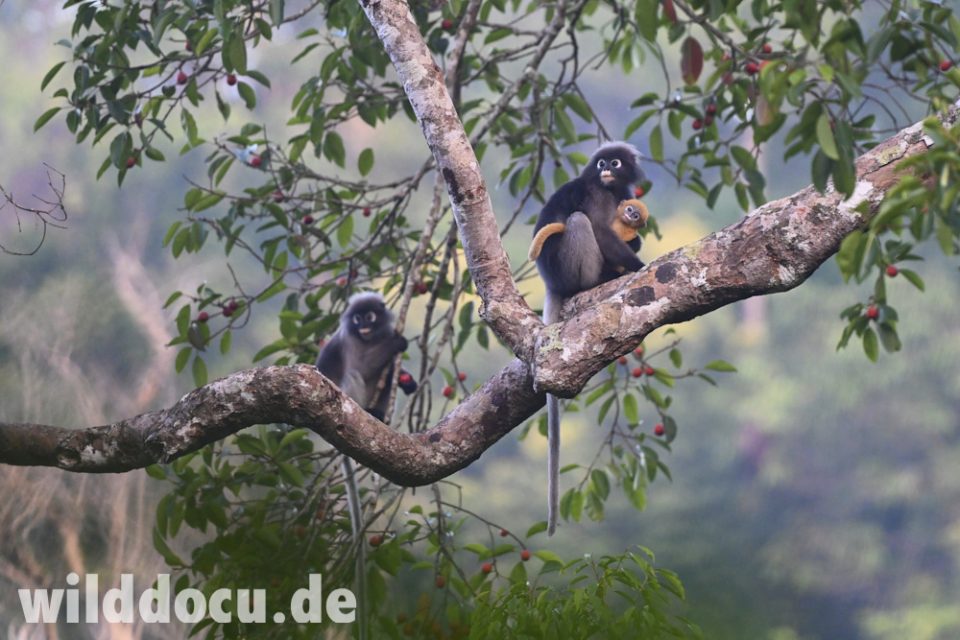
The first trip into the national park itself early in the morning brings us more Spectacled Langurs (Trachypithecus obscurus) – Brillenlangur. (Same thing here: None of the observed individuals appear to be T. o. flavicauda.) Otherwise, the encounters with birds and other wildlife are simply breathtaking.
In the afternoon we visit one of the hides (Lung Sin’s). It’s already fun to sneak along the forest path that leads from the road to the hide. When we arrive, we’re a bit too careless. Of all things, a Lesser Mouse-Deer (Tragulus kanchil) – Kleinkantschil, which is at the top of my species list for today, is already there and immediately flies off when it notices us setting up. No chance to take photos. What a shame!
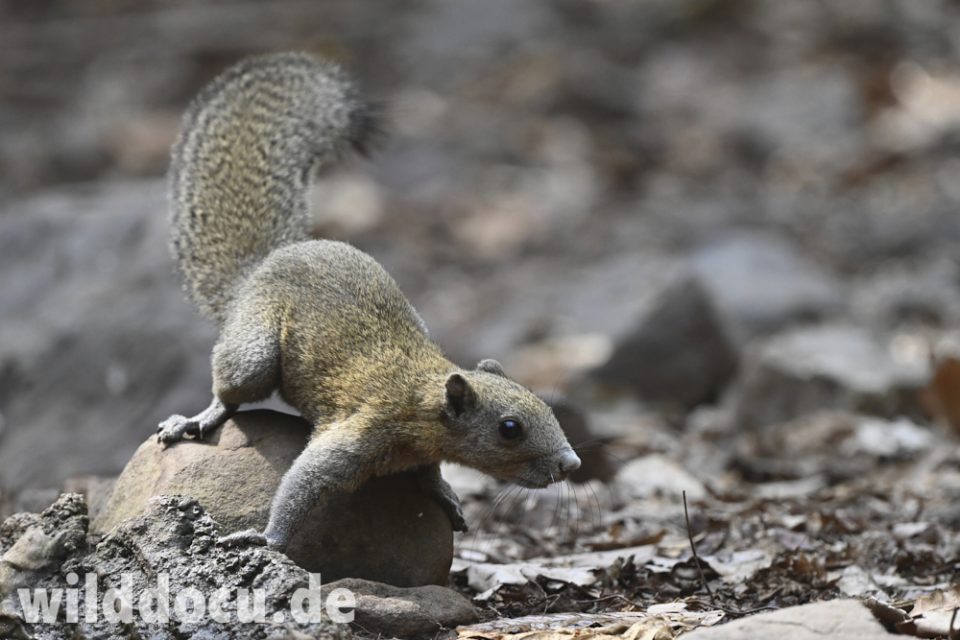
Over the course of three and a half hours, at least three more mammal species can be seen: Grey-bellied Squirrel (Callosciurus caniceps) – Graubauchhörnchen,
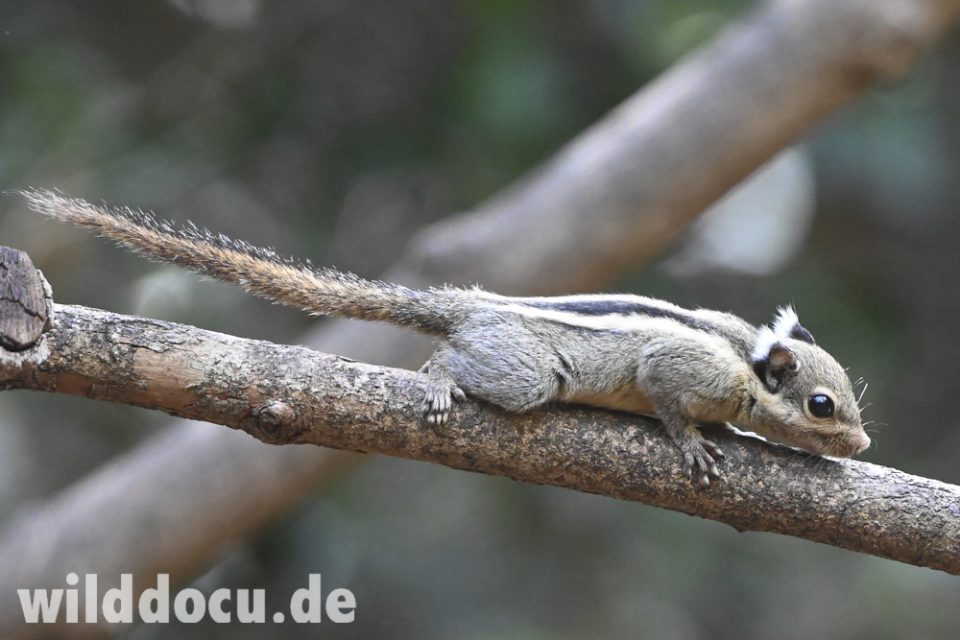
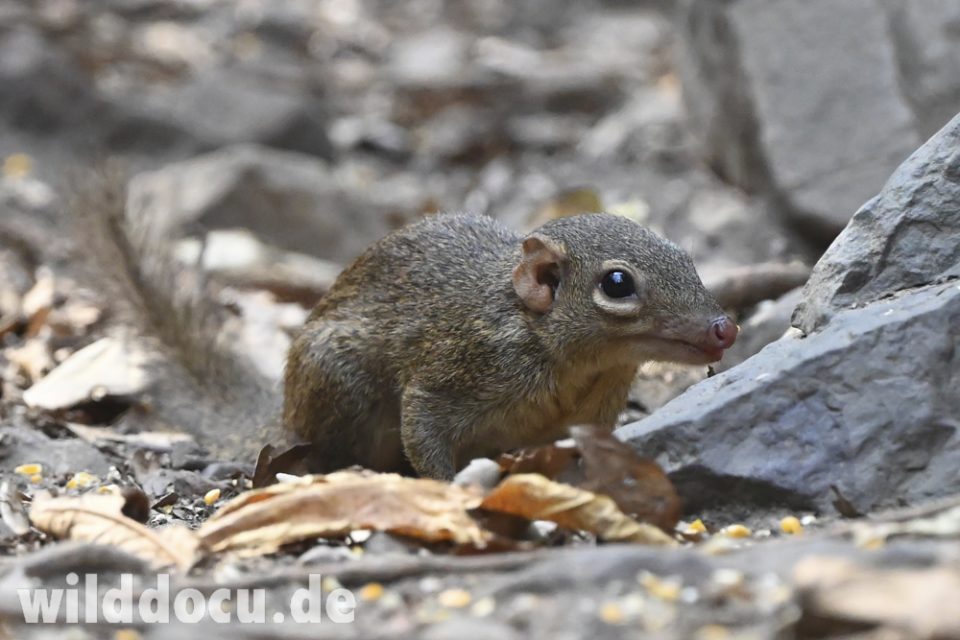
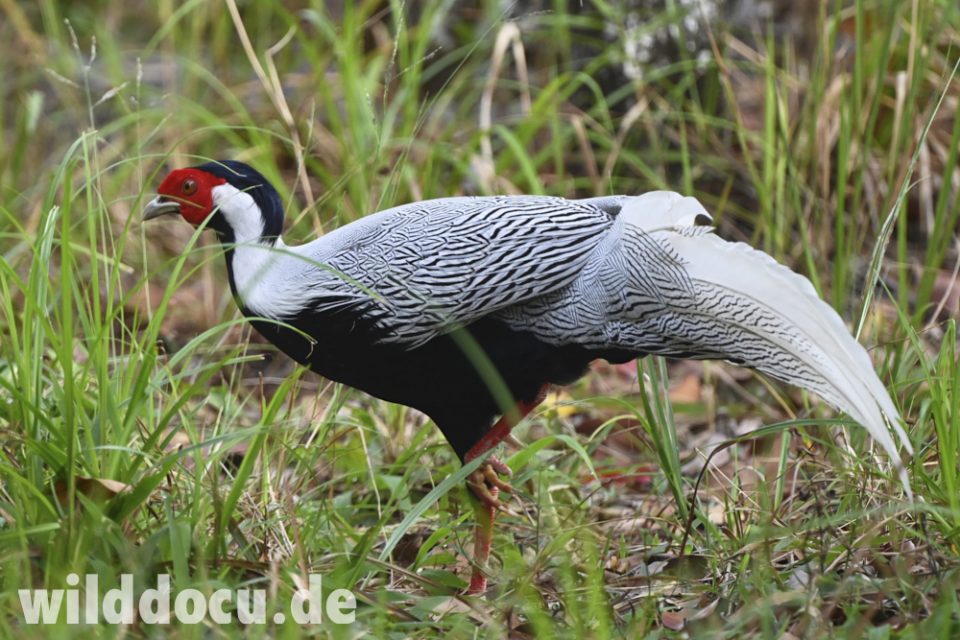
… and so many gorgeous birds:
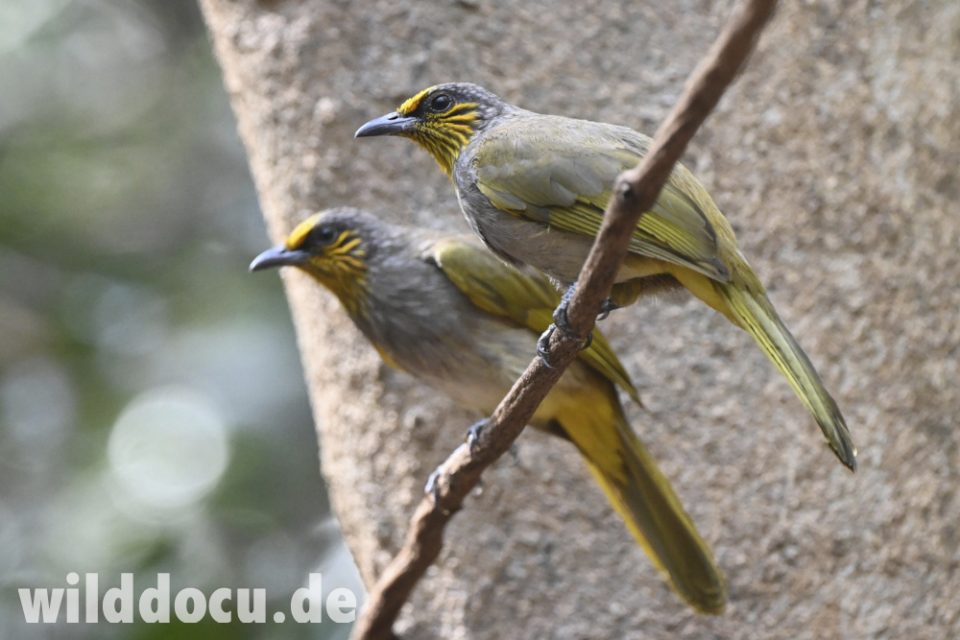
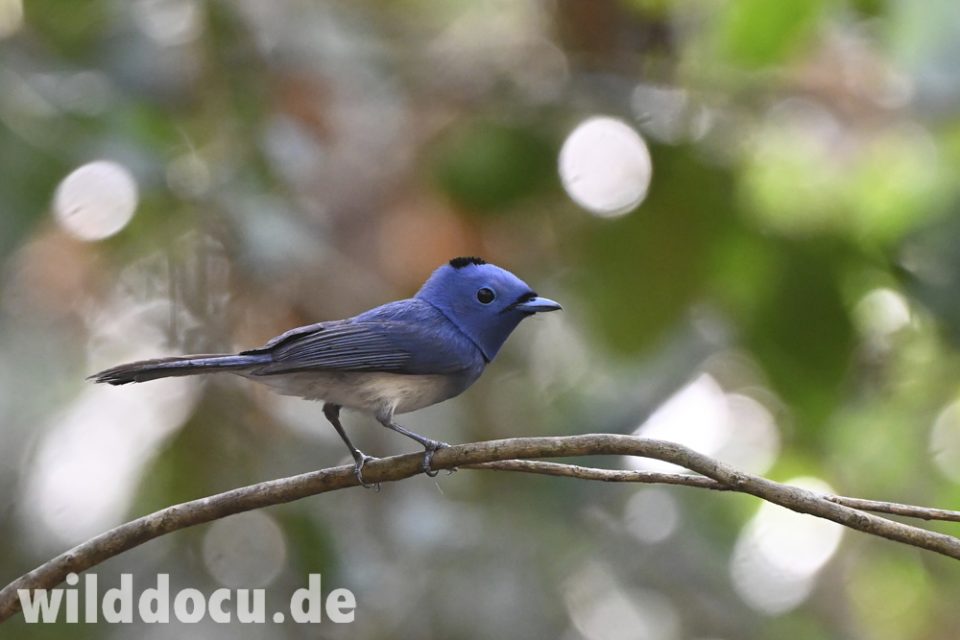
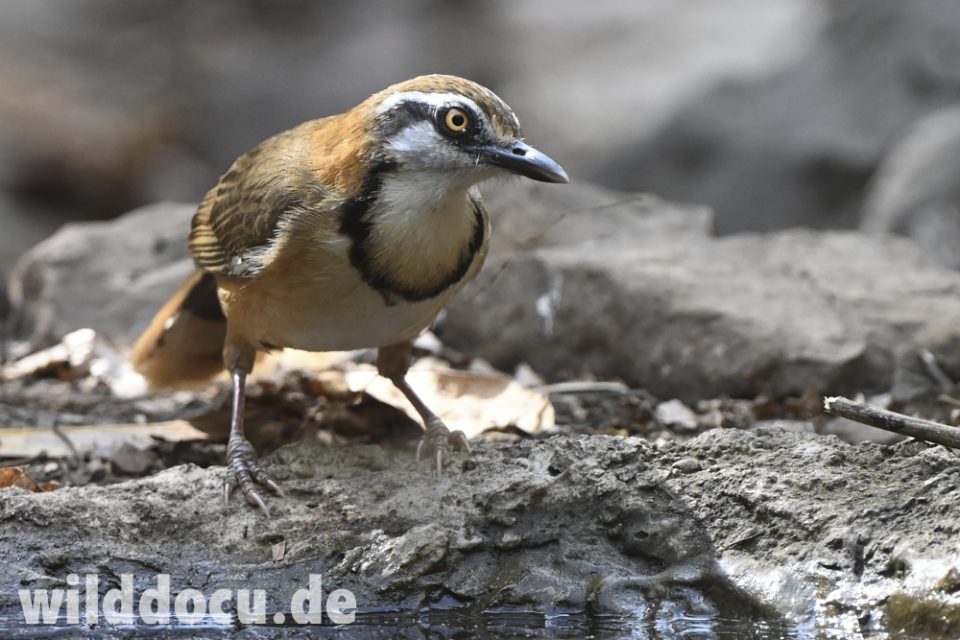
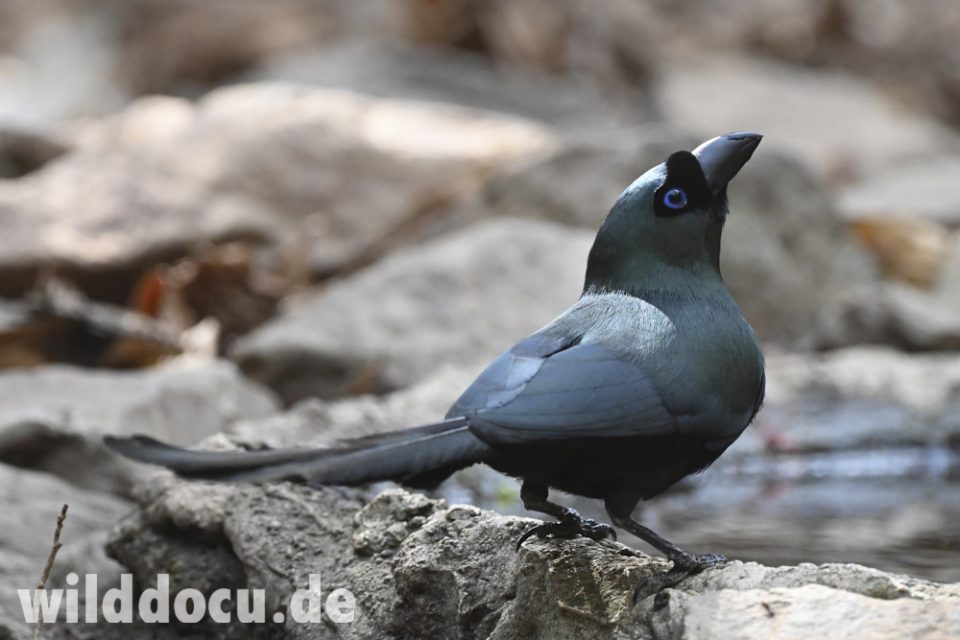
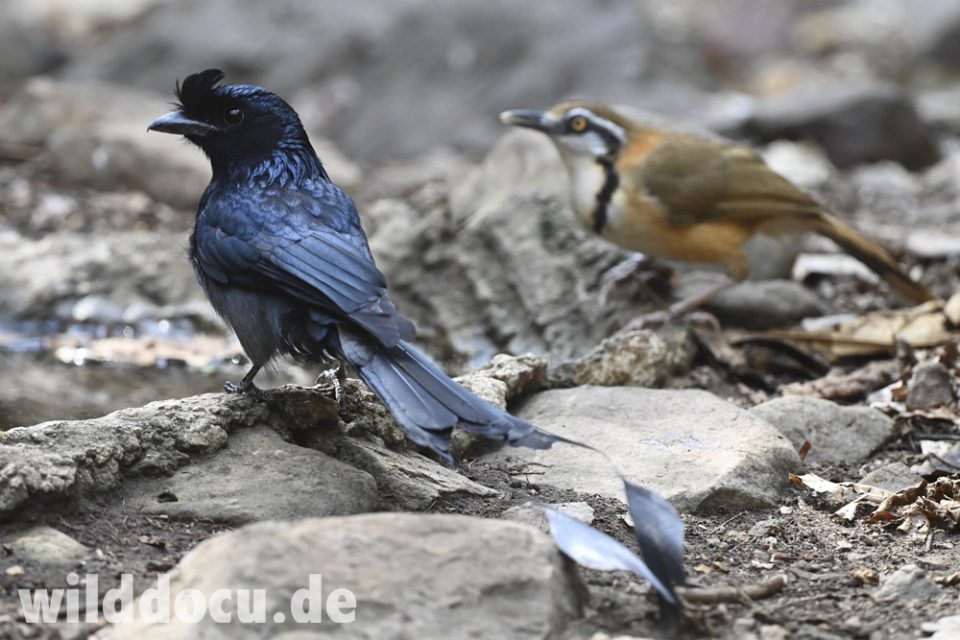
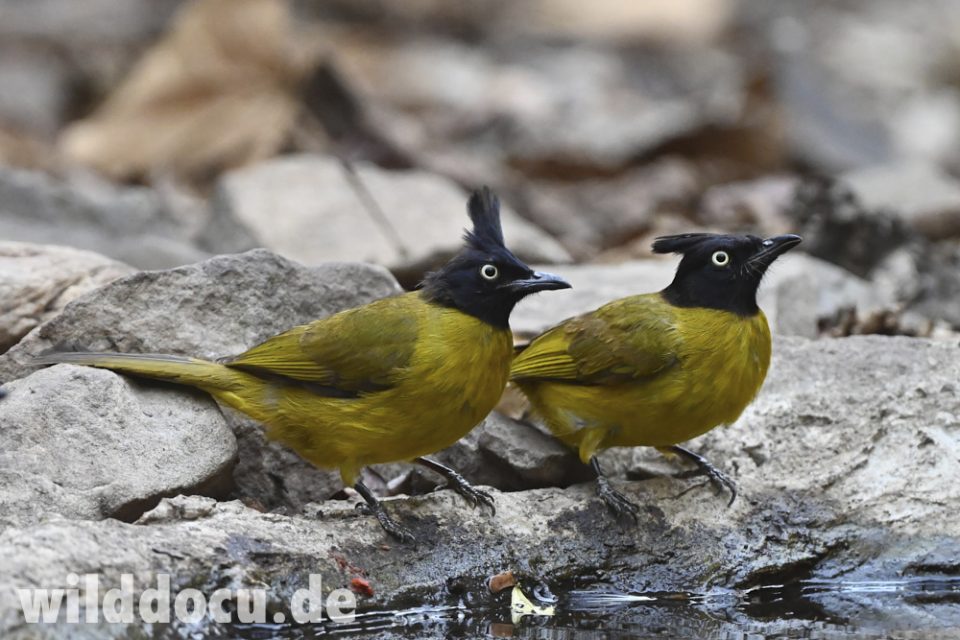
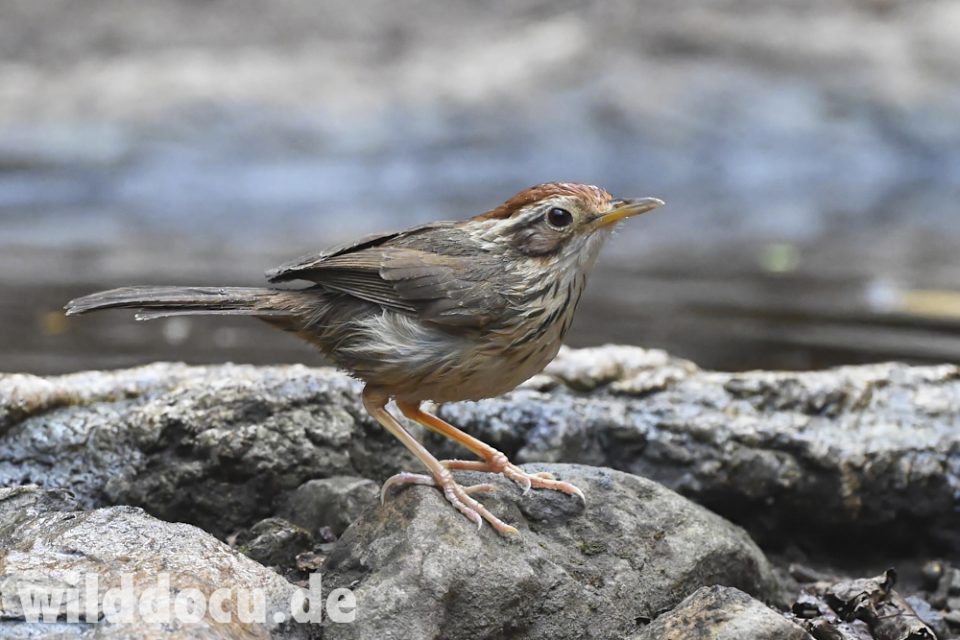
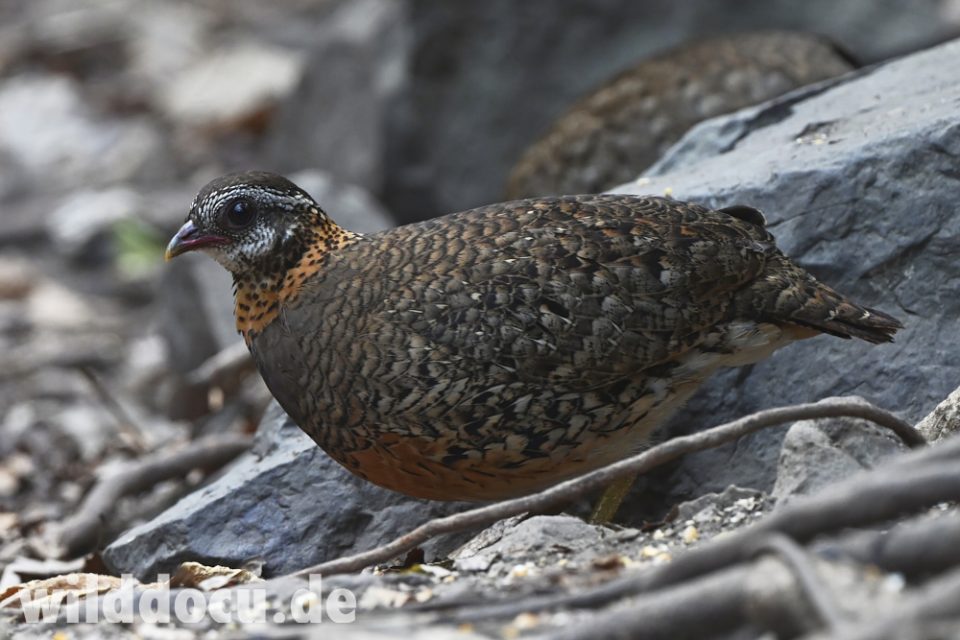
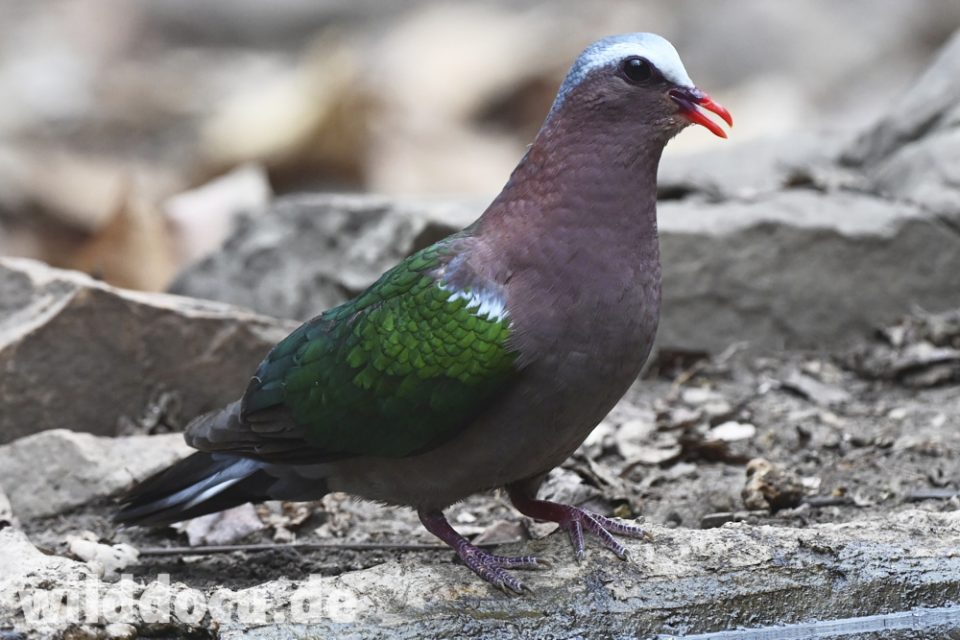
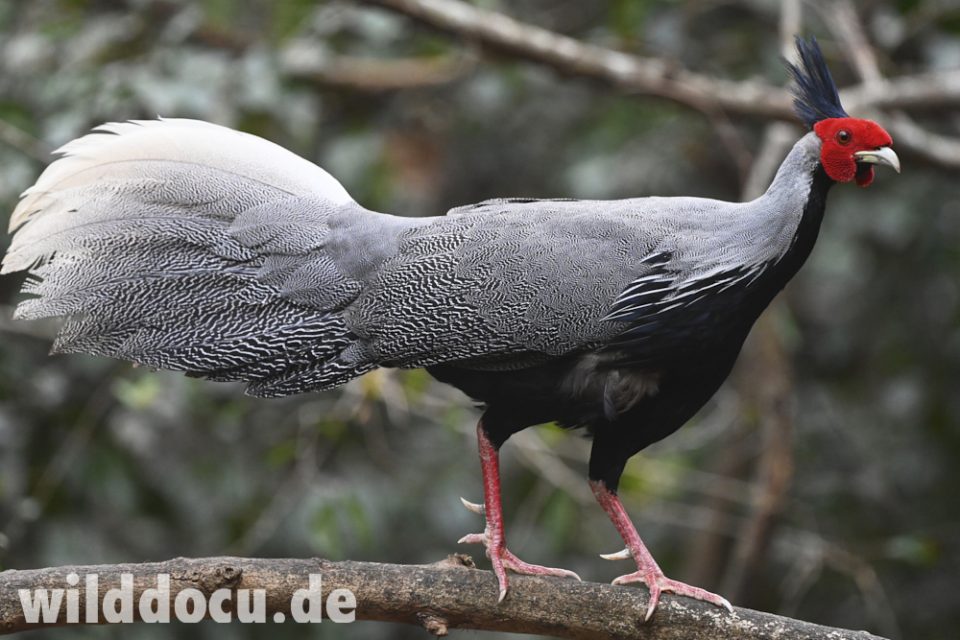
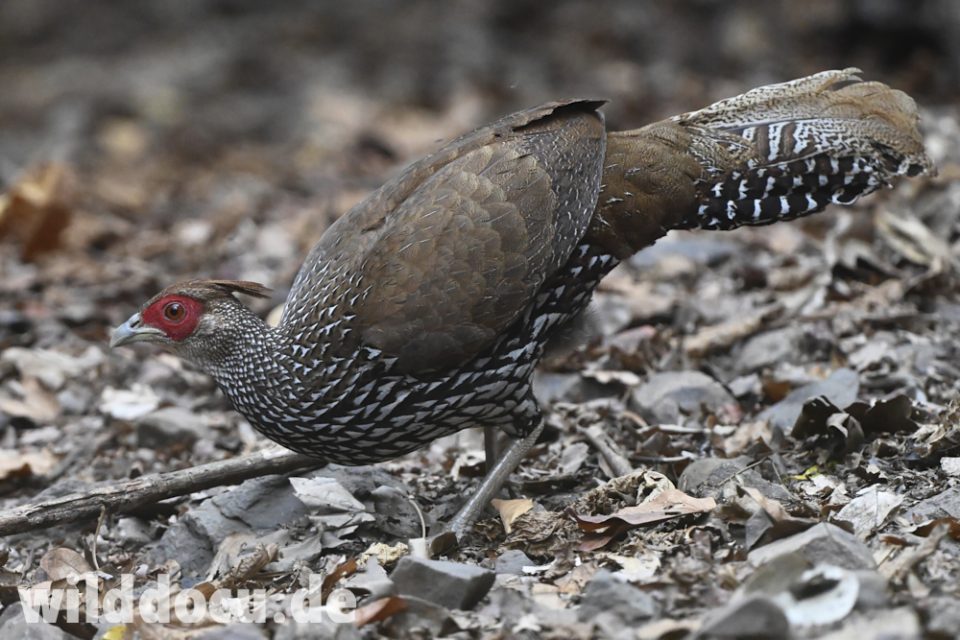
The next day we drive again through the jungle and stop at Ban Krang, the lower campsite. Here we see our second Gibbon species of the trip: the Lar Gibbon (Hylobates lar) – Weißhand-Gibbon.
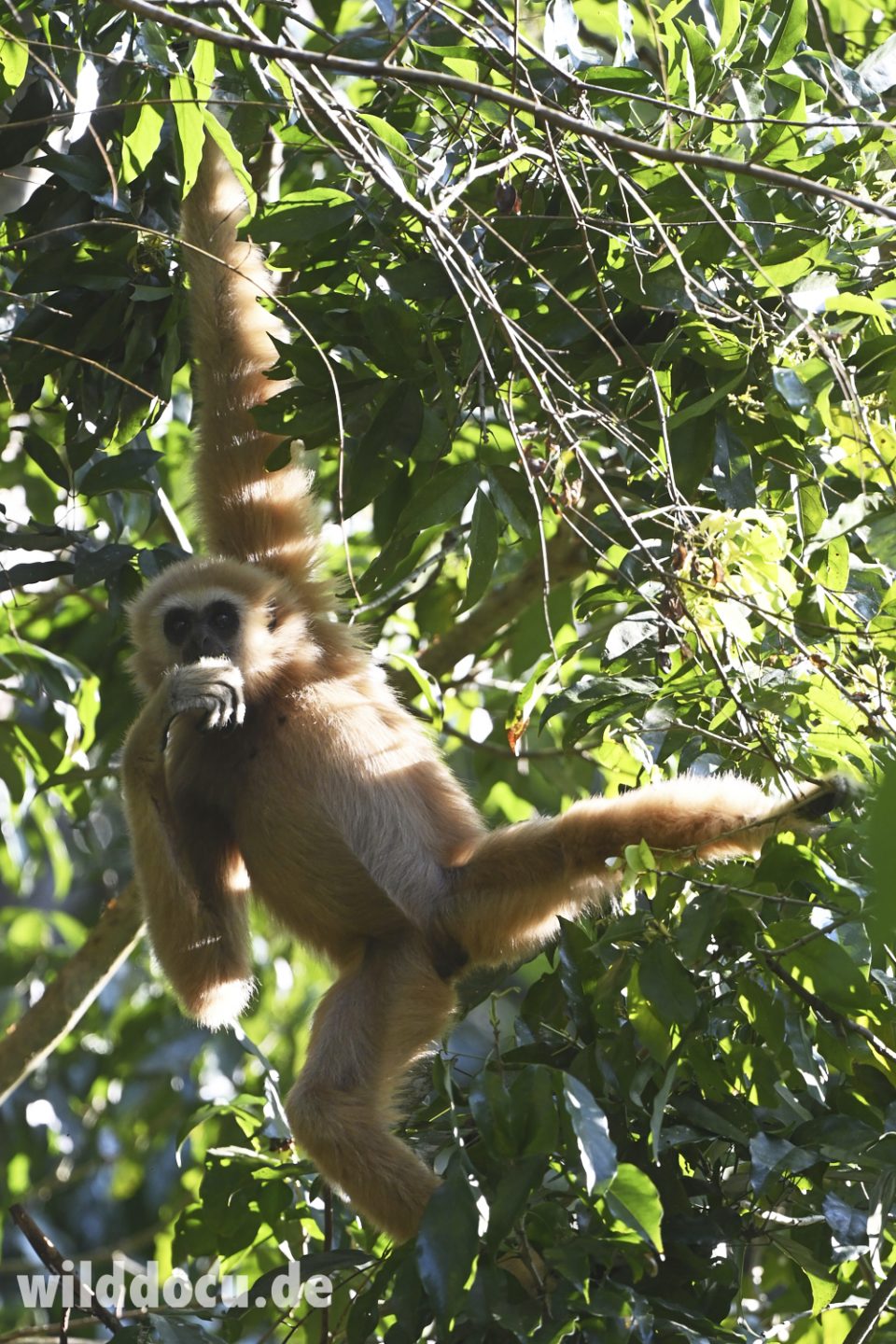
Males and females of gibbon species are often easily distinguished by their fur colour: males are dark (often black), females lighter. However in the Lar Gibbon, light morphs exist. In the subspecies entelloides, males of the light morph look very similar to females of the „typical“ morph.
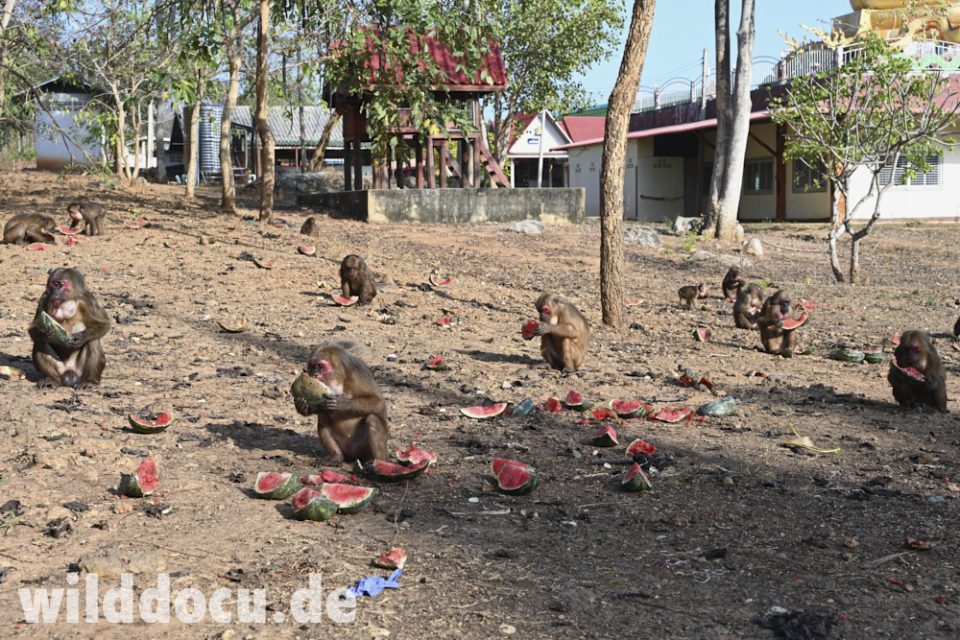
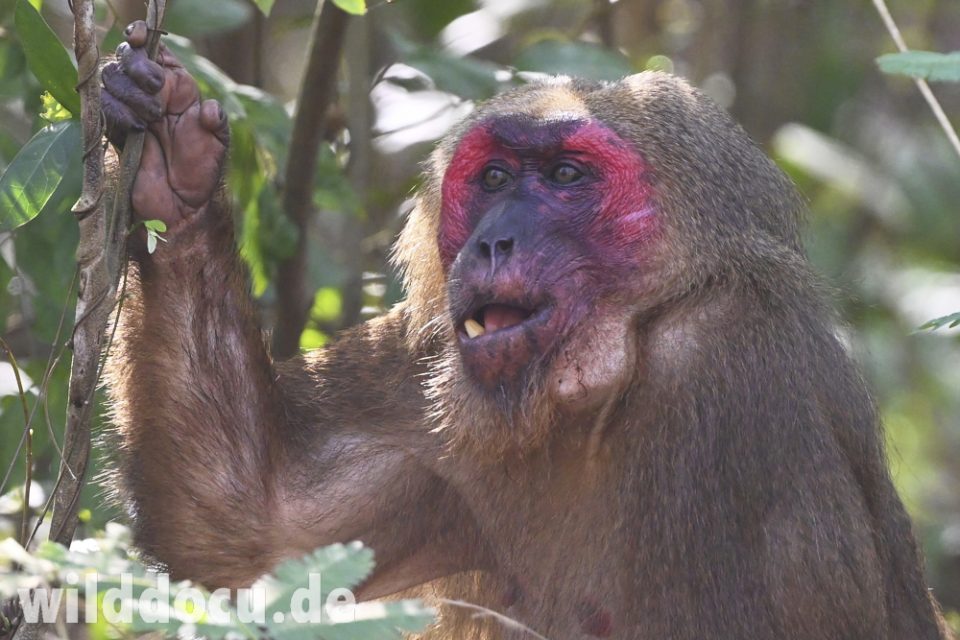
We drive to a place called „Khao Krapuk-Khao Tao Mo Wildlife No Hunting Area“ or simply „Khao Tao Mo“ (12 47 47 N, 99 44 24 E) – 25 minutes from the Ban Maka Lodge to see Stump-tailed Macaques (Macaca arctoides) – Bärenmakaken.
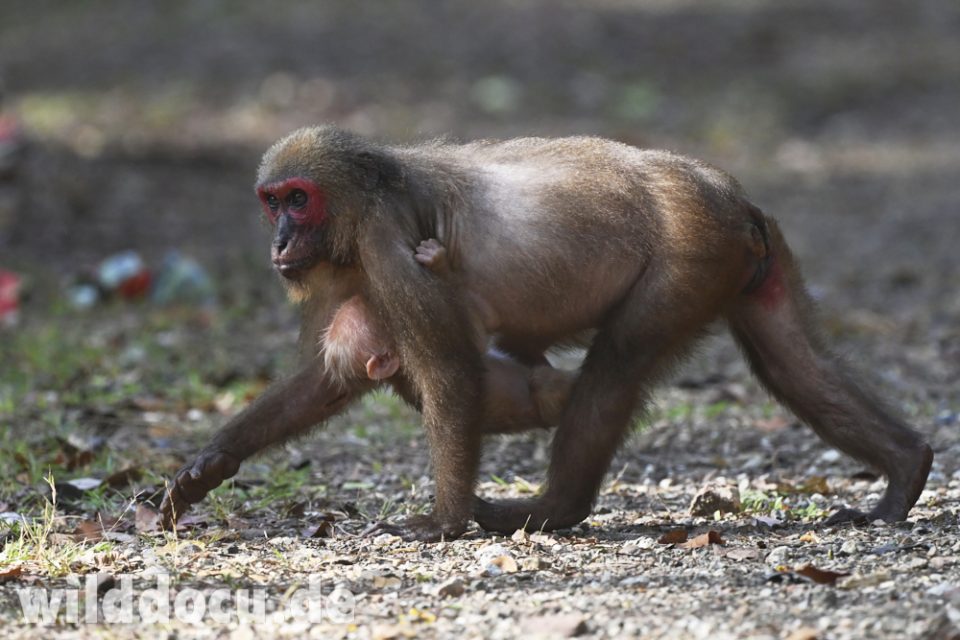
What a spectacular species! They are fed by locals and very easy to observe close up.
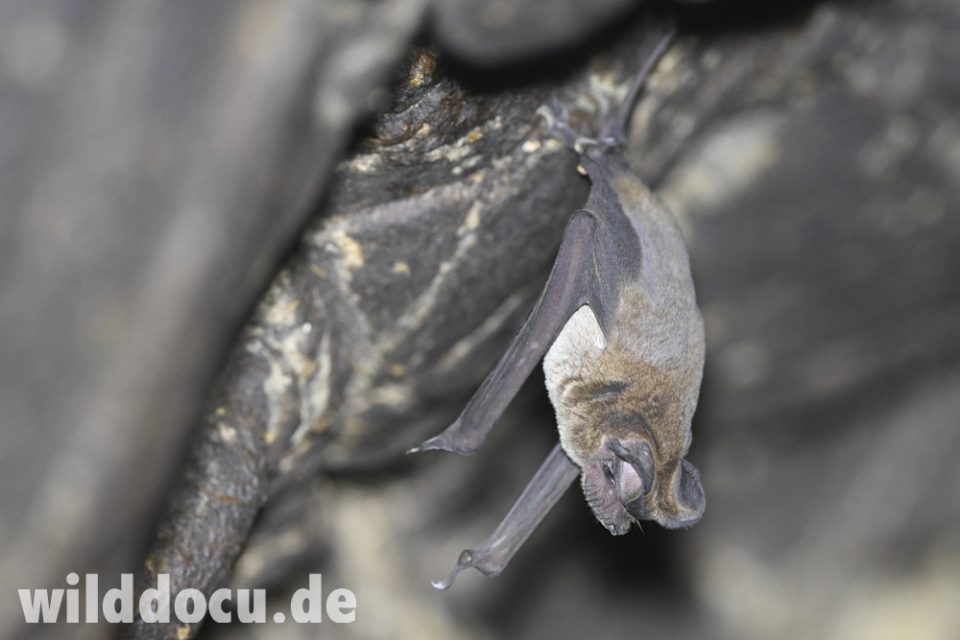
In the area where the bear macaques live, there’s also a cave, the Khao Tao Mo Cave. We decide to check it out. The place has definitely seen better days. There’s an abandoned kiosk. Signs indicate that you once had to pay an entrance fee. But those days are over. We’re the only ones there. As you approach the cave, you can already hear that there’s quite a lot going on inside: Wrinkle-lipped free-tailed Bats (Mops plicatus) – Faltenlippen-Bulldoggfledermaus.
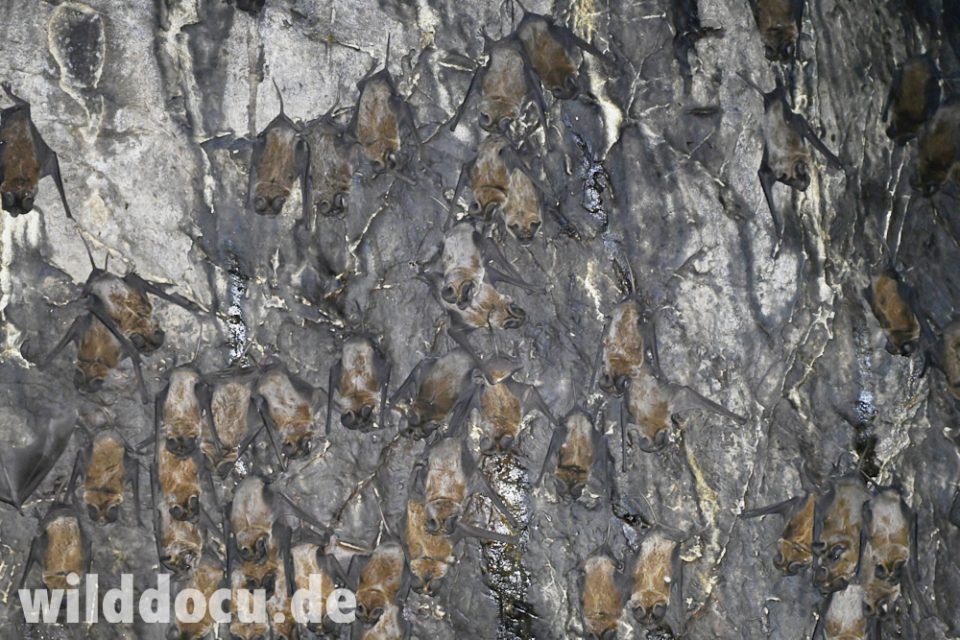
There are many of them, very many. On my first attempt to enter the cave, I have to turn right back: ammonia! The smell of the bat droppings is extremely pungent. I trust my AI, which tells me that staying in ammonia-contaminated caves for more than an hour is fatal, so I tie my T-shirt over my face, breathe shallowly, and then repeatedly go into the cave entrance for just a few seconds at a time.
I feel it gently trickle down my bare torso. I think of bat droppings. It probably is, but when I shake myself off outside, several blood-swollen insects also fall off me: bat bedbugs, as I later identify (Stricticimex sp. / Cimicidae).
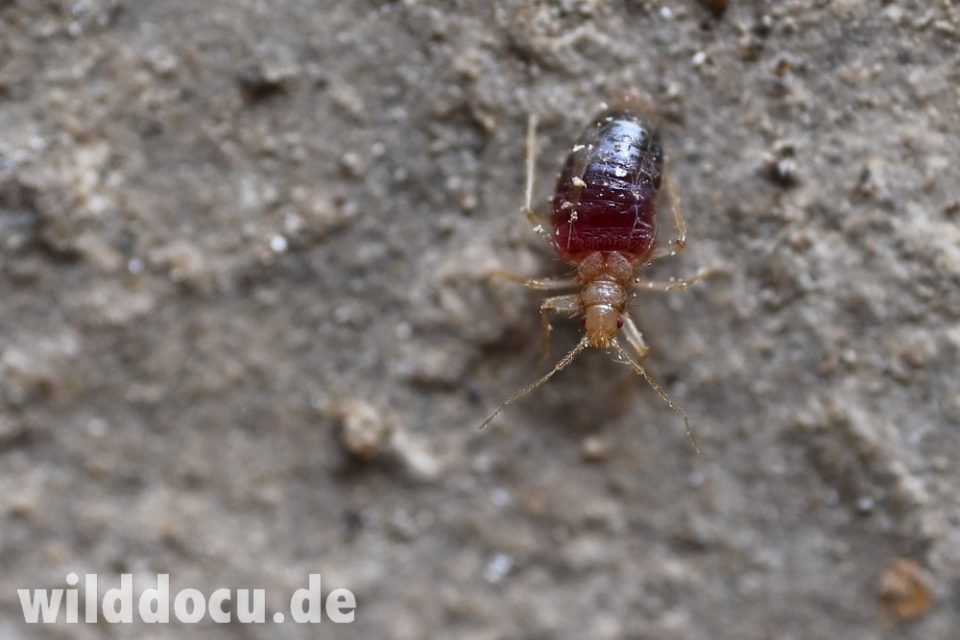
Anja thinks they are bad bugs and I can’t reassure her with the argument that they are already engorged with blood … There are no lasting effects. I remain thrilled. 🙂
We hire a guide and have him drive us through Kaeng Krachan to the Upper Camp, Phanoen Thung.
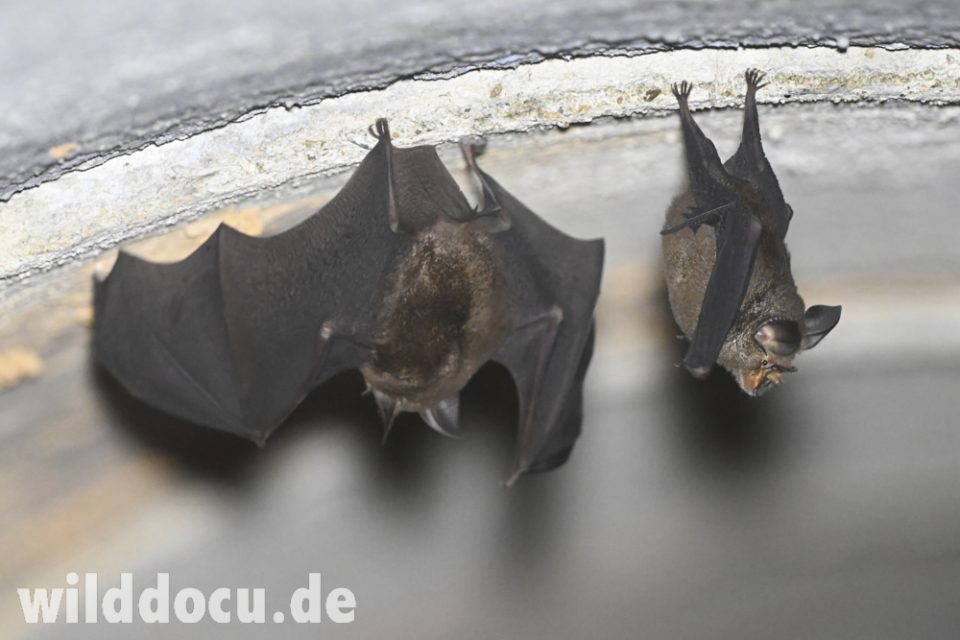
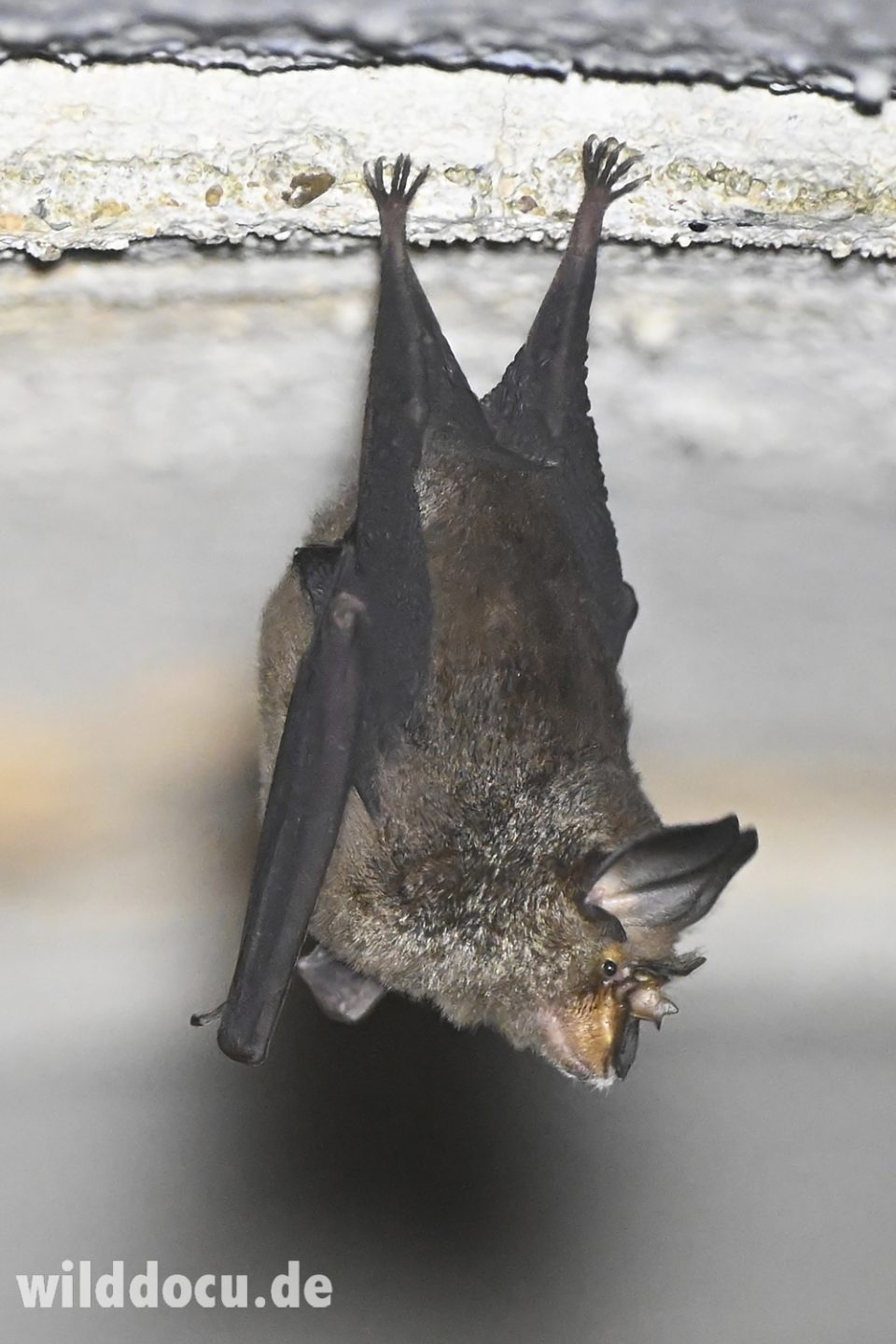
We stop at the culvert at kilometer 27 to check for bats. According to the information provided by Jon Hall’s 2025 Thailand report and novataxa.blogspot.com the species we find should be Mountain Horseshoe Bat (Rhinolophus chutamasae / monticolus) – Gebirgs-Hufeisennase.
We explore the vicinity of the campsite. A Great Hornbill (Buceros bicornis) – Doppelhornvogel – introduces itself.
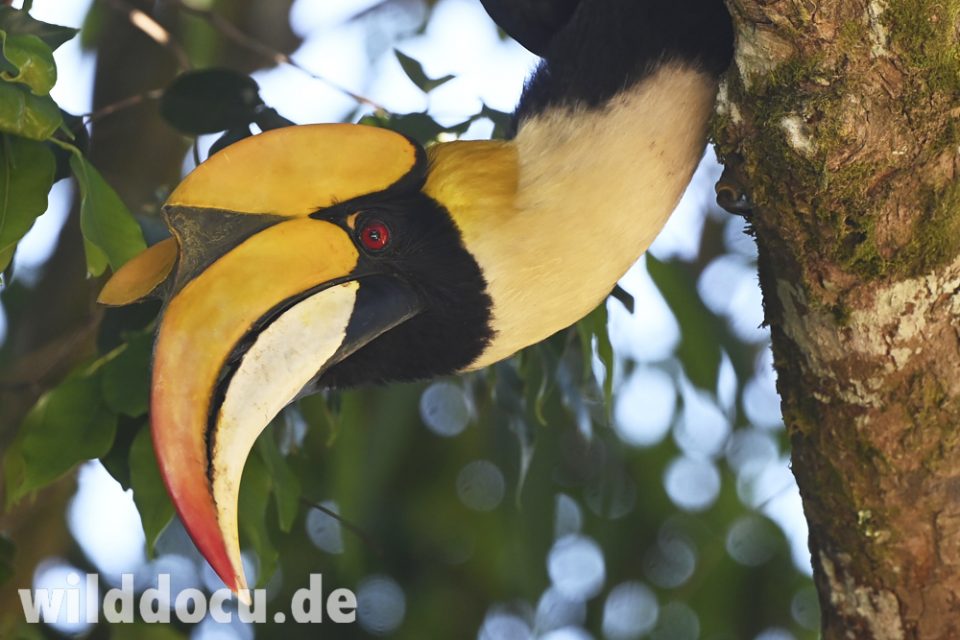
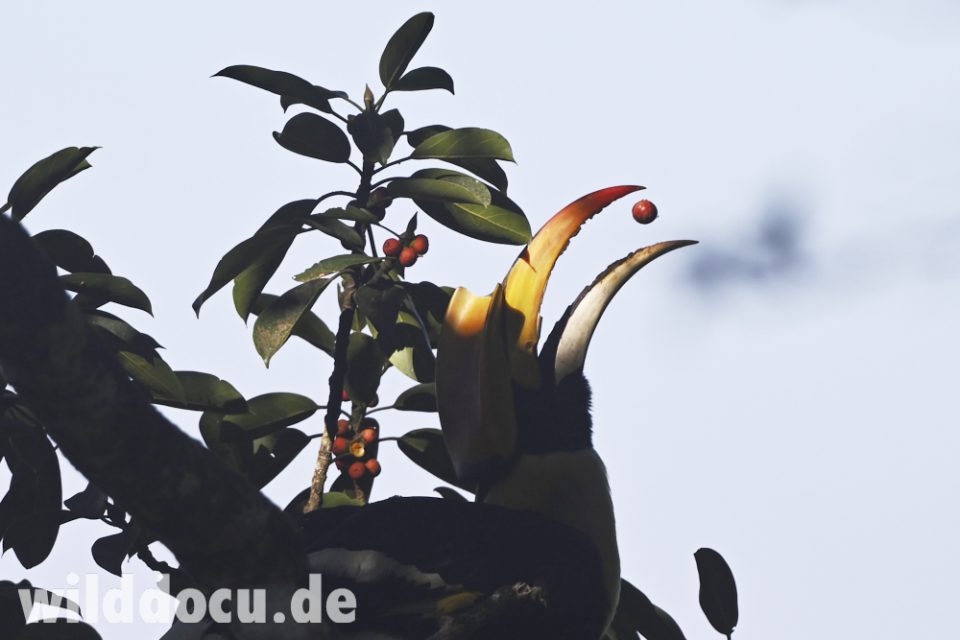
It is not only one of the world’s most charismatic birds, but also an excellent guide, showing us where fruit is ripe in the area so we are well prepared for mammal watching at night.
Around noon we have our first encounter with a Sun Bear (Helarctos malayanus) – Malaienbär.
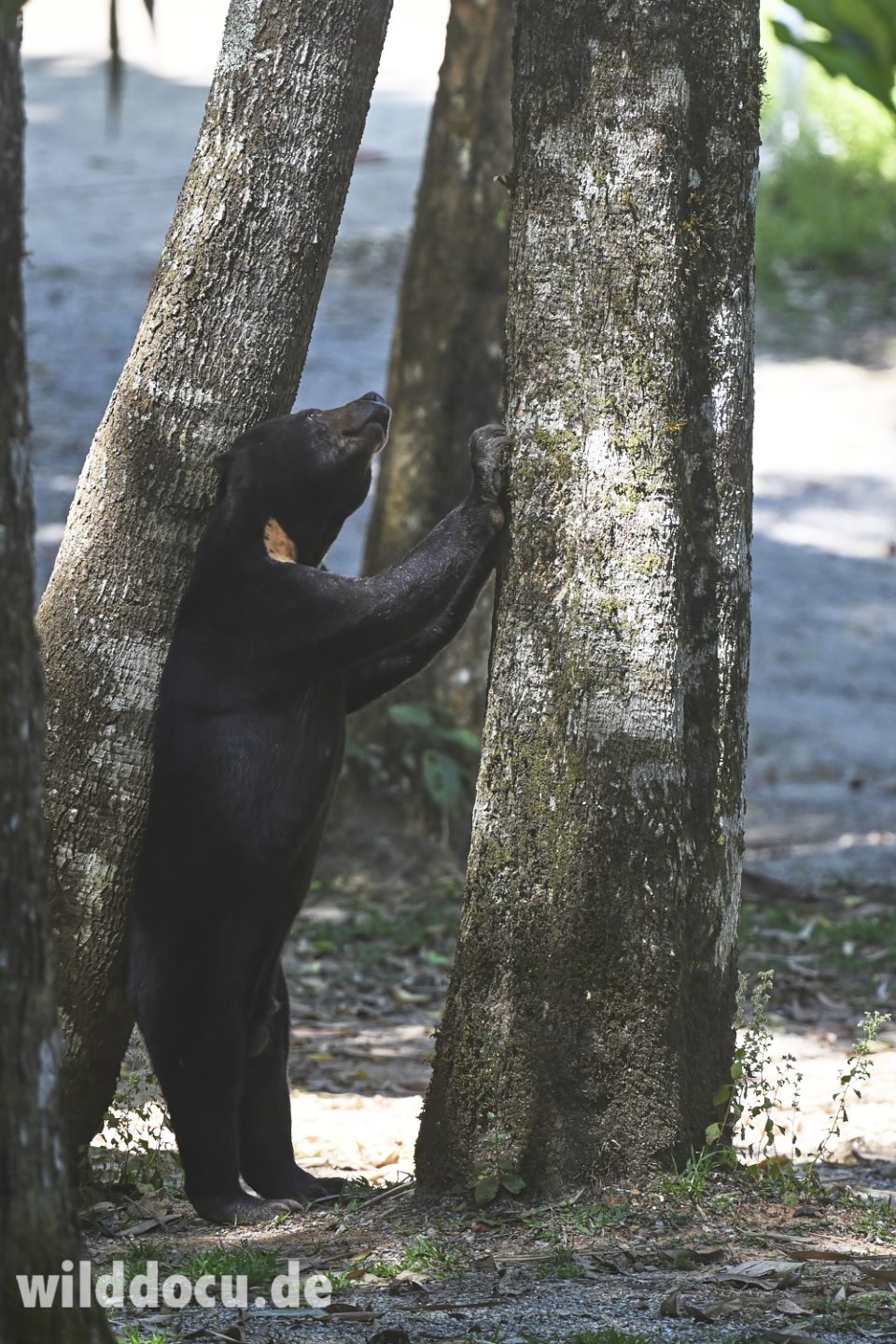
As we later learn, he had already been behind the restaurant kitchen that morning, looking for scraps. Now he is on his way back to the forest, using the forest road. He feels safe. I follow him at a distance of 20 to 30 metres.
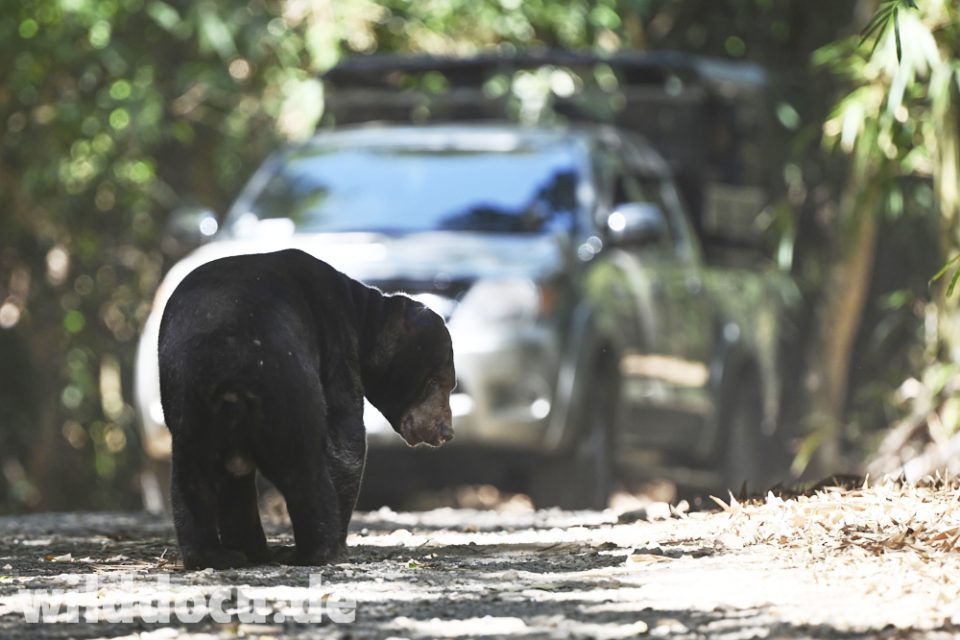
There is a moment when a car approaches, and the bear feels wedged between it and me. He is clearly annoyed. You can easily tell because he repeatedly stamps the ground with both front paws. He leaves the road and takes a detour through the forest. In the evening, it’s bear time again. Check my other entry, to read the whole sun bear story.
The Sun Bear is actually the star of the Phanoen Thung campsite, but he’s also performing as the opening act tonight. Many other stars are on the program. There’s so much to observe — and puzzle over:
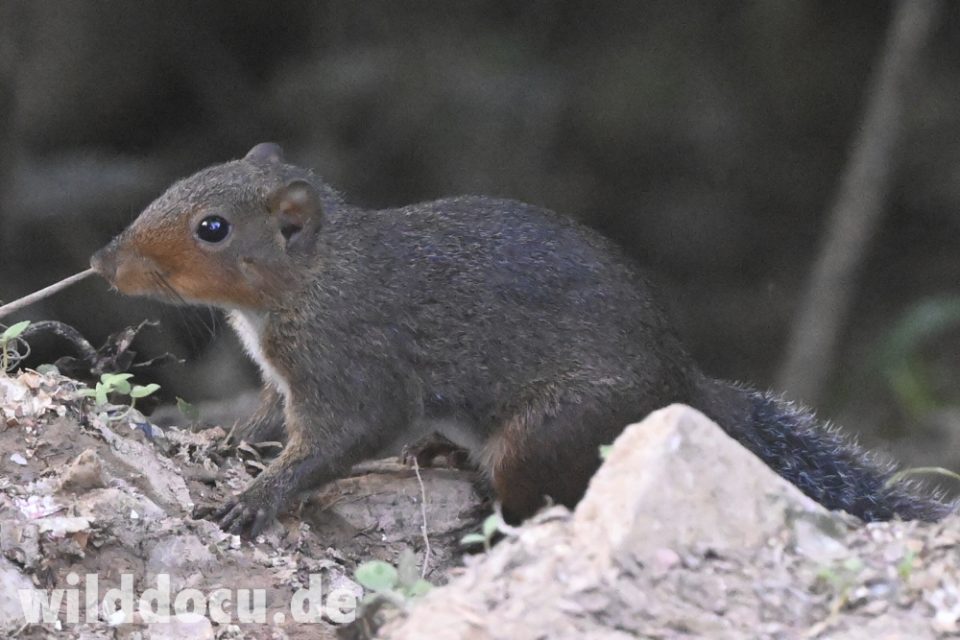
A supposed Asian red-cheeked Squirrel (Dremomys rufigenis) — Echtes Rotwangenhörnchen — gives me pause. It’s very shy and difficult to photograph. On closer inspection, the reddish cheeks become apparent. According to the distribution map, it can only be the aforementioned species. However, the accompanying text in the Handbook of the Mammals of the World states „lack of red thigh patches.“ Looking closely at the photo you notice that the thighs are indeed red or orange. According to the Handbook, this characteristic is only found in the Red-hipped Squirrel, which, however, is found much further east and not in Thailand.
I usually strive to take detailed and aesthetically pleasing photos, but of course, that doesn’t always work out. However, I would never delete a bad photo if it’s expressive. This one certainly is:
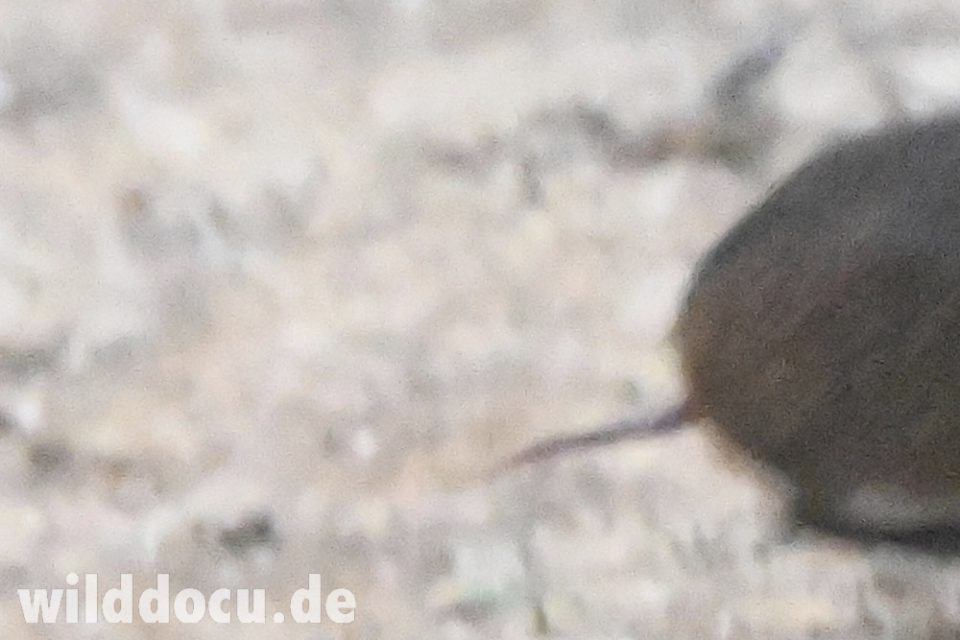
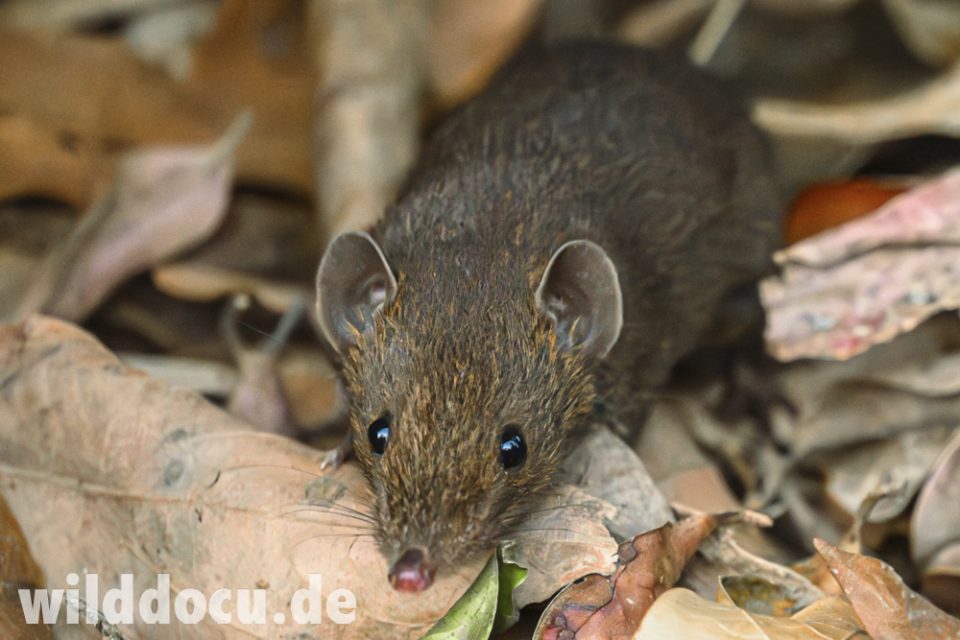
I spent half the night trying to get this animal onto my memory card. The shooting conditions are clearly poor, and I can’t change them. The animal is extremely shy and incredibly fast. And here is what the photo shows: The animal has a short tail. The upper parts of its fur are rusty brown, the underparts are lighter. What the picture doesn’t show, but I could see, is a pointed snout. It is — ta-da! — a Northern short-tailed Gymnure (Hylomys peguensis) – Nördlicher Kurzschwanz-Rattenigel. It was previously recognised as a subspecies of H. suillus, but is now regarded as a full species. At home I find the photo below. It gives you an idea why gymnures are related to hedgehogs.
And the show goes on. Next on the stage are Malayan Porcupines (Hystrix brachyura) and this Large Indian Civet (Viverra zibetha) — Große Indische Zibetkatze.
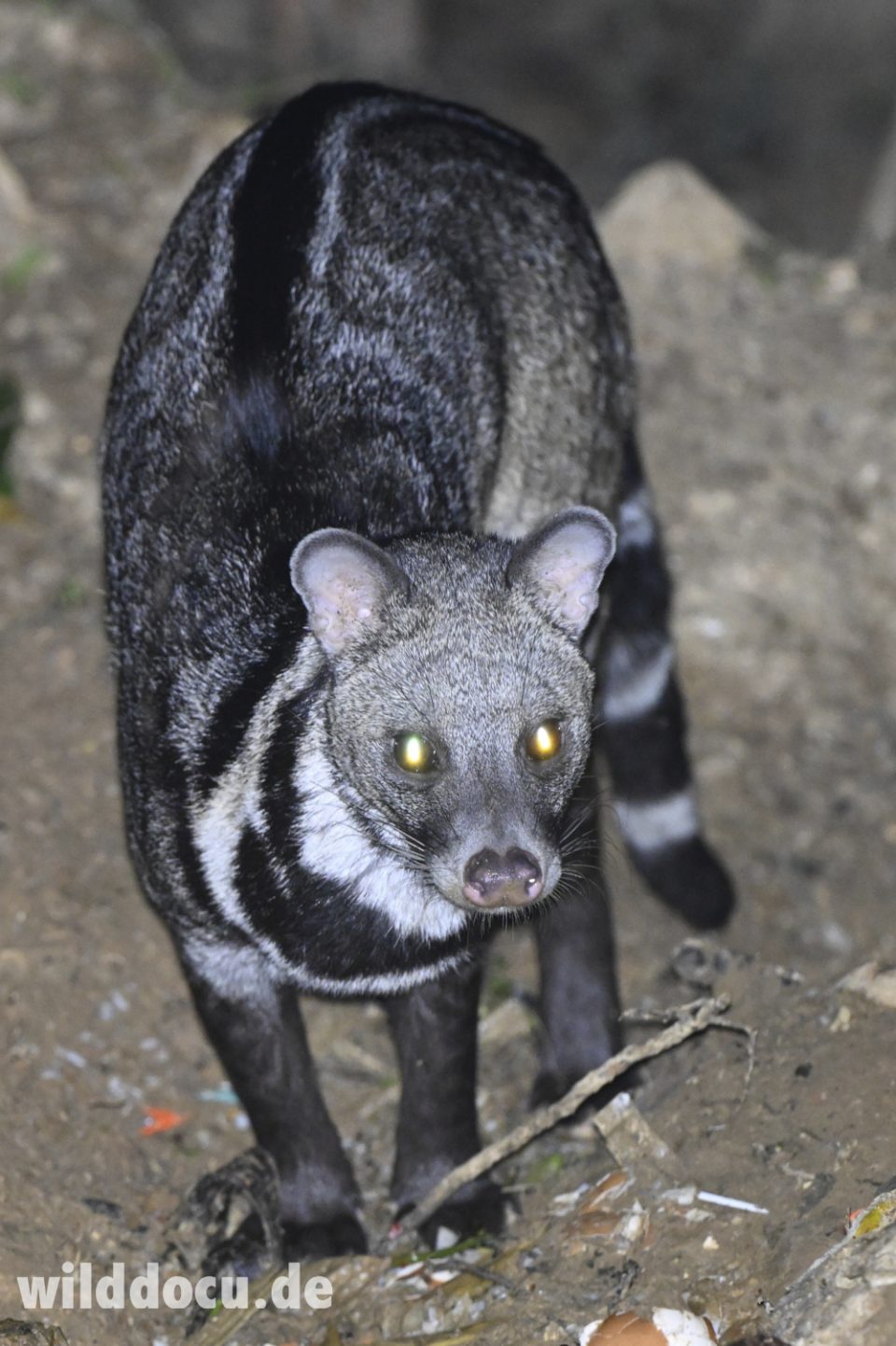
It is an extremely beautiful specimen. Often their coat “is pale gray or fawn, with indistinct dark spots or a mottling of black or dark brown on the flanks” (HMW).
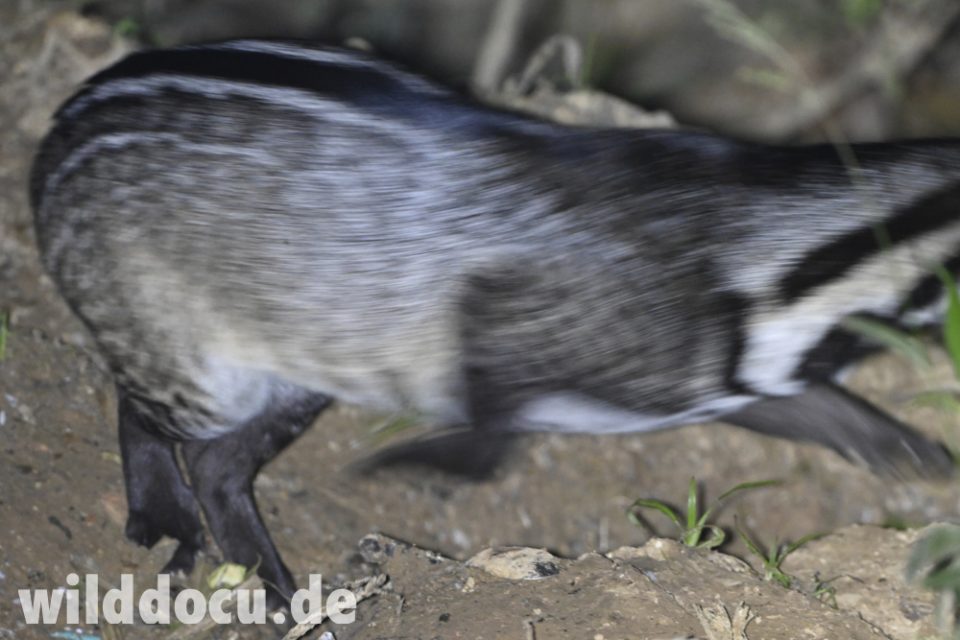
In „my“ specimen, two almost white lines run parallel to the back line in the rear part of the body, which harmonises very nicely with the black and white banding of the neck.
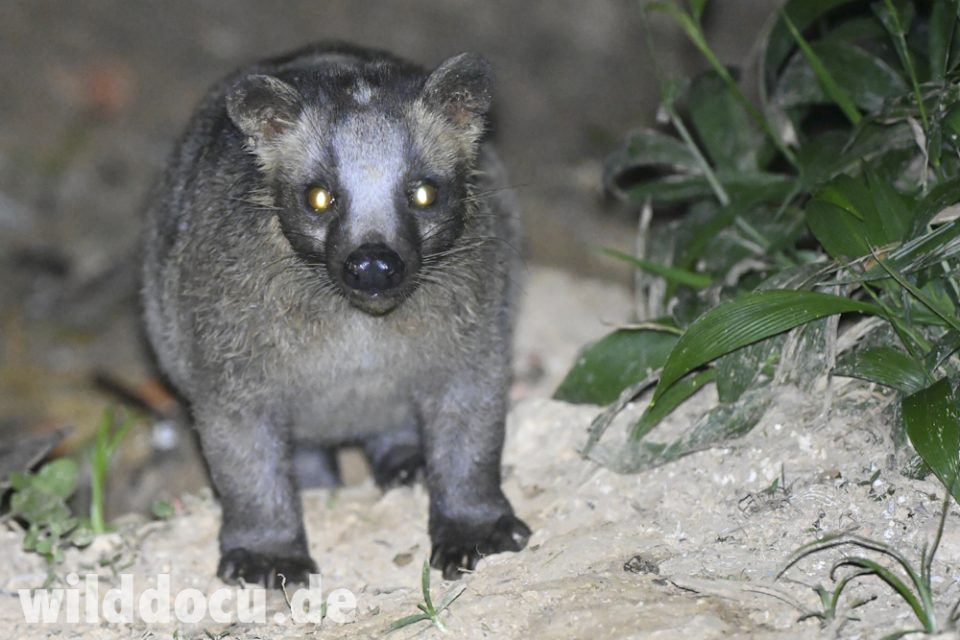
And another Viverrid shows up: Masked palm Civet (Paguma larvata) — Larvenroller. It is less shy than the Large Indian Civet and appears several times in the kitchen at night.
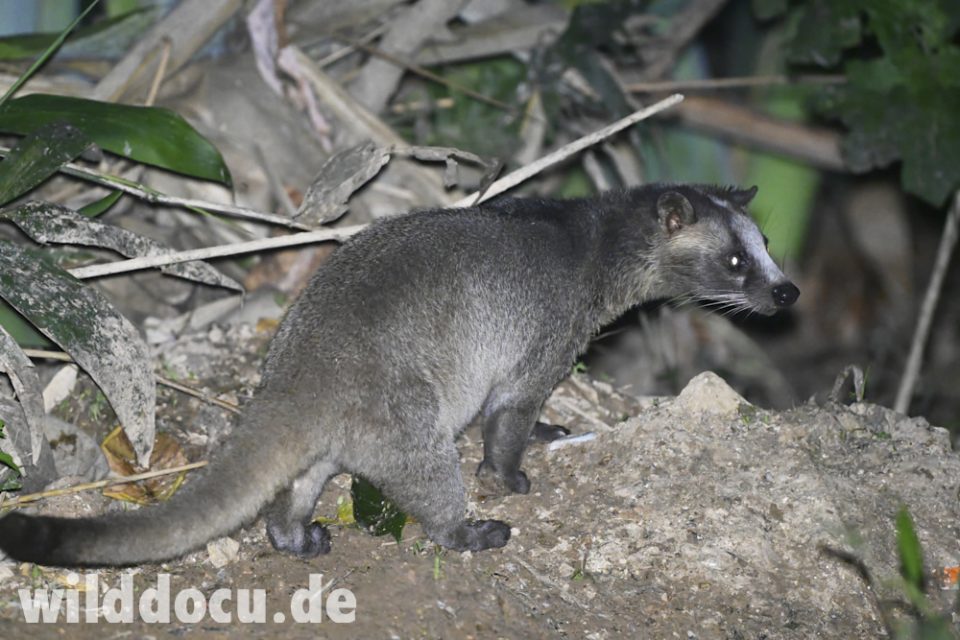
Its mask is not very pronounced. A second specimen in a tree is very dark. In the first moment I believe it’s a Binturong, but no.
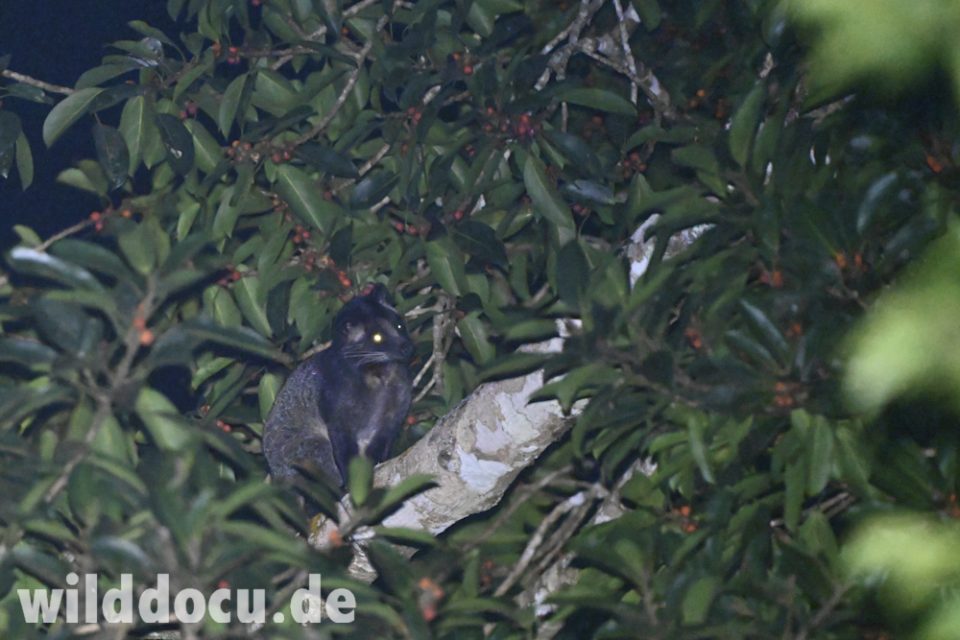
After a short night I go back to the kitchen to take another photo from the „trash“ category. This is an Indochinese or Chestnut white-bellied Rat (Niviventer fulvescens) – Kastanien-Weißbauchratte.
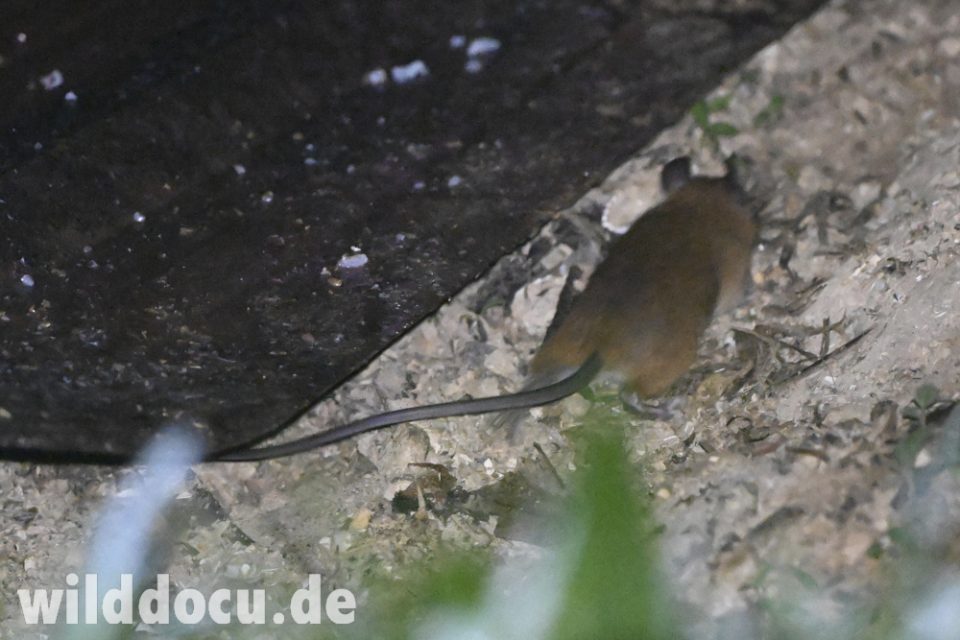
This species has a head-body length of 13 to 17 centimetres. The extremely long tail makes up almost 150 percent of the head-body length. The fur on the back is bright reddish. Belly is pure white. Ears are dark brown.
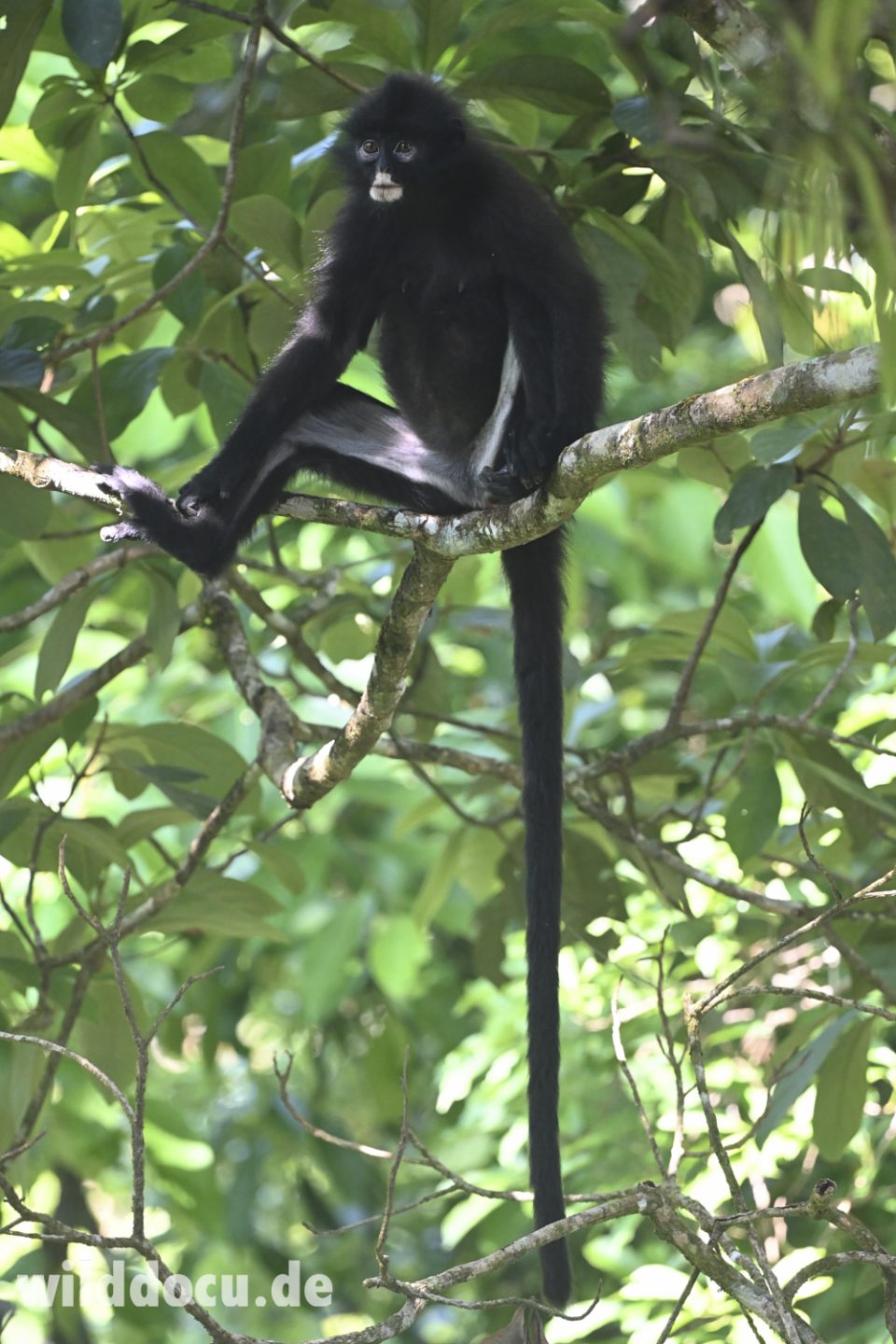
A morning drive on the road beyond the Phanoen Thung campsite then brings another primate species: Robinson’s banded Langur (Presbytis robinsoni) – Robinsons Bindenlangur. The characteristic band runs along the inside of its thighs.
On the way down the valley we spot a Lesser Asian False Vampire (Megaderma spasma) – Malaiischer Falscher Vampir in one of the culverts and a Black giant Squirrel (Ratufa bicolor) – Schwarzes Riesenhörnchen.
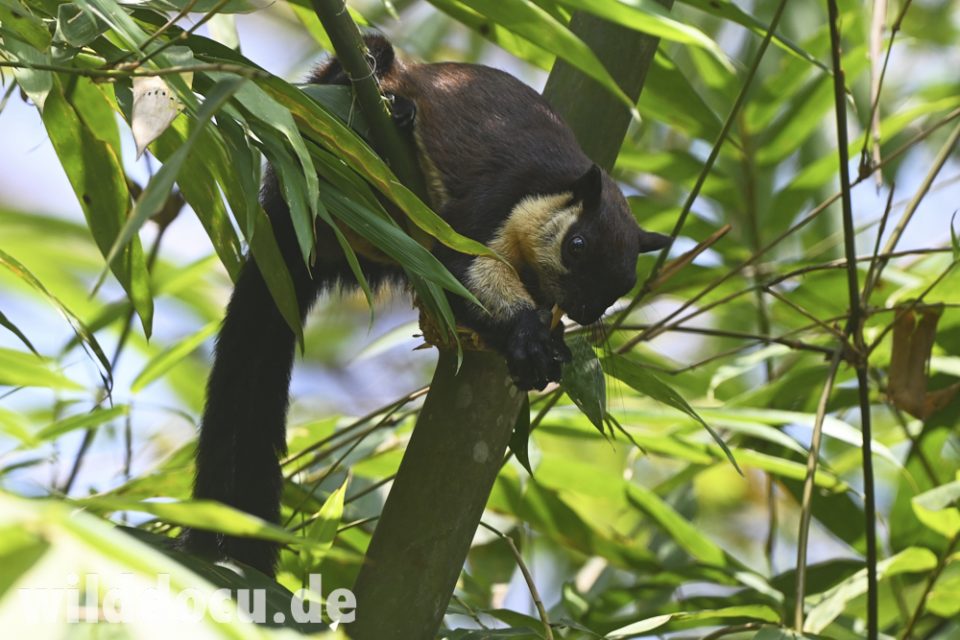
It’s one of the largest squirrel species in the world. According to „Smith and Xie: A Guide to the Mammals of China“ and taking the extremes of their quoted measurements (HBL: 43 cm; tail: 51) the squirrel reaches a length of almost one metre.
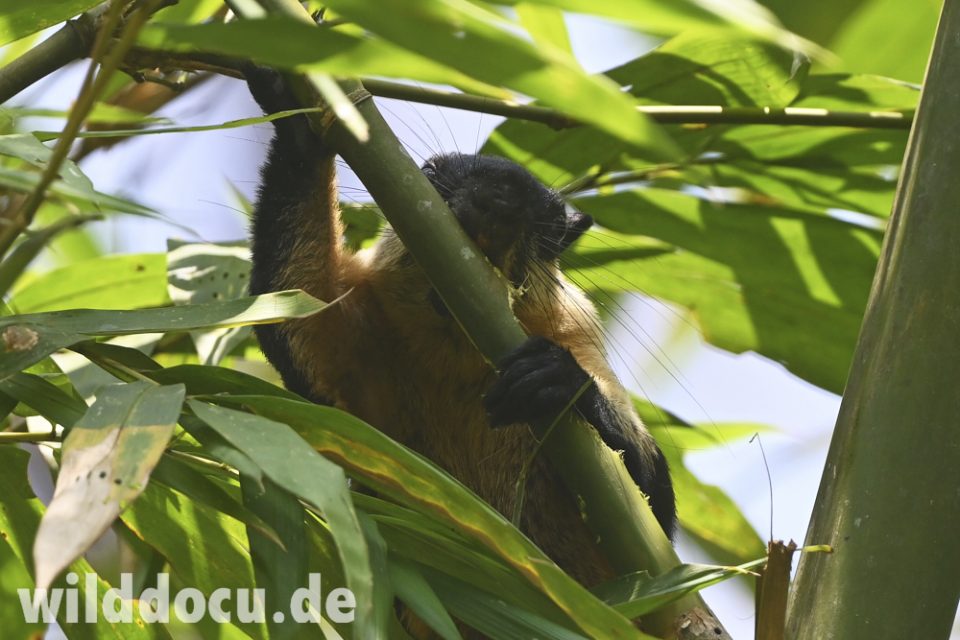
I am quite surprised that it feeds on bamboo. The Giant Squirrel is the last mammal species of the trip.
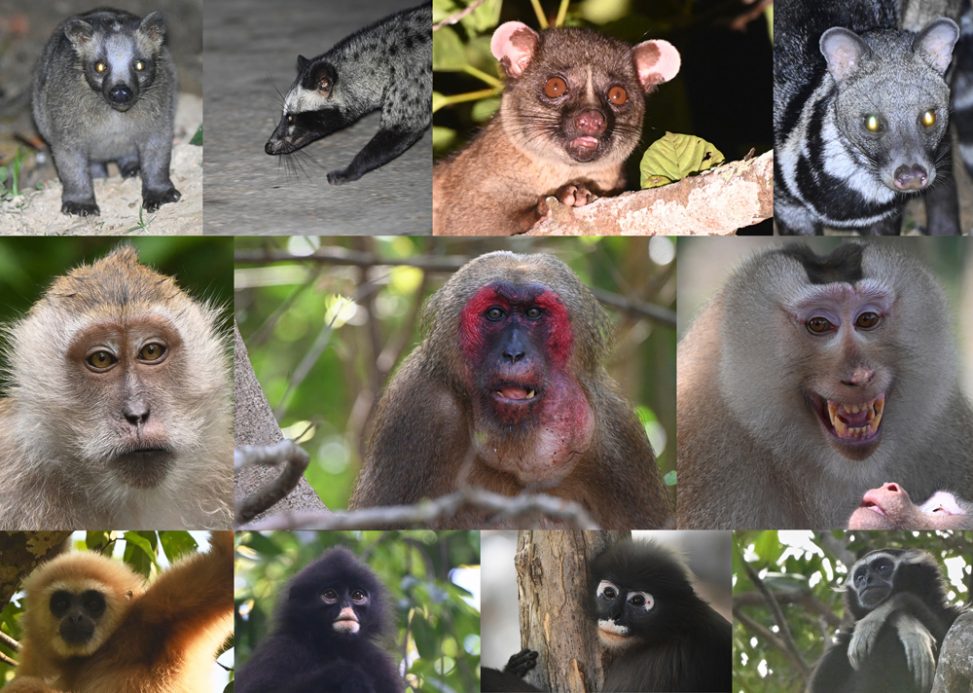
Although I missed my target species, the serow, I’m very happy with this trip. I still collected a lot of data that I could use to update my chapter on the Indochinese Serow. We also saw many new species, including seven primate species and four civets. I love it! We’ll be back.
Sources
Arlo Hinckley, Jesús E. Maldonado, Noriko Tamura, Jennifer A. Leonard and Melissa T. R. Hawkins. 2024. Lost in Synonymy: Integrative Species Delimitation reveals Two unrecognized Species of Southern Asian Tree Squirrels (Rodentia: Sciuridae: Callosciurinae). Vertebrate Zoology. 74: 683-707. DOI: 10.3897/vz.74.e133467
Francis, Charles M., 2008: A guide to the Mammals of Southeast Asia. Princeton University Press, Princeton
Geist, Valerius, 1999: Deer of the World – Their Evolution, Behavior and Ecology, by Valerius Geist. Stackpole Books
Hansen, M.F. et al. 2022. Macaca fascicularis ssp. fascicularis (amended version of 2022 assessment). The IUCN Red List of Threatened Species 2022: e.T195351957A221668305. https://dx.doi.org/10.2305/IUCN.UK.2022-2.RLTS.T195351957A221668305.en
Malaivijitnond, Suchinda and Hamada, Yuzuru, 2008: Current Situation and Status of Long-tailed Macaques (Macaca fascicularis) in Thailand. The Natural History Journal of Chulalongkorn University 8(2): 185-204, October 2008
Mittermeier, Russell and Wilson, Don E., 2009-2019: Handbook of the Mammals of the World. Lynx Edicions, Barcelona
[Mammalogy • 2016] Rhinolophus chutamasae Rhinolophus monticolus | Mountain Horseshoe Bat | ค้างคาวมงกุฎภูเขา • Hill Forest Dweller: A New Cryptic Species of Rhinolophus in the ‘pusillus group’ (Chiroptera: Rhinolophidae) from Thailand and Lao PDR. http://novataxa.blogspot.com/2016/05/rhinolophus-monticolus.html
Smith, Andrew T. and Xie, Yan, 2008: A Guide to the Mammals of China. Princeton University Press, Princeton and Oxford
Schreibe einen Kommentar