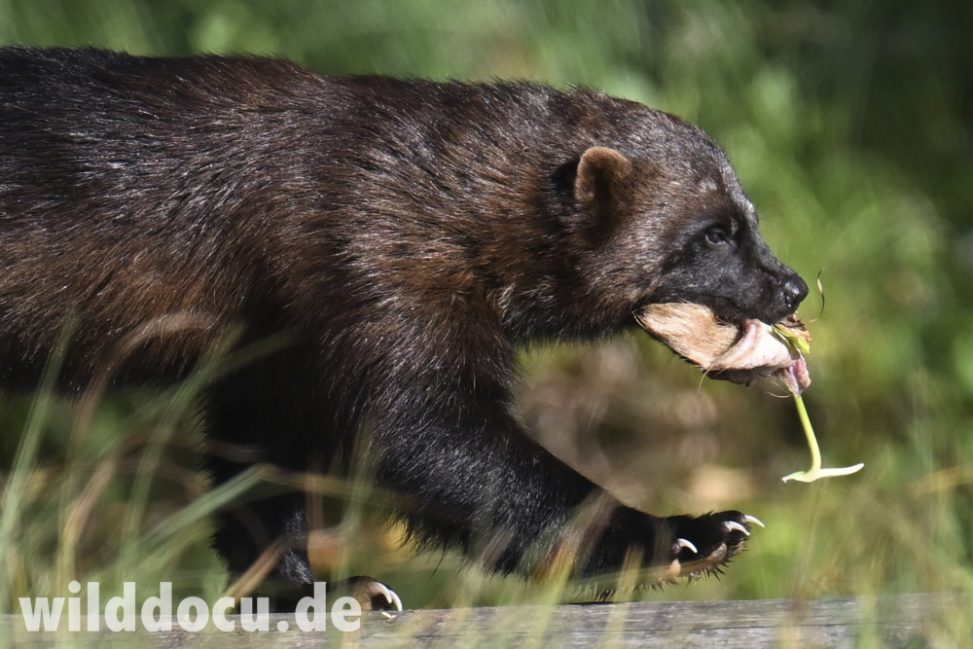
My wife and I travelled through Finland from August 24th to September 9th. Anja needed a slow pace trip, so we took it very easy. My main mammal targets were Saimaa Ringed Seal, Wolverine, White-tailed Deer and Eurasian Flying Squirrel. We gained experience with all species.
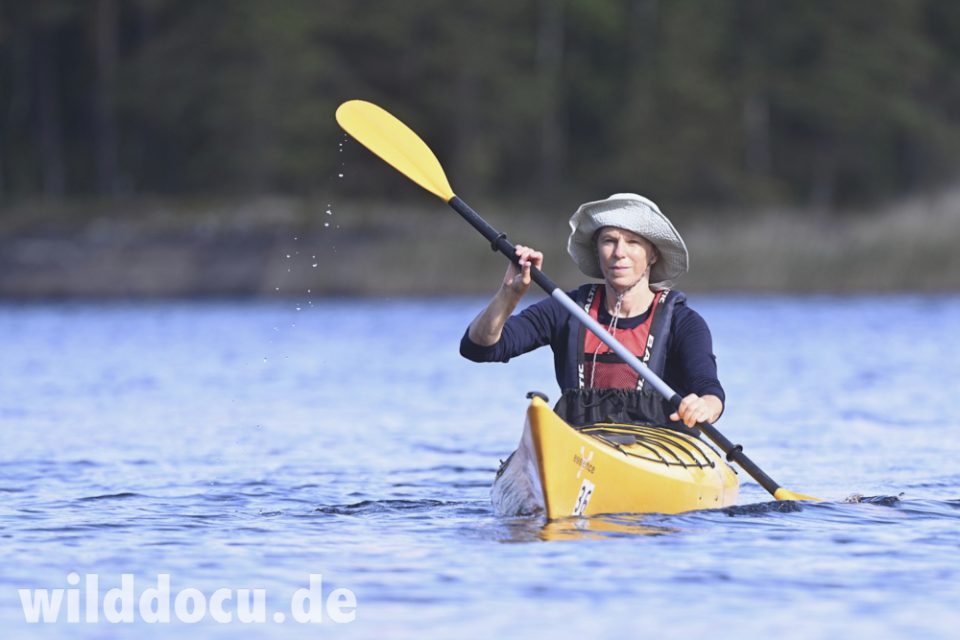
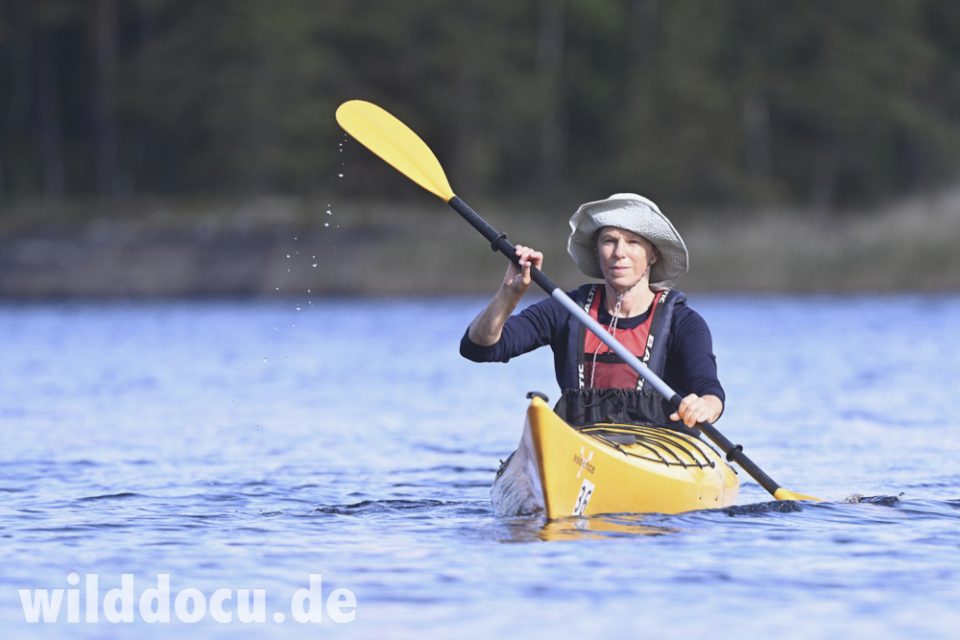
How to find a Saimaa Ringed Seal (Pusa saimensis) by kayak: We spend the first few days in a rented cabin in the south of the Saimaa area with the idea of discovering the seals on our own on daily tours with sea kayaks. I think only a little bit about observation probabilities: Fact is that, at over 4,000 square kilometers, Lake Saimaa is the fourth largest lake in Europe and eight times larger than Lake Constance. There are currently said to be 400 to 500 Saimaa seals … the old, hackneyed “needle and haystack comparison” comes to my mind. Will I perhaps in the future say: „That’s like looking for the seal in Lake Saimaa“ when it comes to finding a very rare animal?
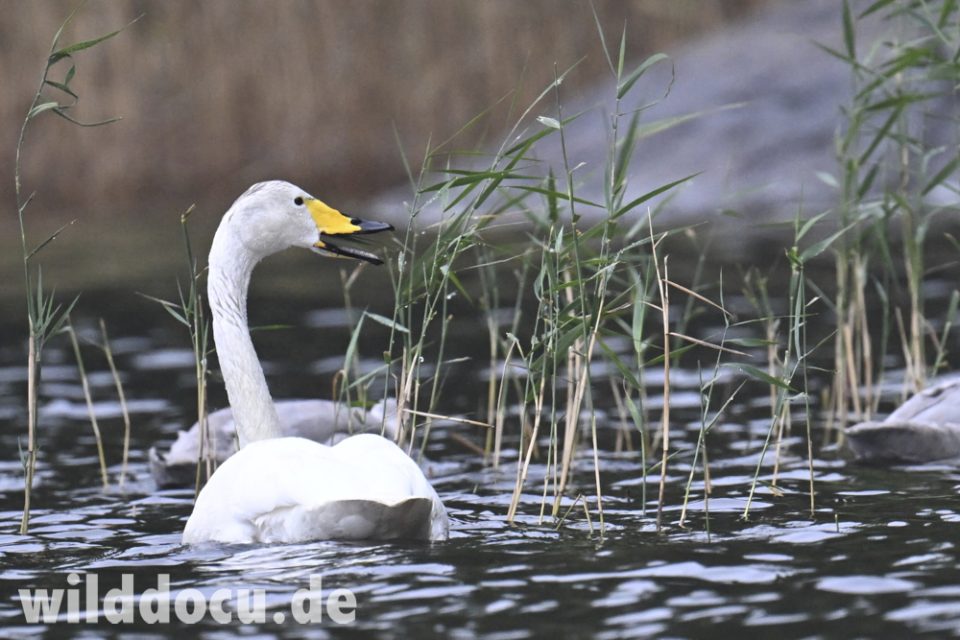
Our on-site research and conversations with locals reveals that it might be advantageous to look for seals in the more open (deeper) areas of the lake. Our cabin is located in a narrow bay with many small islands. Here, our chances of seeing seals are rather slim. We have to paddle several kilometers to reach the open areas.
Many seal species can be easily observed when they come ashore. This only applies to a limited extent to the Saimaa Ringed Seal, which supposedly goes ashore less often. Various sources state that the Saimaa seals can be seen on rocks near the water, especially in spring when they are shedding their fur. The timetables of seal trip providers in Oravi suggest that the animals also come ashore in the evenings over the summer. Other ways to see seals in general are when they are on the move, when they come to the surface to breathe, eat, orient themselves or out of curiosity.
This results in the following strategy for us: We aim for the nearest island in “our archipelago”, behind which the water surface opens up, i.e. fewer islands blocking the view of the water. We land at the southern tip of tiny island (61.6496; 29.1730), where we have a 180° view of the lake and can overlook several square kilometers. We set up for a nice, sunny observation picnic for two or three hours and let our eyes glide over the smooth surface of the lake. And what can I say? The first picnic egg has not yet been peeled when a seal appears directly in front of us, less than five meters away. Just very briefly. We can see it both and notice that the head is relatively small. It unceremoniously pulls it’s head back and disappears. There is no time for a photo. But wow! What a precision landing.
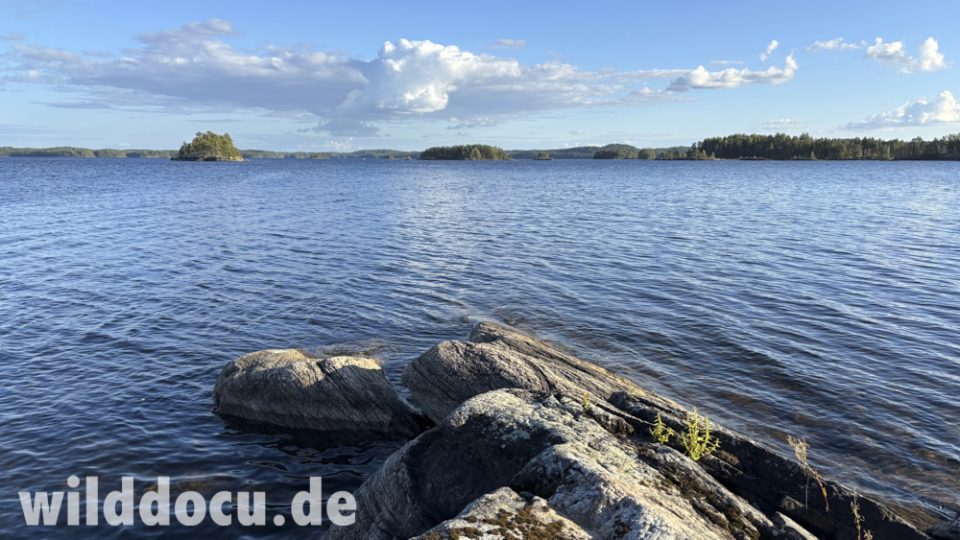
We look further out over the lake. We continue peeling eggs and gradually eat our picnic. But no more seal. We begin to realise how incredibly lucky we must have been to see it that way: The population of Saimaa seals is so small, on the other hand the expanse of water in front of us appears huge. But a look at the map reveals that our “huge” section of the lake probably only corresponds to a ring on the fur of a ringed seal. We still want more, but we postpone it and are off for the wolverine.
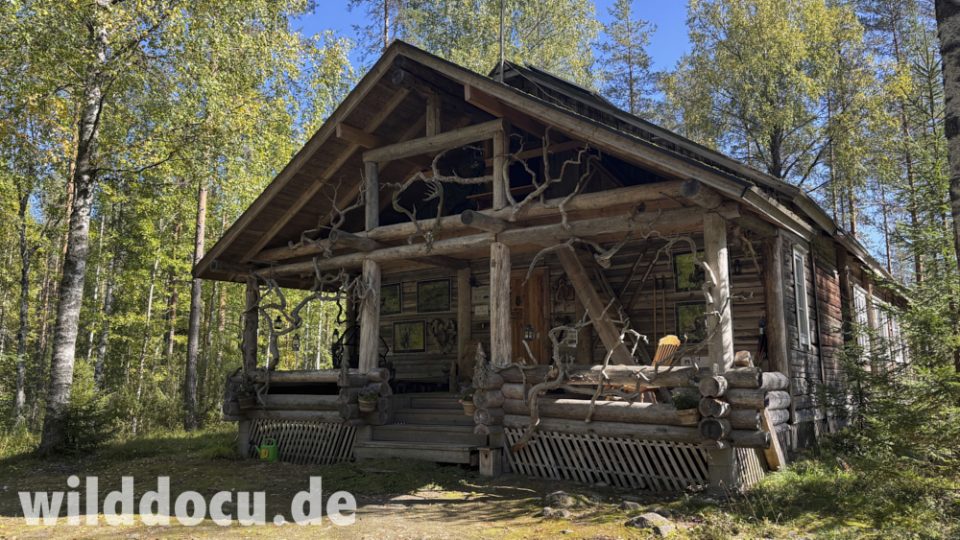
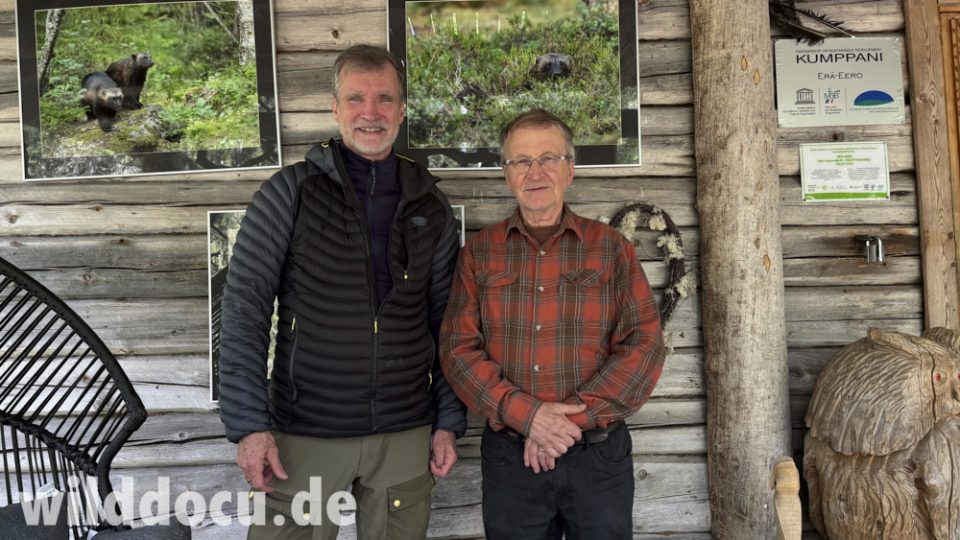
August 29th, next stop: Erä Eero’s property near Lieksa, close to the Russian border. As far as I’ve been able to find out, Erä is one of only two operators offering hides from which Wolverines can be observed. It’s important to note (as of September 2026) that Erä is looking for a successor. I’m sure he’ll find someone. Anyone who wants to visit him under the current conditions should probably hurry. I’m glad I had the opportunity to meet Erä and that he shared some of his fascinating stories with me.
After a short briefing, we head straight to the photo hide. It’s a beautiful late summer day. Several hides are set up along the edge of a lake, occupied by three groups on the first day. A meadow stretches out in front of the hides. Beyond the lake, the forest rises. The bait for the predators is hidden under stones, stuffed into rock crevices, or hung from dead trees. This also attracts birds.
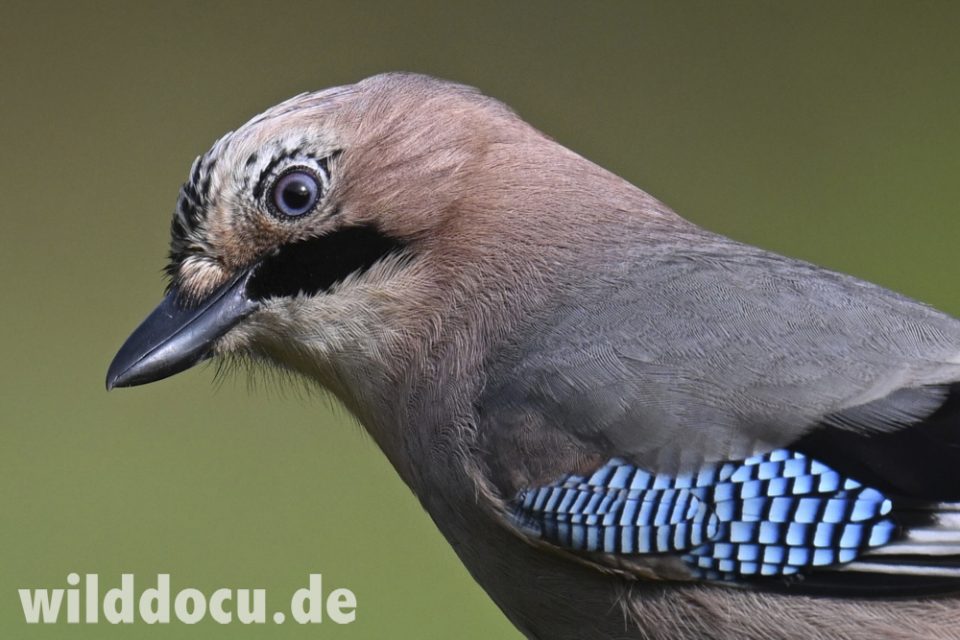
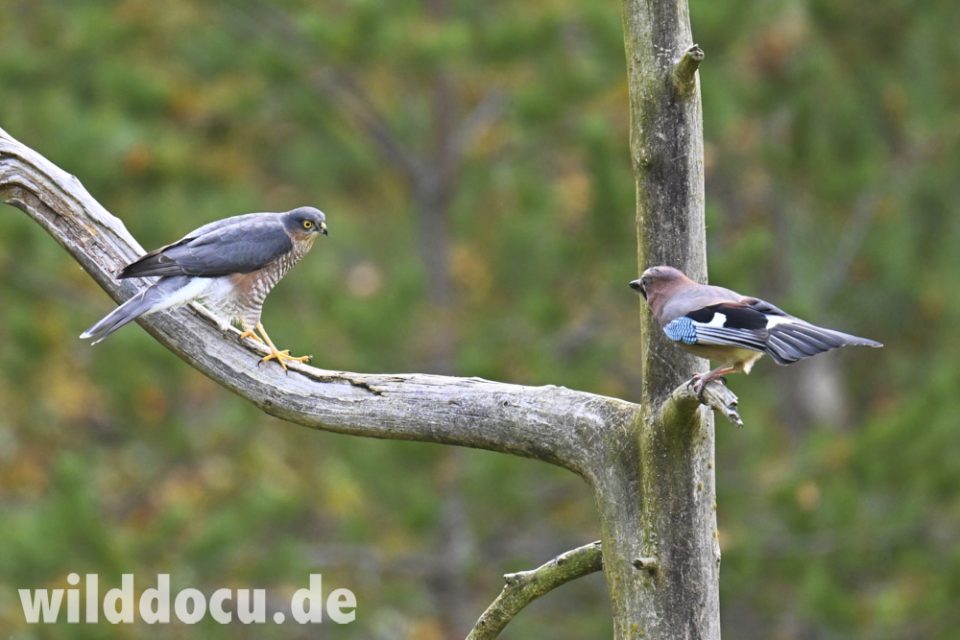
Eurasian Jays are everywhere, mostly busy tearing off pieces of the bait. Ravens do the same. Sparrowhawks are interested in the jays, goshawks in the ravens. Throughout the afternoon, I observe countless sparrowhawk attacks – all unsuccessful.
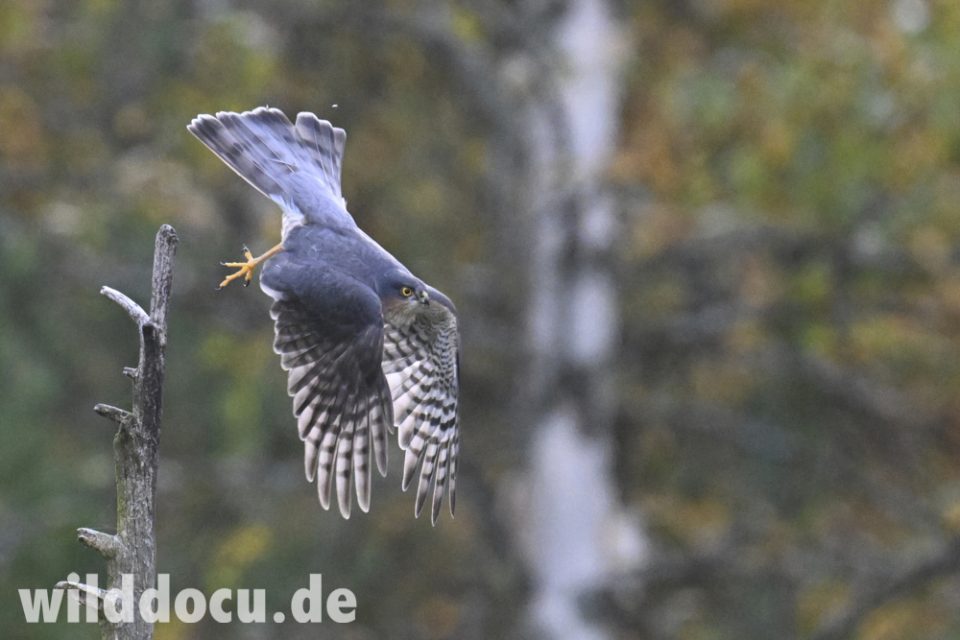
The jays always manage to parry the aerial attacks. The sparrowhawks don’t seem to have much stamina. After each attack, they have to rest. If they perch relatively openly, they have to put up with the jays approaching them at close range. It seems as if the jays are trying to discourage the sparrowhawks: „Give it up! We’re more agile. You won’t catch us.“ And then the wolverine makes its appearance.
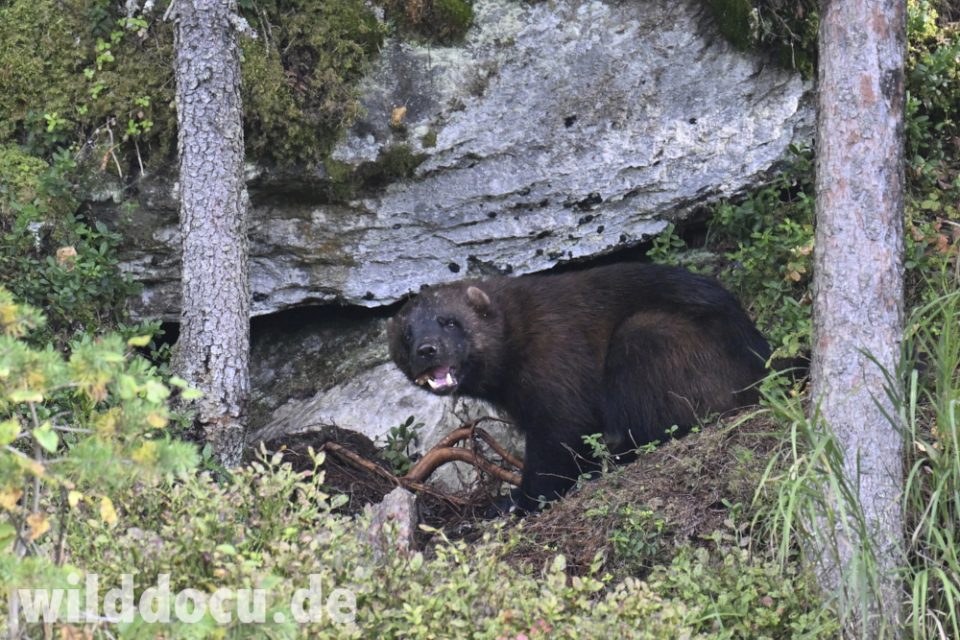
It’s busy behind the lake, 200 meters away, dark fur in the shadowy woods, a brief appearance. These aren’t ideal photo conditions, but hey, it’s my first Wolverine (Gulo gulo)! I’ve spent countless days and nights in wolverine territory, seen hundreds of bears and countless wolves, but never the „Ahma,“ as the Finns call it. Now, finally, I do! I’m thrilled.
There are other visitors: After sunset, Northern Bats (Eptesicus nilssonii) and Daubenton’s Bats (Myotis daubentonii) show up, which I identify using a thermal imager and bat detector. A Wolf howls. With the very last light, around 10 p.m., a Brown Bear also makes an appearance. He’s very shy. The slightest noise from the camera hides disturbs him from calmly tending to the food they have laid out for him. If he’s startled, he retreats a few meters with a few gallops, without completely abandoning the spot.
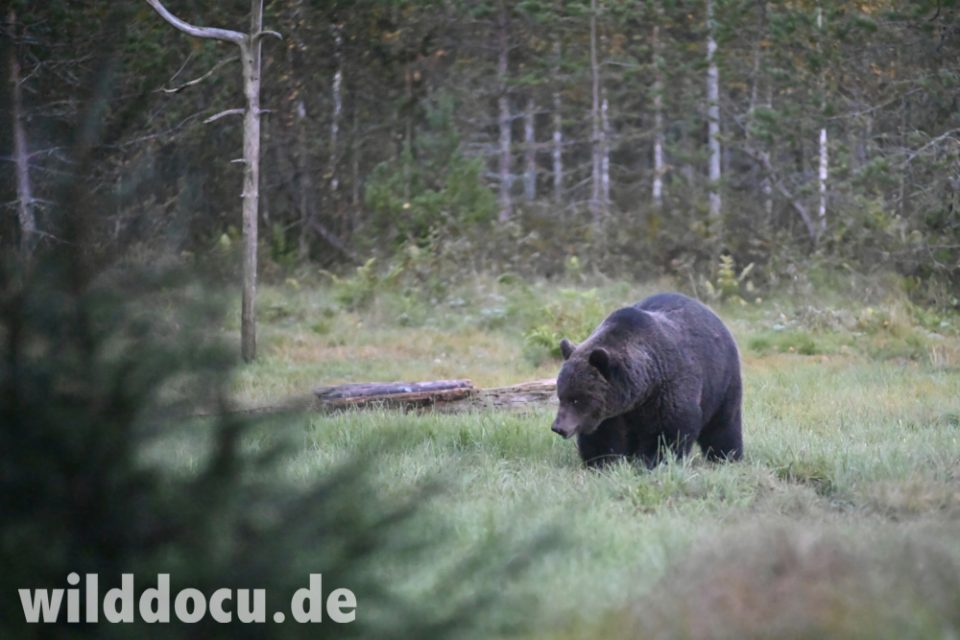
I have to admit, taking photos at this moment is almost annoying. The equipment and the challenging lighting conditions demand my full concentration, which distracts me from the actual experience. I’ve had the privilege of observing bears in many places across Europe, North America, and Asia, but this is my FIRST taiga bear, one from the boreal coniferous forest, a forest often fragmented by a mosaic of tree islands, lakes, and swamps. Brown bears are incredibly agile, navigating primeval forest chaos, peat moss pools, and open water – nothing can stop them. Yet they are also lazy and keen to conserve energy when covering distances. That’s what I’m thinking about, though it’s mixed with nervous thoughts about exposure speed, ISO settings, and silent mode.
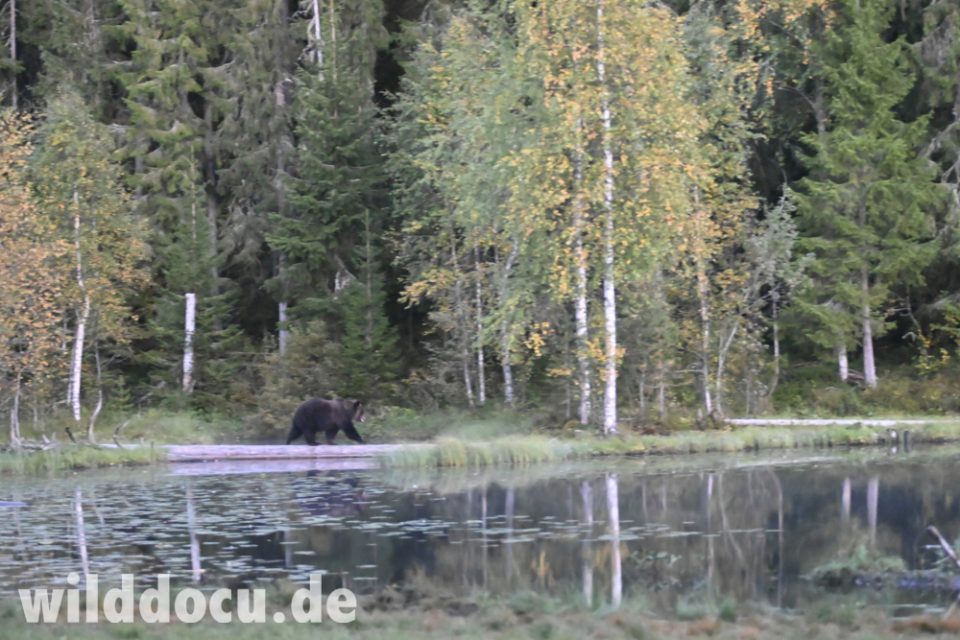
But then I experience this moment that brings me into the present: The bear balances on a long, bare log as if crossing a bear highway – thus avoiding having to enter the water or getting its fur covered in mud. Is that „smart“? It’s intuition. It’s simply doing what is most advantageous for it, what will ultimately give it a better chance of survival. I’m amazed.
Eventually, though, it’s over; it’s simply too dark to continue observing. That’s the downside of summer. In June, at 63° north latitude, there’s something to see all night long. It’s better then to come in pairs and take turns observing. Now, at the end of August, there’s another advantage: far fewer visitors. It’s enough that there are two birdwatchers sitting in the hut next door – birdwatchers gone astray.
As the afternoon/evening progresses, it becomes clear to me what a fundamental difference lies between birdwatchers and mammal watchers: For birdwatchers, it’s the norm to stand in a group and chat away. Or, to put it bluntly: They can’t keep their mouths shut, or rather, they lack the sense to recognize when it’s necessary. They drive me crazy! Luckily, birdwatchers also go to bed earlier. As I learn the next day, they missed the bear …
The next morning, I drive to the lodge for breakfast and discuss the situation with Erä. He isn’t surprised that the wolverine had only made a brief appearance and hadn’t dared to approach the food scraps near the hides. According to Erä, the wolves are to blame. When they are around, they communicate, meaning they howl. Then the wolverine doesn’t venture far from its hiding place. It doesn’t get along well with the wolves; it avoids them.
And another fact: The animals that Erä Eero attracts are, of course, somewhat conditioned. They know the drill; they know they are relatively safe from humans here; know the feeding grounds; know there will be something for them again the next day. This leads at least some individuals to stay in the area for extended periods. They remain within earshot or olfactory range and are constantly learning. This leads to some curious occurrences.
Erä tells me that during his rounds, when he’s laying out bait, it can happen that a wolverine doesn’t initially notice Erä trudging through the area. The „Ahma“ eventually gets startled, jumps up, and hops away. If Erä then speaks to it and says, „Hey, be quiet! It’s just me. I’m bringing you something to eat,“ the wolverine might stop and relaxes. Erä is convinced this only works because the wolverine recognizes his voice. Fascinating!
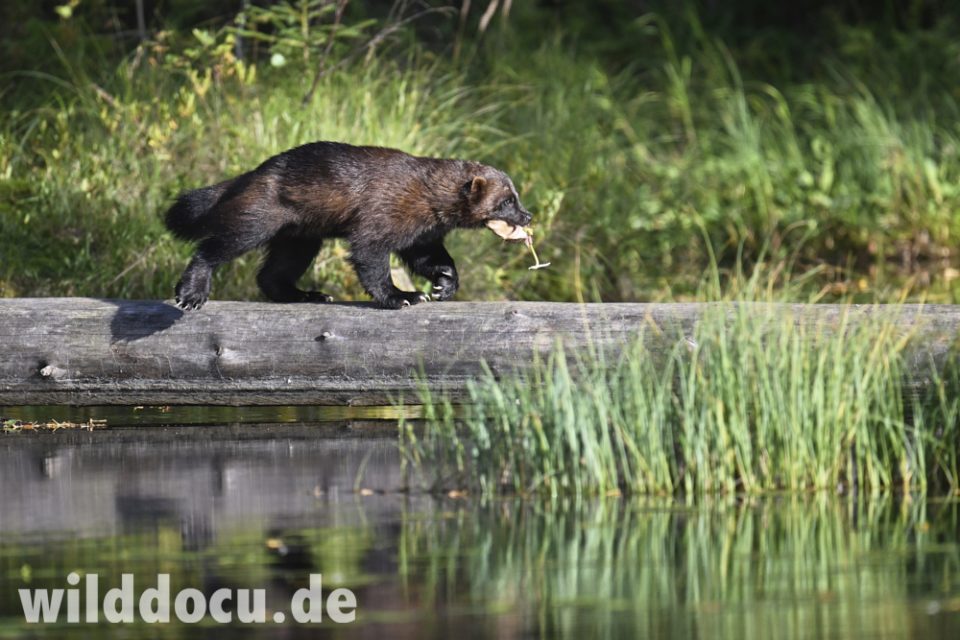
Erä knows other tricks, too. I make it clear to him that the wolverine is my absolute priority; I can do without wolves. Erä knows how to give the wolverine a better chance. For the second session that evening – which I’m doing alone! – we drive together to the hide by the lake. While I get settled in, Erä and his assistant lay out the bait. Something he doesn’t usually do: After all the pieces of fish and meat have been distributed from the buckets, the two of them turn their buckets upside down and begin drumming on the bottoms. Erä has learned from experience that wolves don’t like drumming, and wolverines don’t care. They even seem to know that the drumming is meant for the wolves and therefore venture out. How this is possible, I still haven’t figured out. In any case, that’s the theory. And the theory holds true.
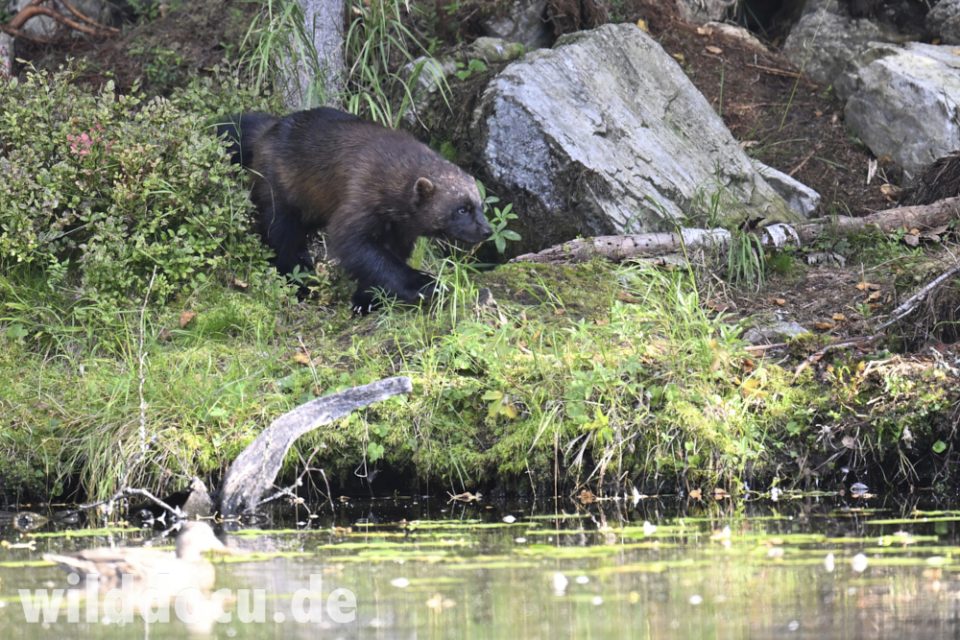
It’s a beautiful late summer day. The afternoon light is perfect. The shadows are no longer so harsh. In front of me is the meadow, the lake, and behind me, the forest. How often in my life as a nature photographer have I crouched in front of such a perfect backdrop and hoped: „If only my photo subject would come along now!“ But how many hundreds of times has it not come?! Well, you know what’s coming next. Luck is on my side once again. What unforgettable scenes!
Bear, wolf, lynx, wolverine – where? Here's an interesting Finnish website where you can see, among other things, recent sightings of large mammals: https://luonnonvaratieto.luke.fi
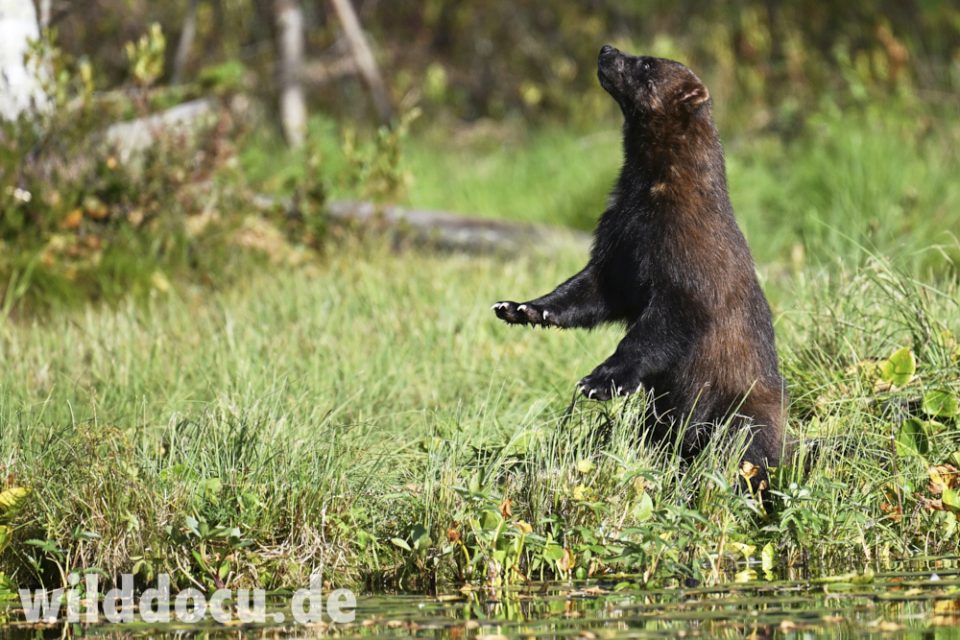
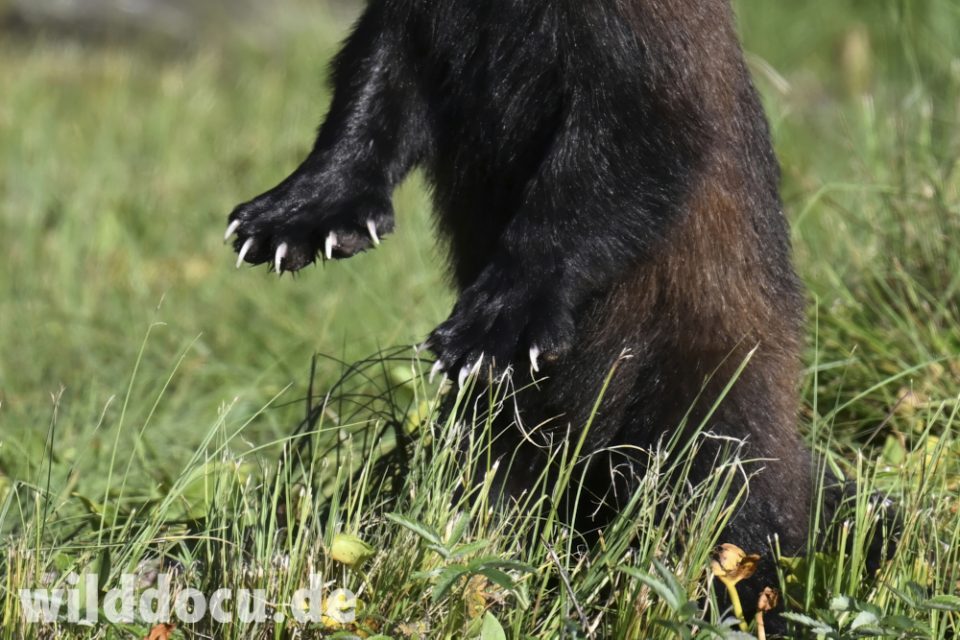
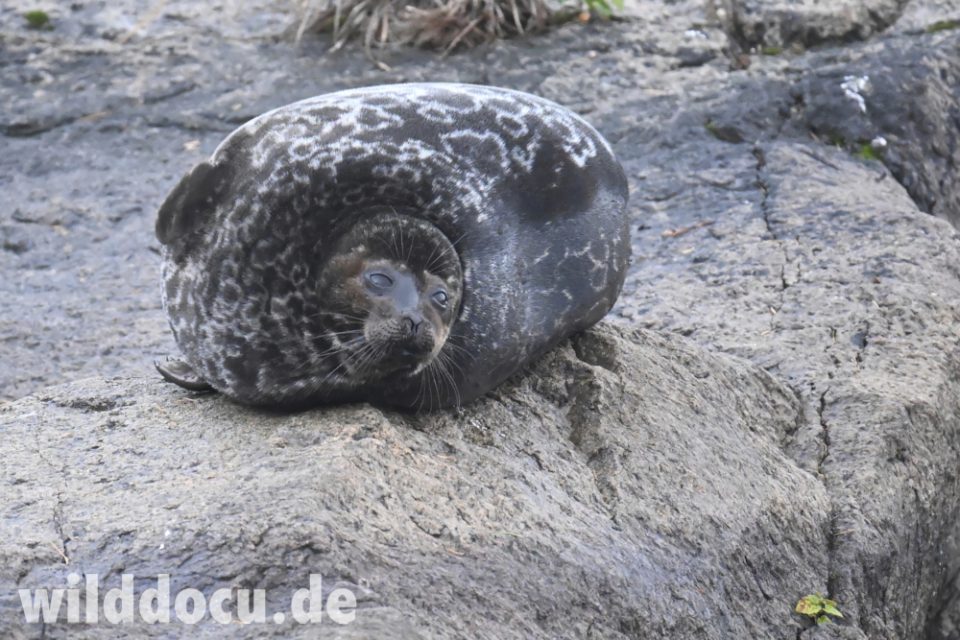
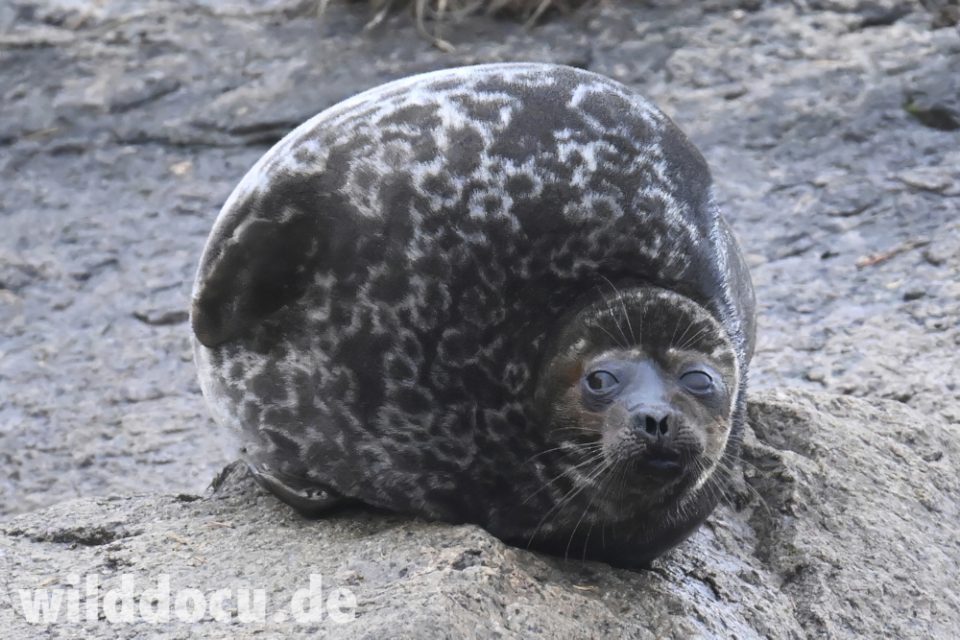
Now that the wolverine is bagged, I turn my attention back to the Saimaa Ringed Seal. This time, we opt for the seemingly simple solution of hiring a guide with a motorboat in Oravi, the starting point for trips to Linnansaari National Park. We book the sunset tour, which is quite expensive when you do it on your own and not in a group. But as it turns out, it’s absolutely worth the money. We cruise through the archipelago. Our guide, Ami, checks various rocks near the shore where he has seen seals in the past. It takes a while before he finds one, but he does, and we get to see a beautifully colored animal. There are conflicting recommendations regarding the required safety distance. Some say 50 meters, others 150-200 meters. I estimate we end up being 50 to 100 meters away. The seal remains relaxed throughout, and so I manage to get some very satisfactory shots with my 800 mm lens.
The following day we start again with kayaks for a multiday trip through Linnansaari National Park, hoping to see more seals at places that Ami had shown us. This trip at the end of the season with very few visitors around, turns out to be one of my all time favourite kayak trips. However we do not manage to find Saimaa Ringed Seals again. My conclusion is therefore this: Exploring Saimaa Lake independently by kayak in search of the Saimaa Ringed Seal is a wonderful nature experience. However, spotting a seal from a kayak requires a considerable amount of luck.
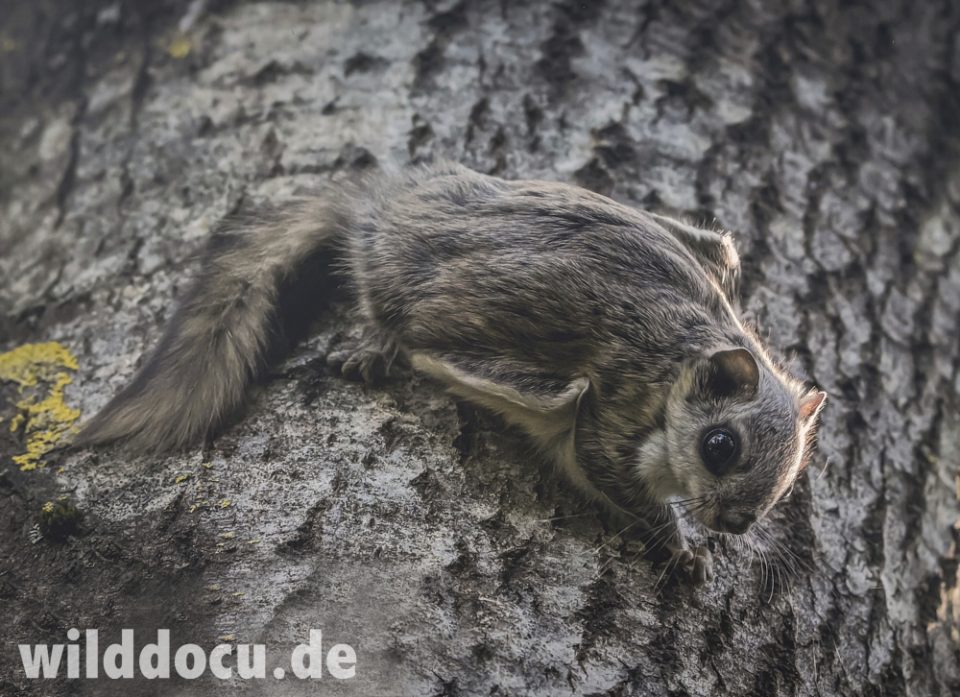
Next target: Eurasian Flying Squirrel (Pteromys volans). I don’t understand, why it’s so difficult to get a proper common name for this species. The German Wikipedia calls it „Europäisches Flughörnchen“ (European Flying Squirrel). The English Wikipedia names it „Siberian Flying Squirrel.“ Why? Its distribution range goes all the way from Northeastern Europe to the Far East. So it’s „Eurasian“! And to be clear, this isn’t my idea. Various scientists use this name, but it just doesn’t seem to catch on. Well!
We try to find the squirrels in Nuuksia National Park, 40 km northwest of Helsinki. We park at the „Haukkalampi Small Parking Lot“ and walk ten minutes to the „Mustalampi campfire site.“ It’s Friday, September 4th, so practically the weekend. There are a few other visitors on the way to the campsite. Will we still find a nice spot? Or will it be overcrowded?
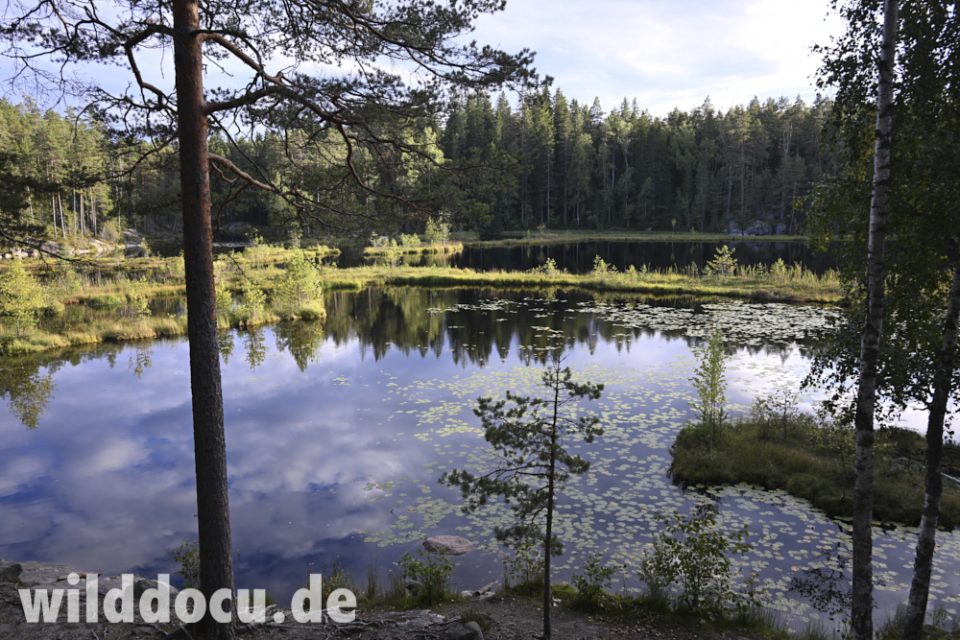
Luckily, we find an idyllic spot overlooking a small lake. From here, we plan to explore the forest for flying squirrels in the evening and at night. But then we have another concern: Blondes!
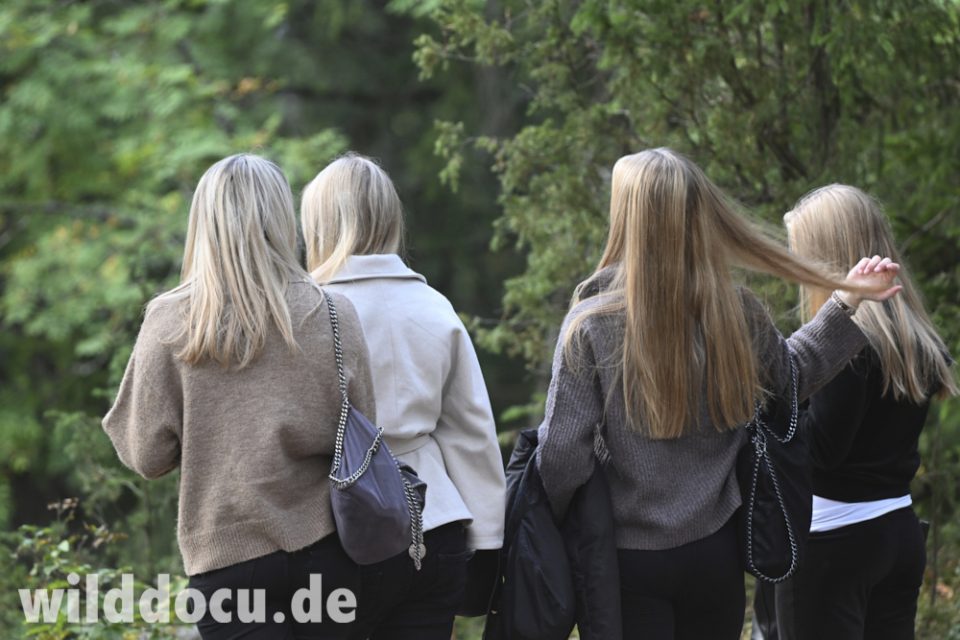
The campsite is teeming with the usual outdoor enthusiasts, pitching tents and standing around fire pits. But as the afternoon progresses, more visitors arrive: mostly young, stylish women with blonde hair, designer handbags, and a cell phone seemingly glued to one hand. Huh? What are they doing in the woods? Some of them look a little lost. It seems that their destination is not entirely clear.
Opposite the camp is a rock, and I later spot a photo of it on a board, depicting a folk group. It’s becoming clear that the blondes – and more and more blondes, and eventually some guys too – also want to climb up there. What kind of place is this? And then: music. Music that must be coming from huge speakers. Now it’s clear: this is turning into a party in the middle of the national park forest. That wasn’t the plan!
In situations like this, I tend to wait it out: earplugs in, pillow over my head. Eventually, it’ll be quiet again. But Anja has a much lower tolerance level. She’s urging us to leave. „Oh no!“ We have to discuss it. But then, finally, a decision aid is offered. Someone has grabbed a megaphone. At first, we think there are now officials there, telling people to break up. But then it becomes clear: they’re playing some kind of game, led by a chosen one. A megaphone in the woods? That’s too much – even for me.
We give up. We pack up our camp and retreat to a secluded corner of the forest. We pitch our tent again on the shore of another lake. There’s no designated campsite, and camping here is certainly illegal, but partying in a national park can’t be legal either. „This is an emergency!“ I would argue to a ranger. At least it’s so quiet and idyllic here that, after the party scare, I have the energy to go out with my thermal camera. Ultimately, though, I can’t spot any wildlife.
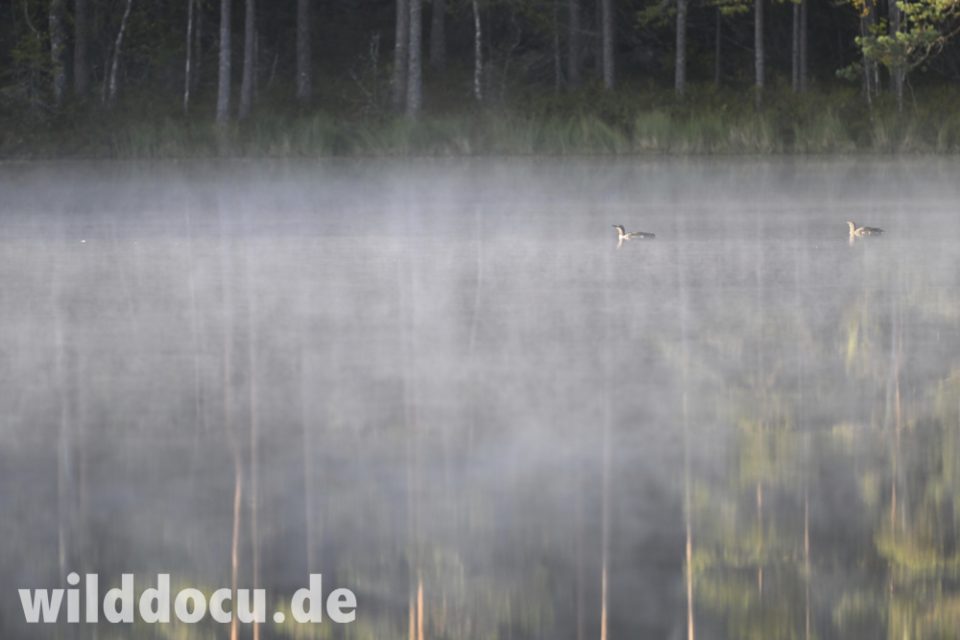
Only at dawn do we get nature’s reward: Red-throated loons – for which Nuuksio National Park is known – paddle across the mist-shrouded lake, calling out. Eventually, one of the two – I suspect the male – takes off, circles the lake, and seemingly invites his mate to follow him. Following our hunger for breakfast, we head to the Haltia Nature Centre – Suomen luontokeskus Haltia – a very nice exhibition centre with lots of information, including about the flying squirrel, and very tasty food. That made up for it. We’ll have to come back again another time to see the real squirrels.
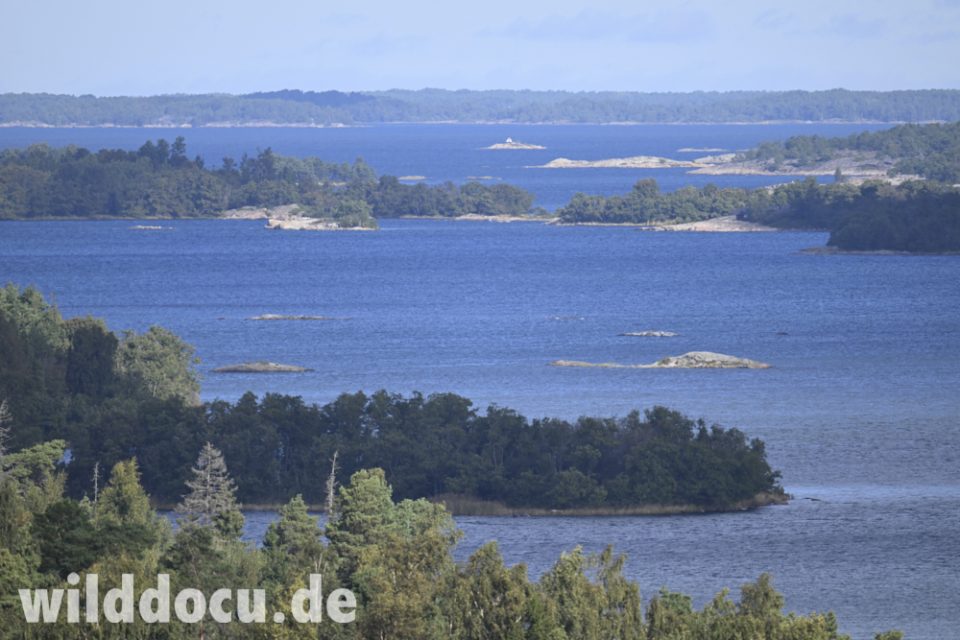
Highest roe deer density in Europe? Next destination: the Archipelago Sea. The Archipelago Sea is a collection of 20,000 to 50,000 islands in the Baltic Sea, located in southwestern Finland between the mainland and the Åland Islands. Bridges and ferries connect some of the islands, making it a popular travel destination. So far, we haven’t seen any deer, whitetail deer, or moose. That’s about to change.
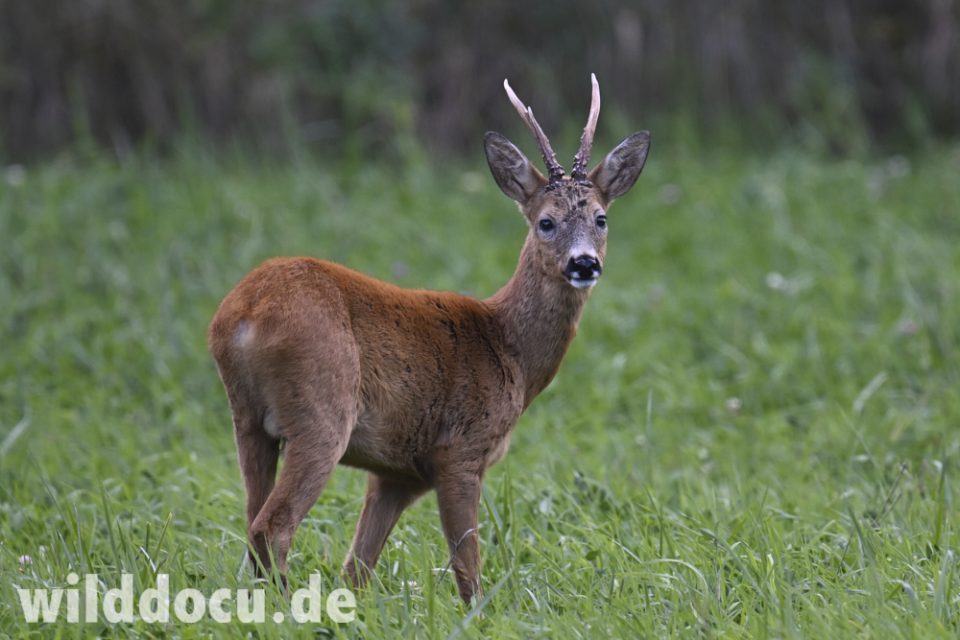
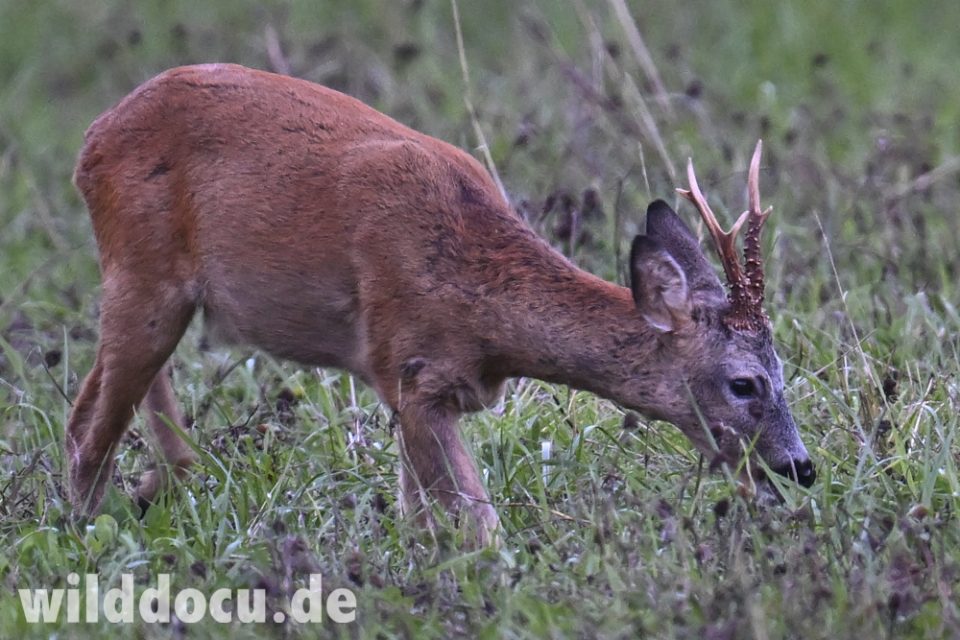
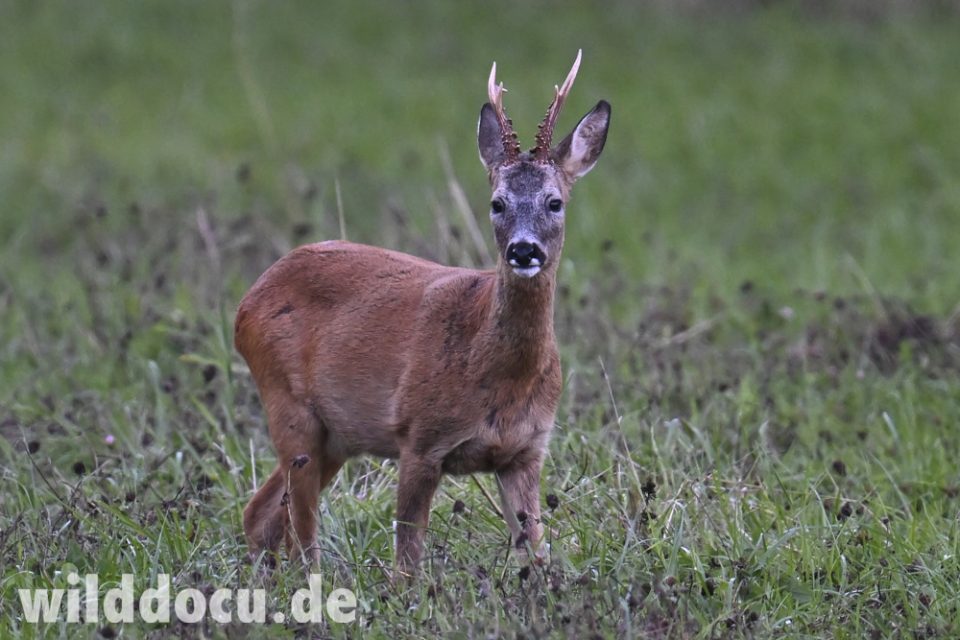
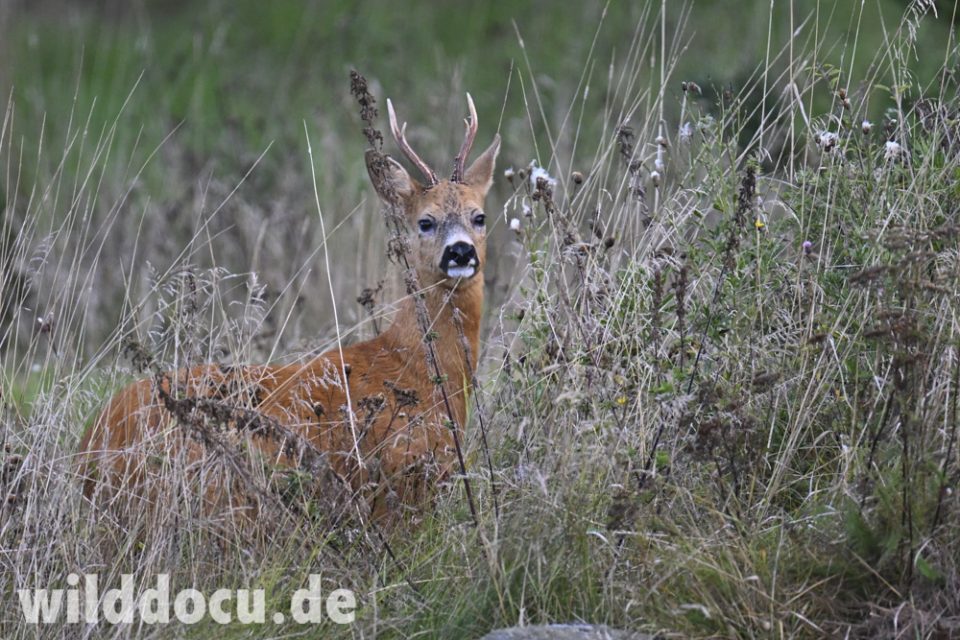
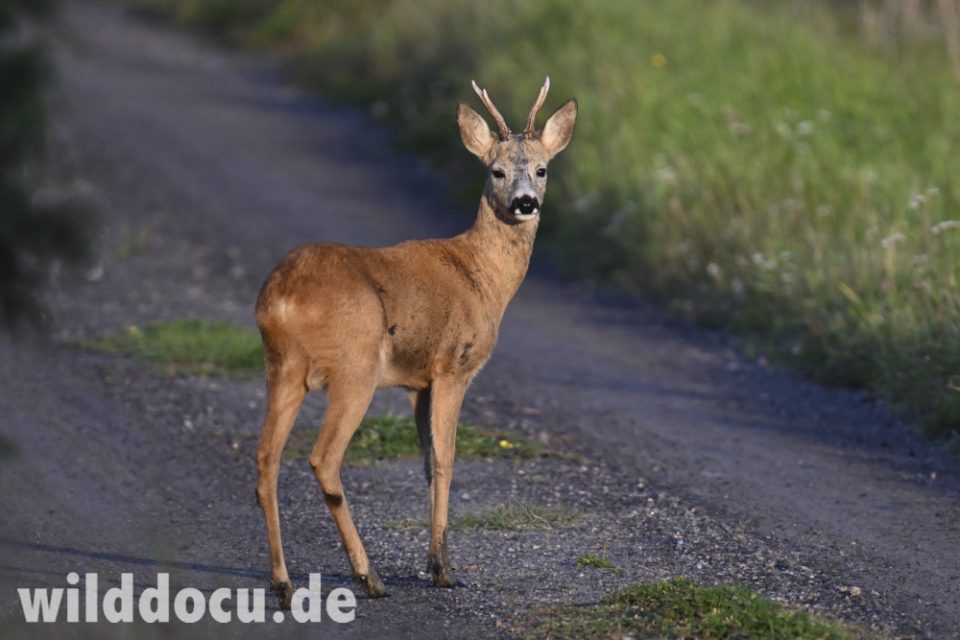
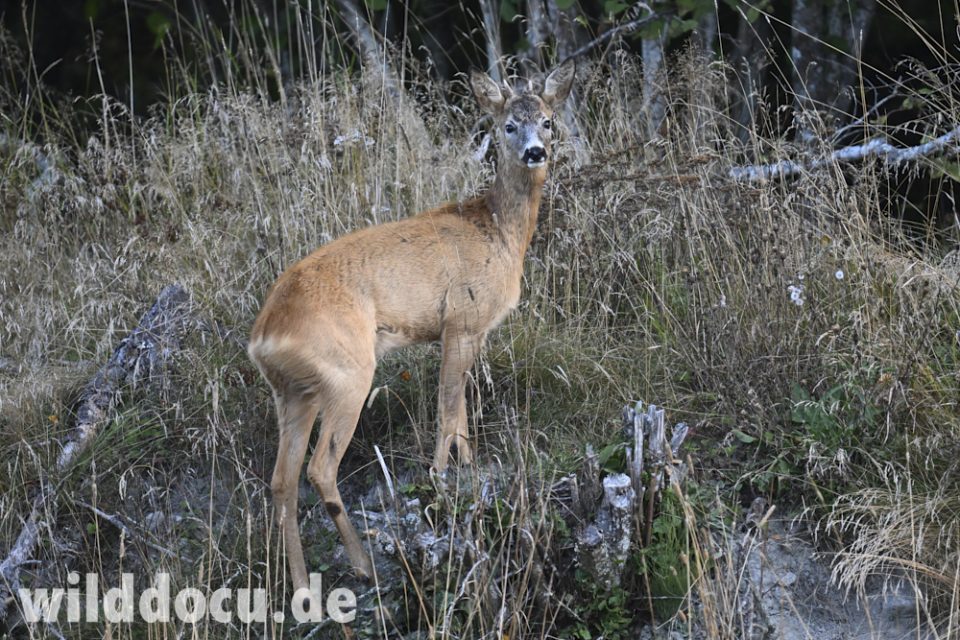
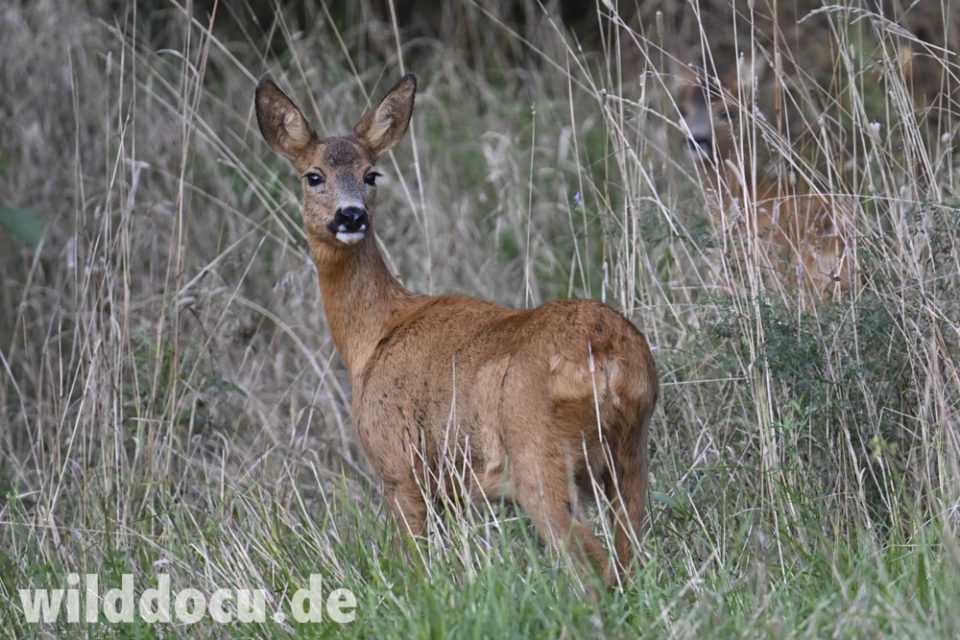
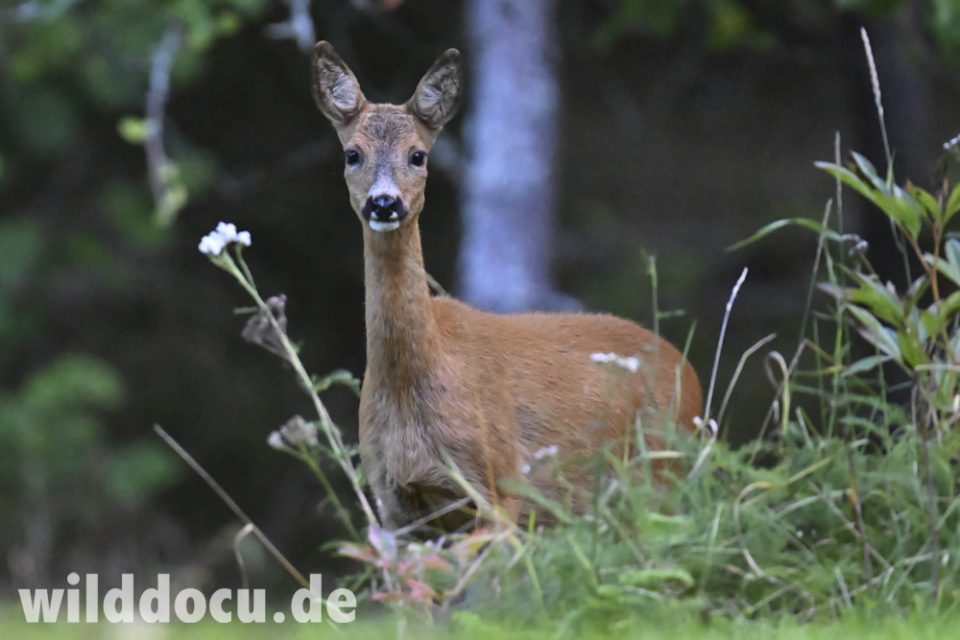
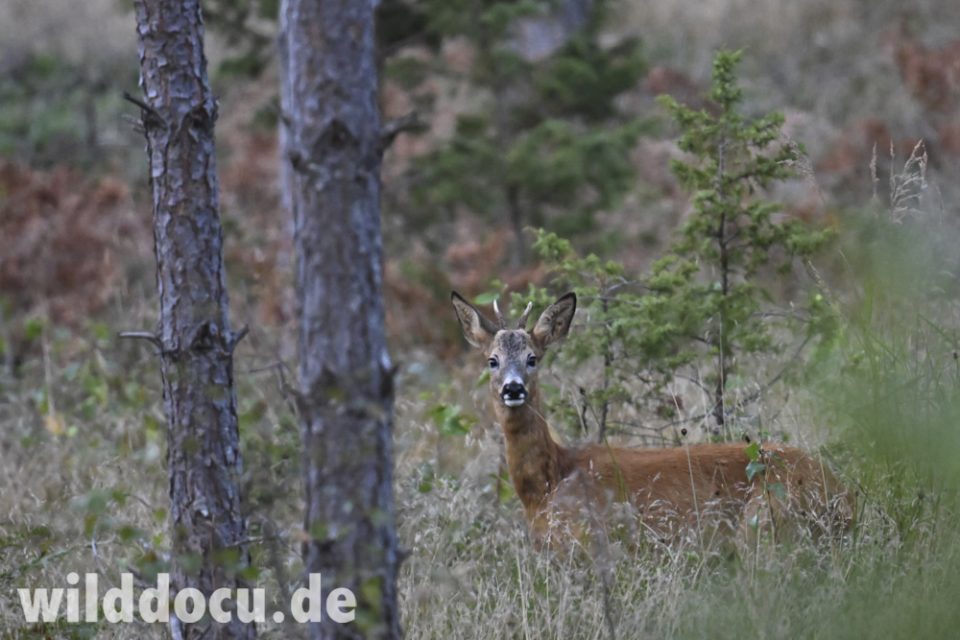
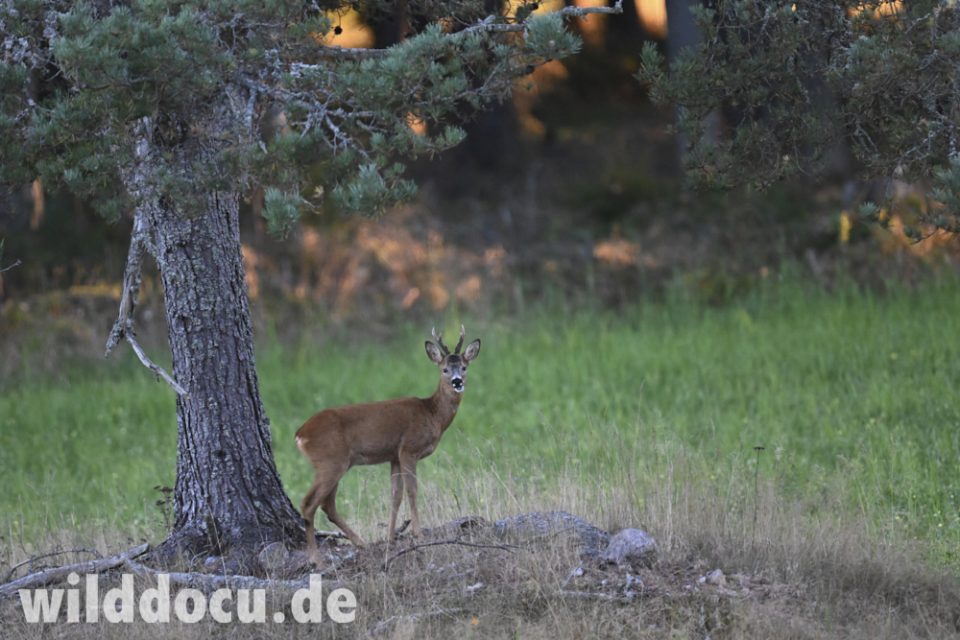
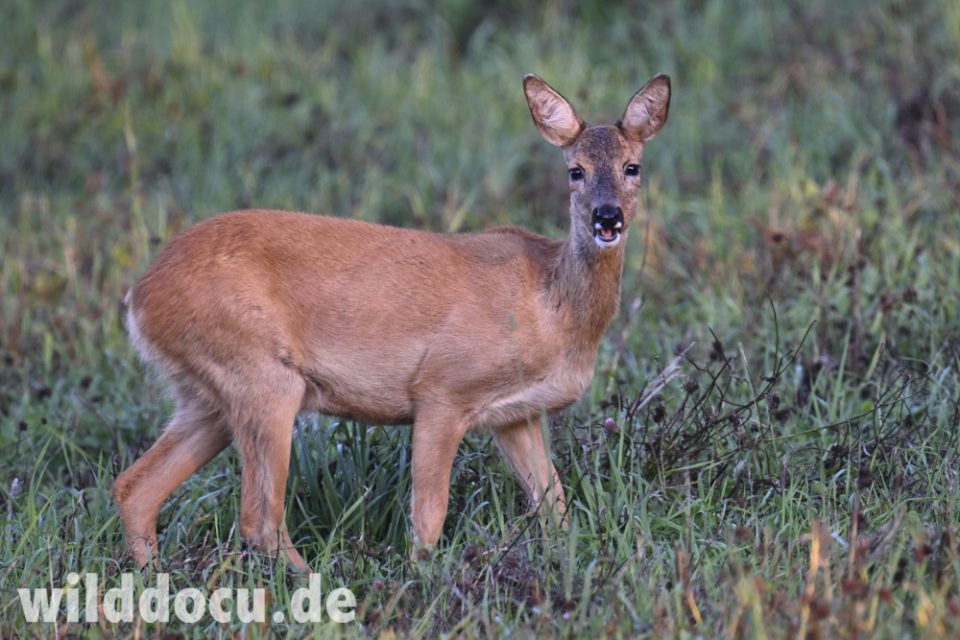
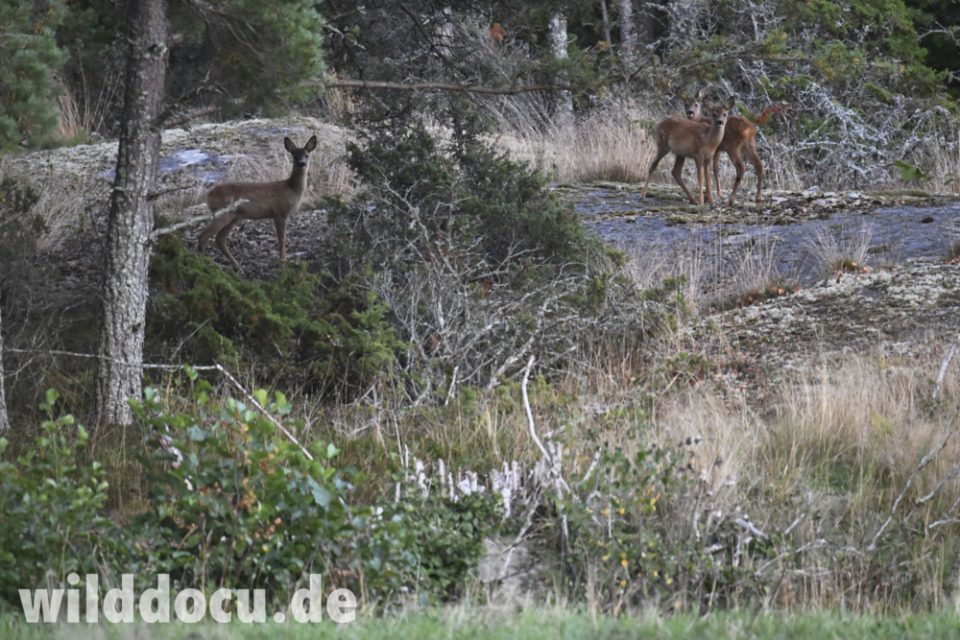
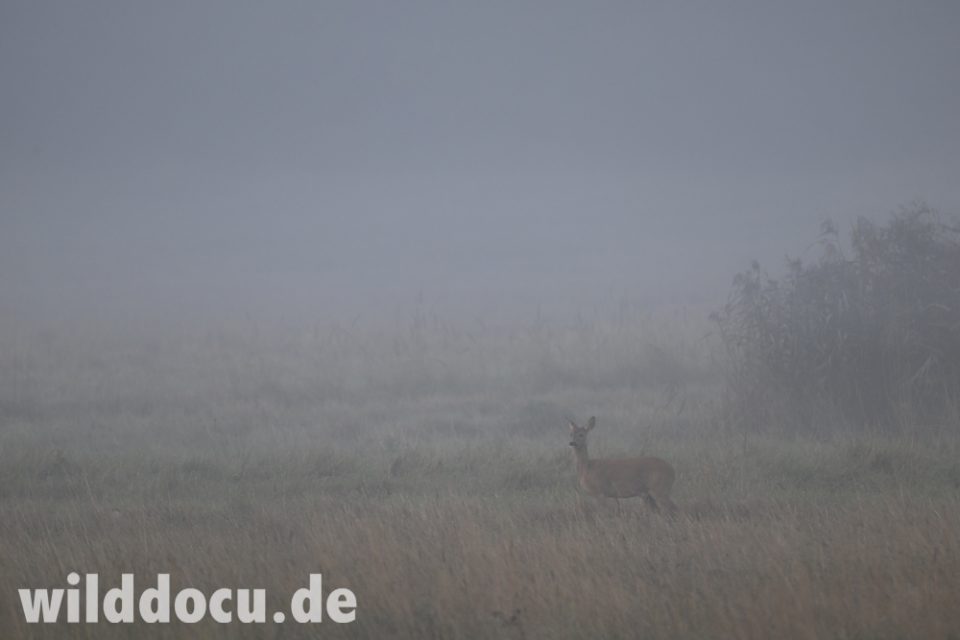
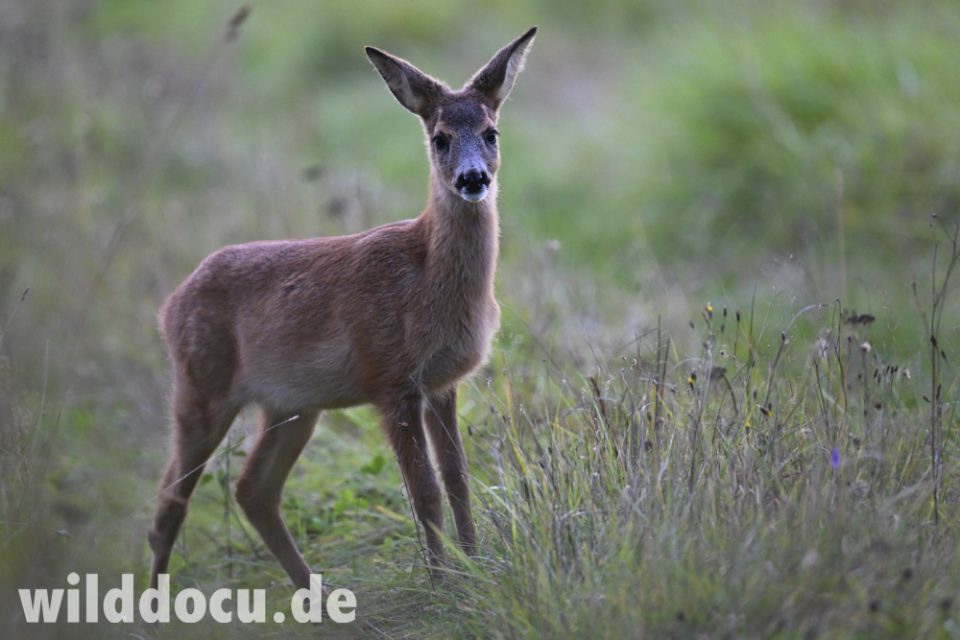
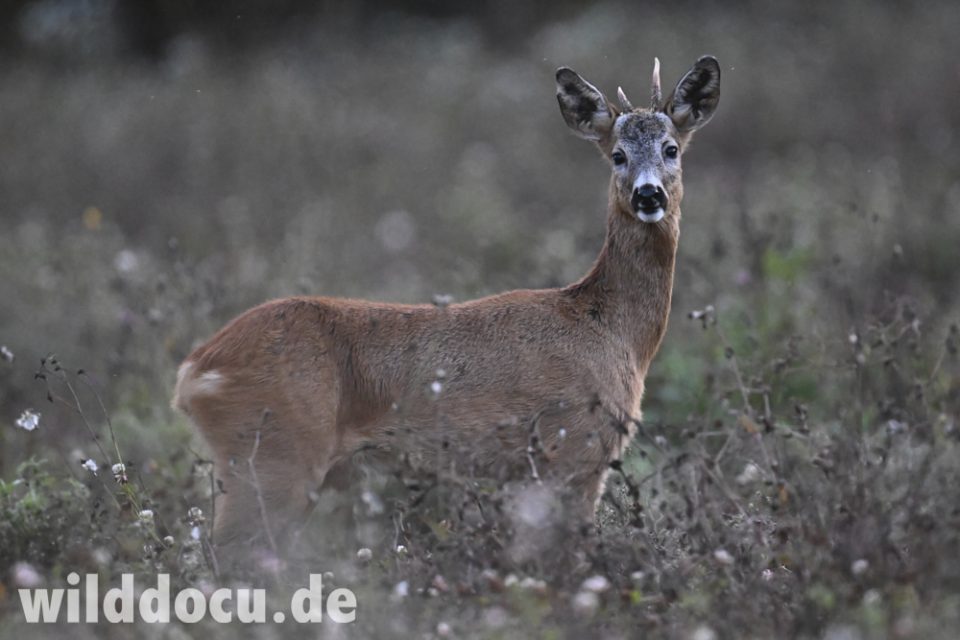
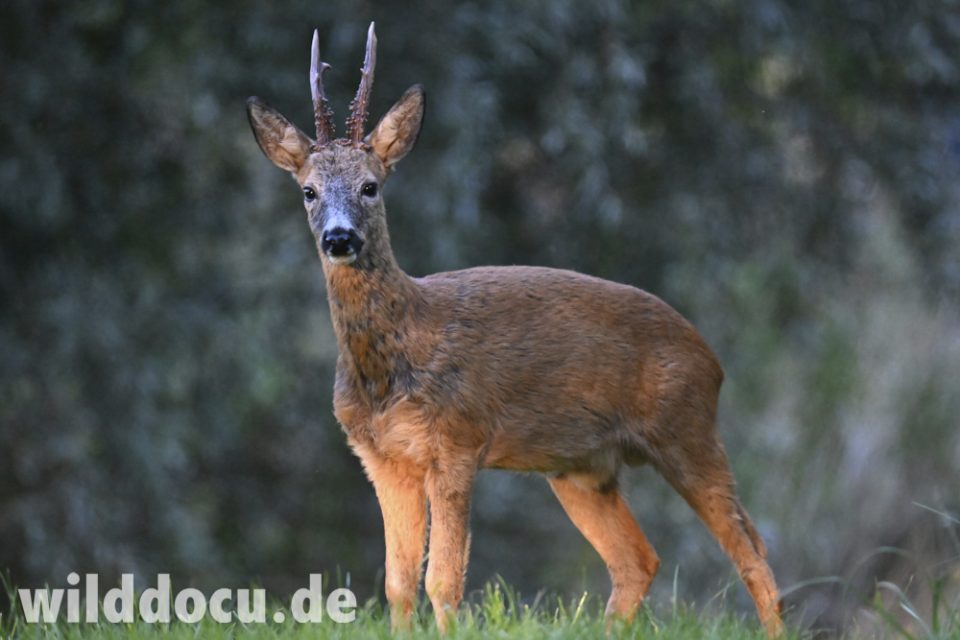
We spend the night on the island of Kyrklandet at the wonderfully simple „Naawa Nature Camp“. And there are Roe Deer here – lots of them! On Kyrklandet, and especially in the area surrounding the camp, we count around 50 within 24 hours – during our arrival, two walks, and a bike ride (double counting is possible). In 40 years of wildlife observations, travelling all across Europe, I never had more (value should be understood as a rough estimate). It’s obvious that hunting is either not practiced here or not very intensively. White-tailed deer are unlikely to play a role as competitors.
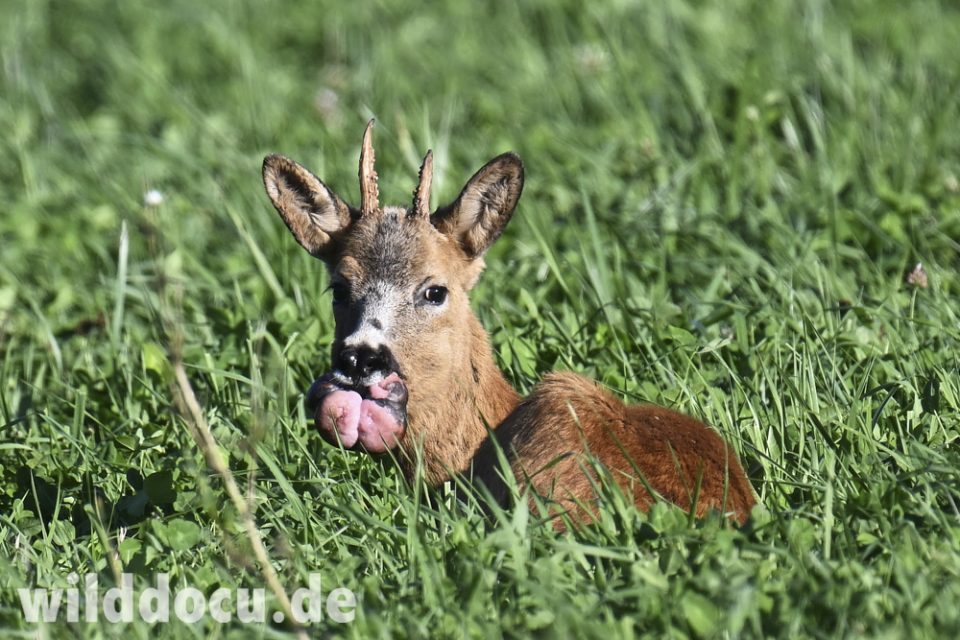
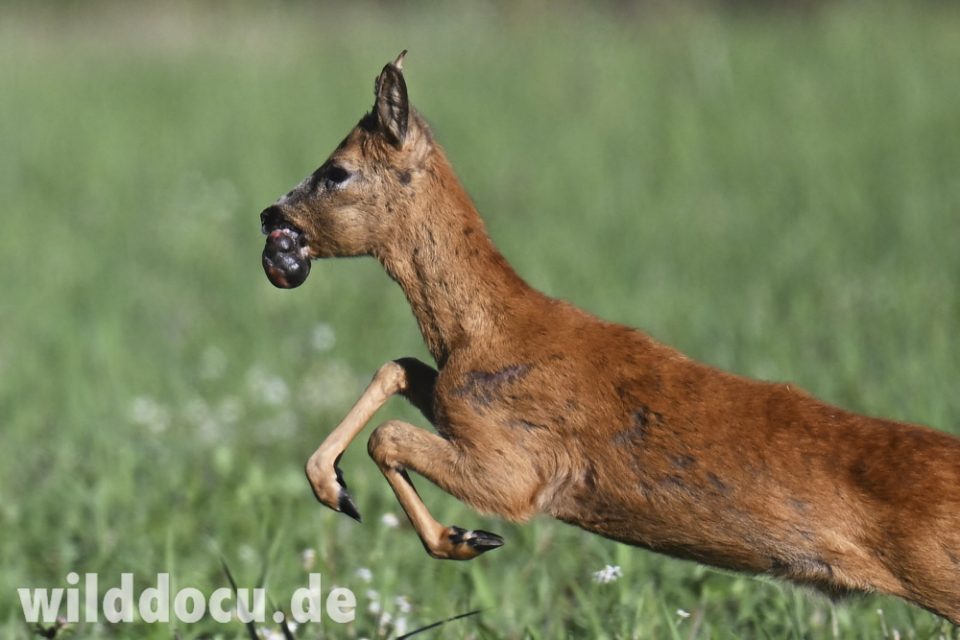
To intervene or not to intervene? Hunters are sometimes obligated to euthanize sick or severely injured animals to end unnecessary suffering of wildlife. This is stipulated, for example, in the German Hunting Law. However, in the case of this animal with a tumor on its snout, which I observed on Kyrklandet, hunters apparently don’t feel responsible. I can easily imagine that the prevailing motto here is: „Nature will take care of it.“ Indeed, bears, wolves, and lynxes are widespread in Finland. For these predators, it’s advantageous to be able to make „easy prey“ to feed their young. But who wouldn’t be left pondering this sight?!
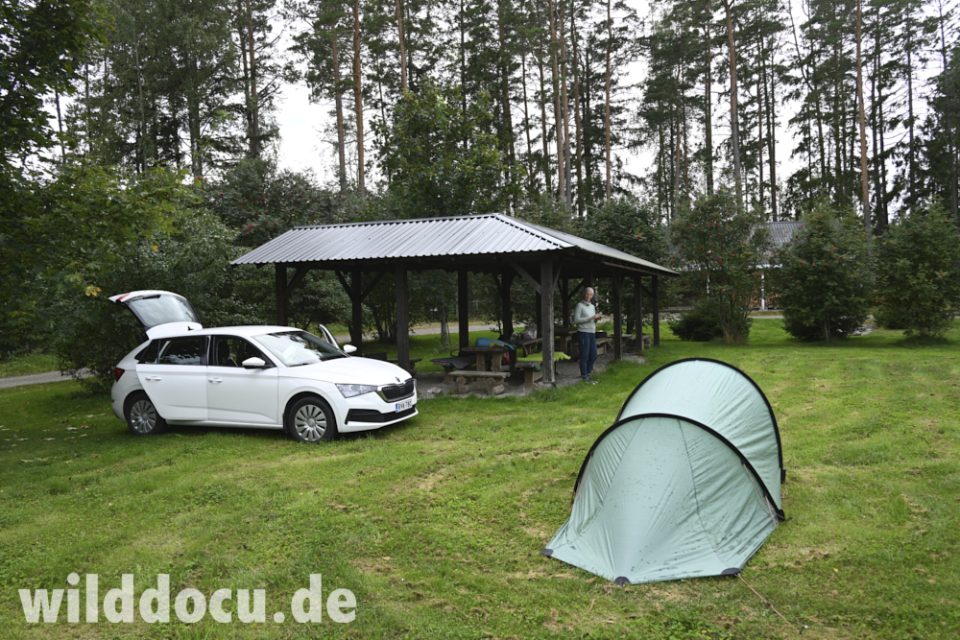
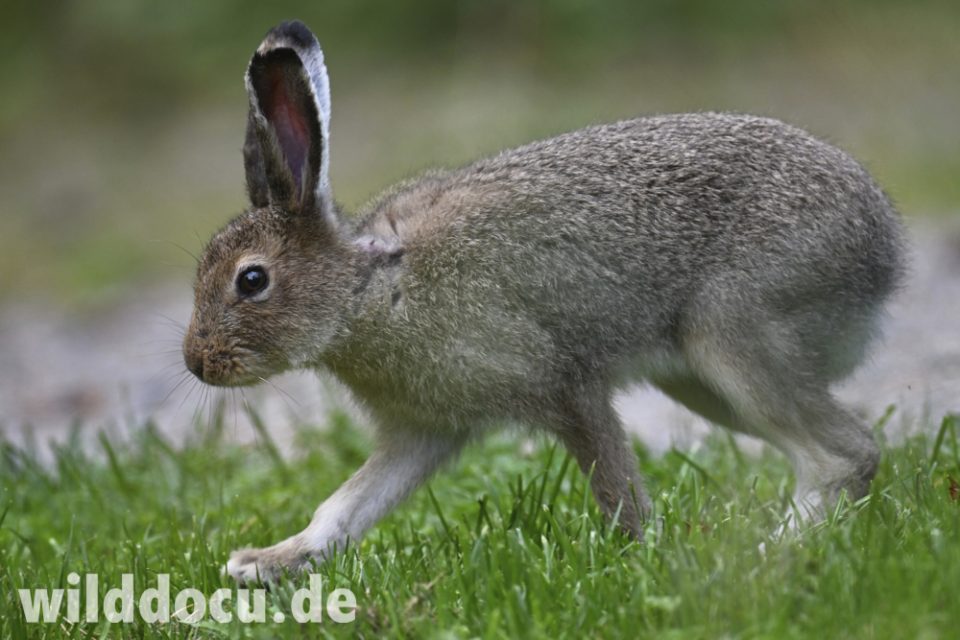
For me, as a mammal watcher, the best accommodation is in a wilderness camp or at a campsite close to nature. Ideally, I can see the animals hopping around me, observe them from my tent, or hear them at night. Mossala Island Resort / Mossala is just such a place. Here, Mountain Hares hop about on the meadow between the tents. And down by the jetty, grey seals surface.
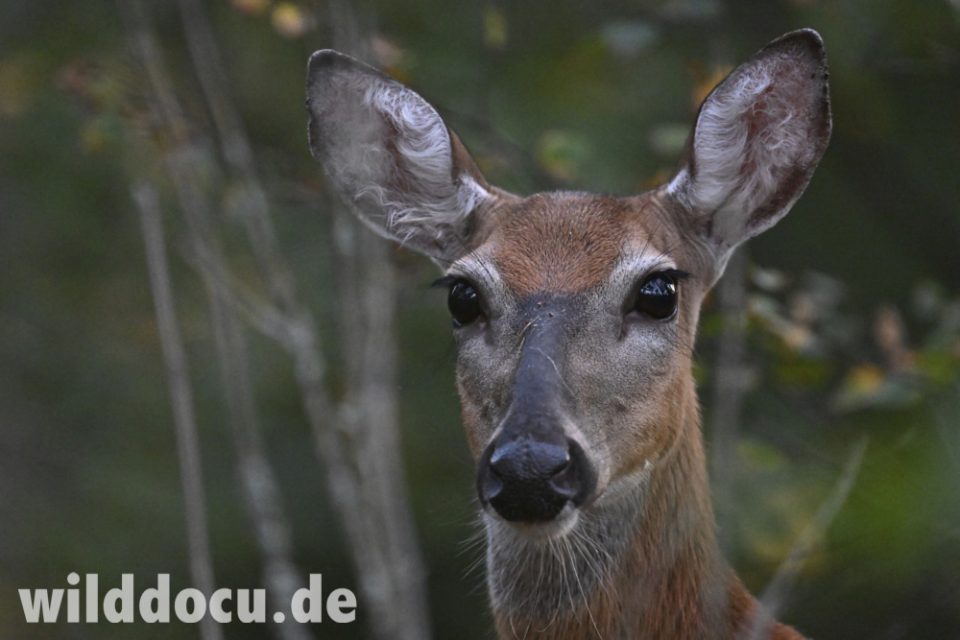
White-tailed deer! We’ve reached Vartsala Island. On a walk after dinner, between 7 and 9 p.m., I count 17 White-tailed Deer! Within 48 hours, I see around 100 individuals (double counting possible). We also see Roe Deer, but just 10. The obvious question is: Is the introduced North American White-tailed Deer competing with the native Roe Deer?
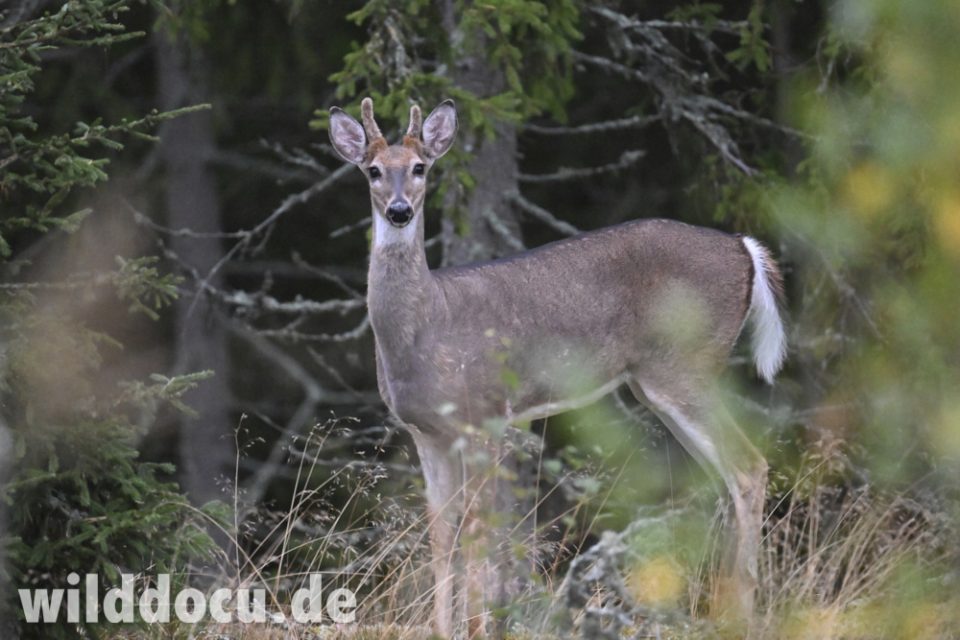
Both species are concentrate selectors. This could mean competition. On the other hand Roe Deer are generally found in smaller numbers in Finland than further south. However, the population in the southwest of the country – where the White-tailed Deer occurs – is increasing. This is why scientists assume that competition is not a significant factor. In this context, I make another very interesting observation: A young Roe Deer buck has joined a group of about seven or eight White-tailed Deer with their young. Apparently, this stag’s interest in females of a different species is greater than his aversion to the foreign species.
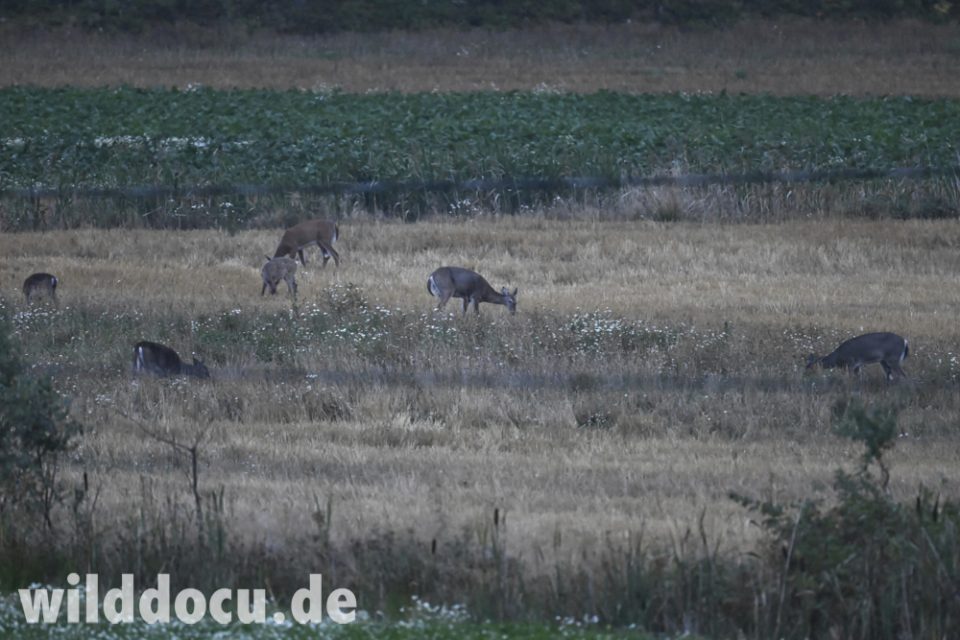
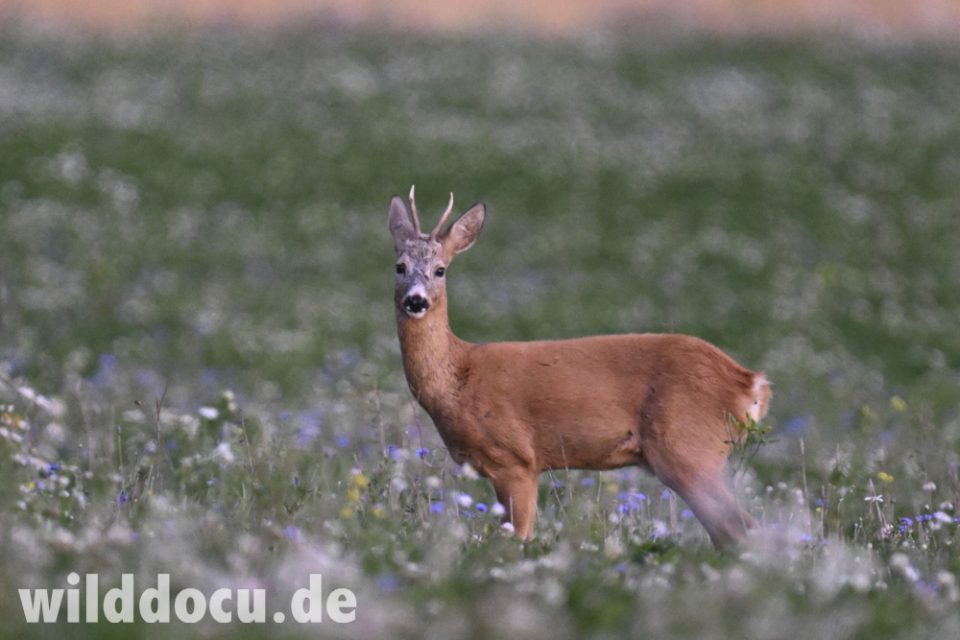
Background: White-tailed Deer have been introduced to several European countries. Most of these introductions have failed. The most successful introduction in Europe is the one in Finland. Finnish immigrants who had settled in Minnesota, USA, shipped fawns as a gift to their homeland. One male and four females were released in the south in 1934. Despite the small number of founders, the Finnish White-tailed Deer population shows no signs of genetic impairment. Hybridization with other deer species is unknown (Corlatti and Zachos, 2022).
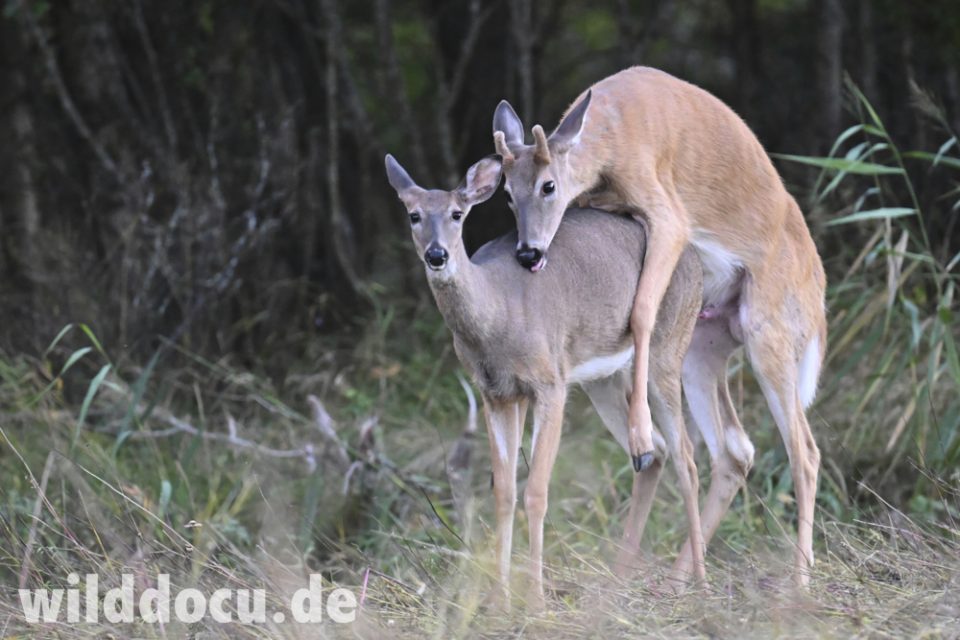
Incredible reproduction rate: In Finland, the rut of White-tailed Deer starts around November. However, testosterone levels begin to rise as early as July. White-tailed Deer have an incredibly high reproductive rate. The rate of annual increase is 50 to 60 percent. This means that predators and hunters could kill 50 out of 100 animals in a year without the population shrinking. I mention this because the state is relying on hunters to stop the invasive species. The question that arises is: Is it even possible to stop the deer through hunting? Among 100 deer I saw, there was only one trophy buck. It seems as if the hunters are only picking out the animals with large antlers. Another factor that makes White-tailed Deer so successful in Finland could be a lack of parasites that exist in North America, but not here (Corlatti and Zachos, 2022).
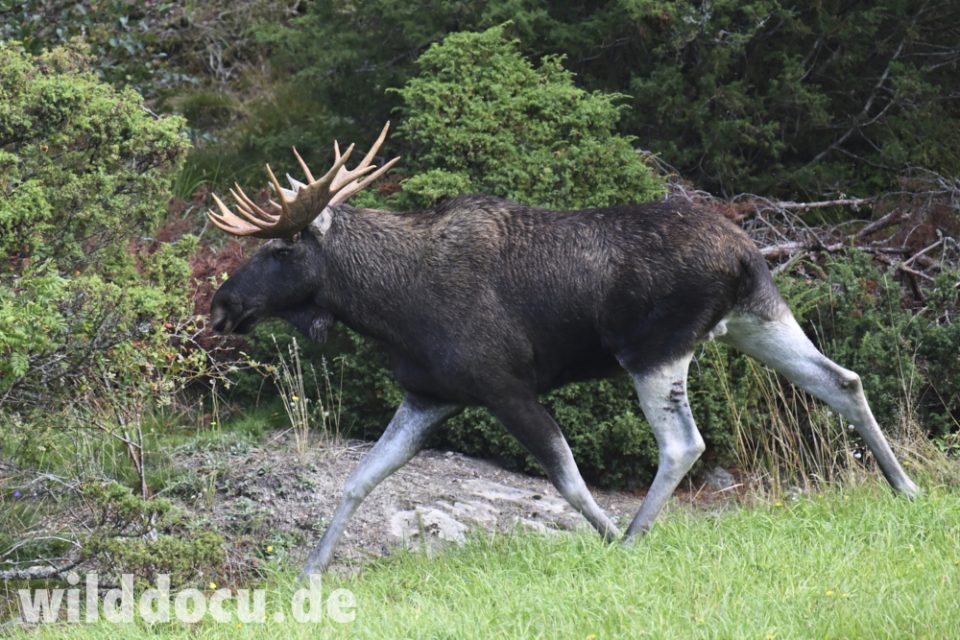
One more thing: the elk / moose. We have already driven 1800 km when suddenly the first one appears next to us. We pass it in our rental car, and there it is. For a second, I can’t believe it. Is it really a living animal? – What I can’t stand in Finland, and in many other countries, too, is large-scale advertising in the middle of the landscape. Landscape defacement! Some of the advertising objects are even three-dimensional, including those depicting animals.
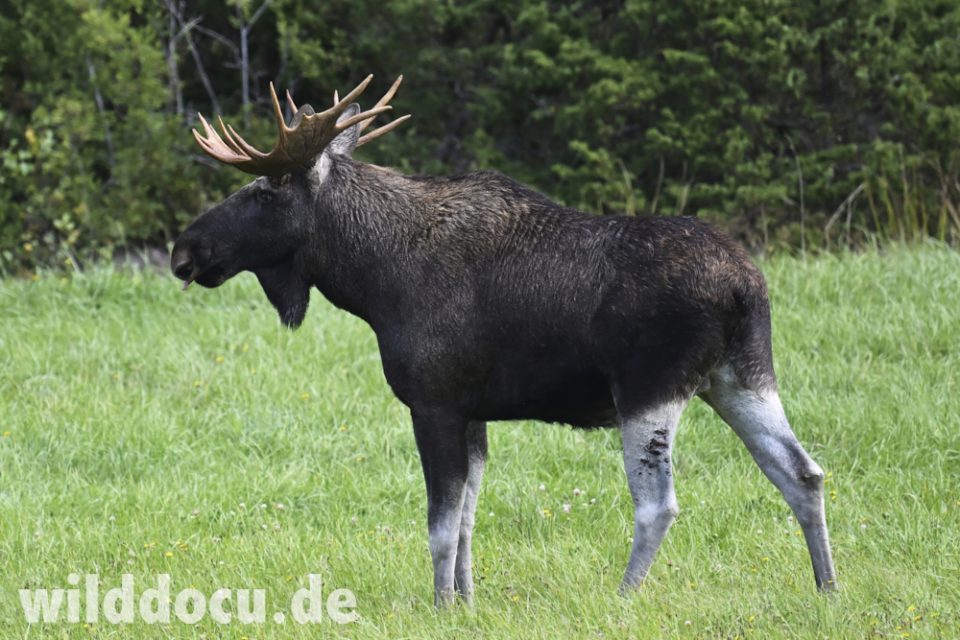
So, my first thought when I see this elk is: „It can’t be real.“ But it is. And what a magnificent one! Just its size alone! That snout! It has something of a dinosaur about it. Fantastic!
Sources
Corlatti, Luca and Zachos, Frank E., 2022: Terrestrial Cetartiodactyla. Handbook of the Mammals of Europe. Springer Nature Switzerland (Cham)
Schreibe einen Kommentar