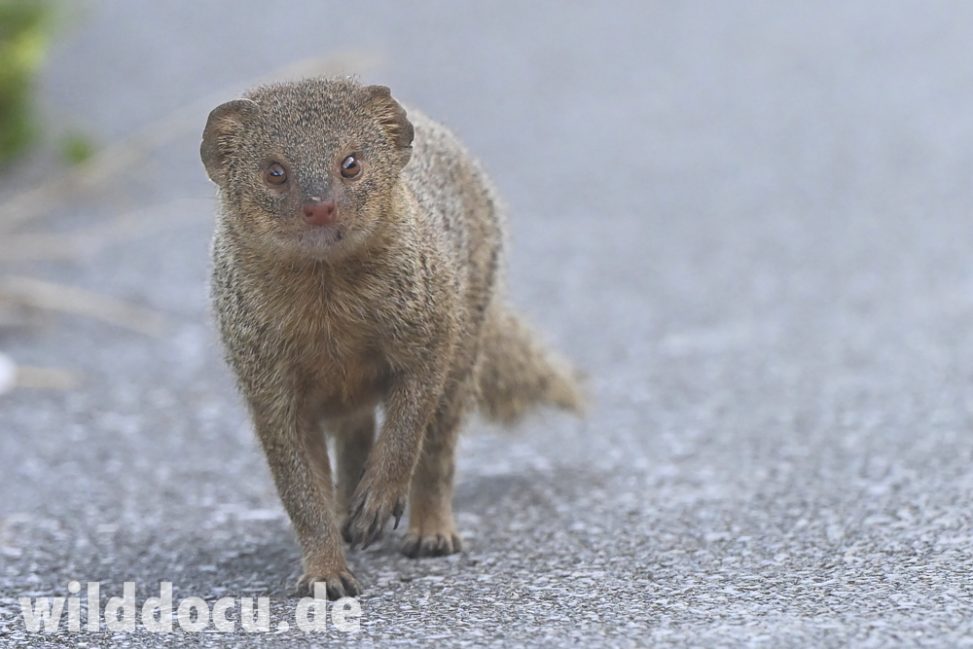
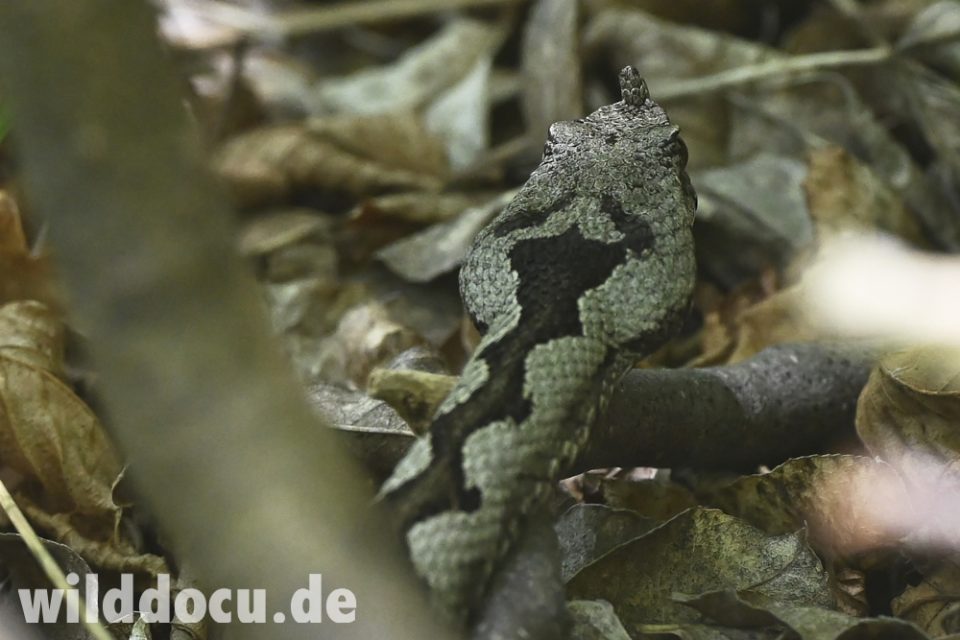
The small Adriatic island of Mljet has a truly incredible history regarding its wildlife. In the early 20th century, it was known as the „Island of Snakes“ (Tvrtkovic and Krystufek, 1990). It was particularly notorious for the Horned Viper, Europe’s most venomous snake. In 1910, the small Indian mongoose was brought in from India to curb the snake plague – and it succeeded completely. Today, the Horned Viper is considered extinct on Mljet. I wanted to find out how the mongoose is doing today and whether it is possible to observe one.
The Small Indian Mongoose (Urva auropunctata) is a carnivore species from the Mongoose family. It feeds primarily on insects including dragonflies, grasshoppers, mole crickets, ground beetles, earwigs and ants and also preys on rodents and birds (Mahmood and Adil, 2017). It is native to South Asia and has been introduced to many countries worldwide.
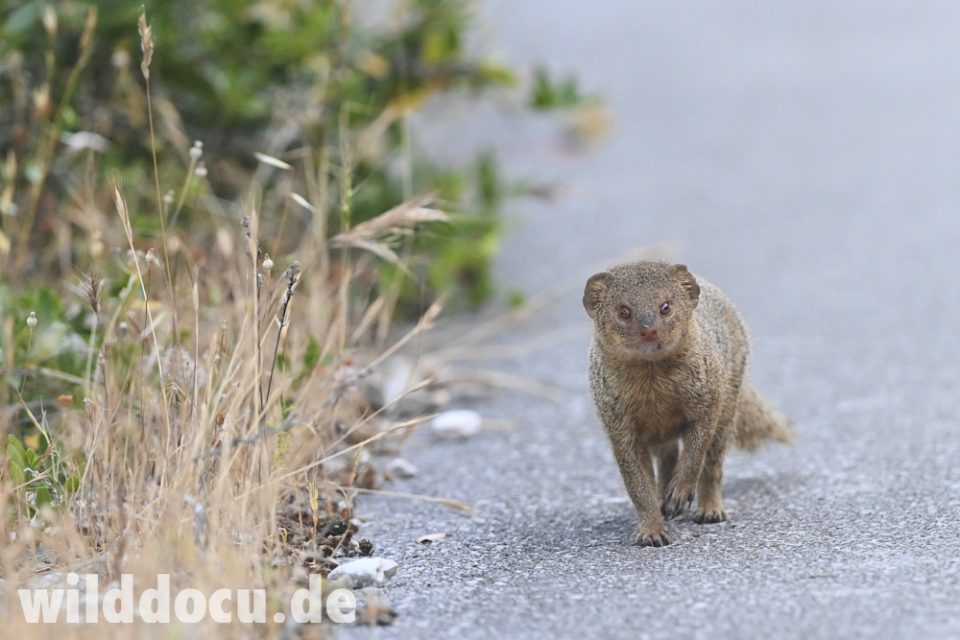
One of these countries is Croatia, where it was released on Mljet island in 1910 by order of the Austro-Hungarian Ministry of Agriculture in an attempt to control the Horned Viper (Vipera ammodytes).
Later, the species was also introduced to the islands of Korčula, Brač, and Šolta, as well as the Pelješac Peninsula (Tvrtkovic and Kryštufek, 1990).Today the Small Indian Mongoose is considered a pest that has since reached the European mainland, with the potential to disrupt ecosystems. For this reason – but also simply because it is an interesting species – I found it worthwhile to focus on this species on site.
On June 4th 2026, my wife, my daughter, and I arrive in Korčula and settle into an apartment. I ask our landlady about the mongooses. Yes, she does see them occasionally along a particular stretch of road. „How often“, I ask – „Every trip? Every tenth trip? Every hundredth?“ She thinks for just a moment before replying that she has to make the drive fifty times to spot the mongoose once. That gives me a benchmark. I have her show me the area and go for a two-kilometer walk that evening: no sighting.
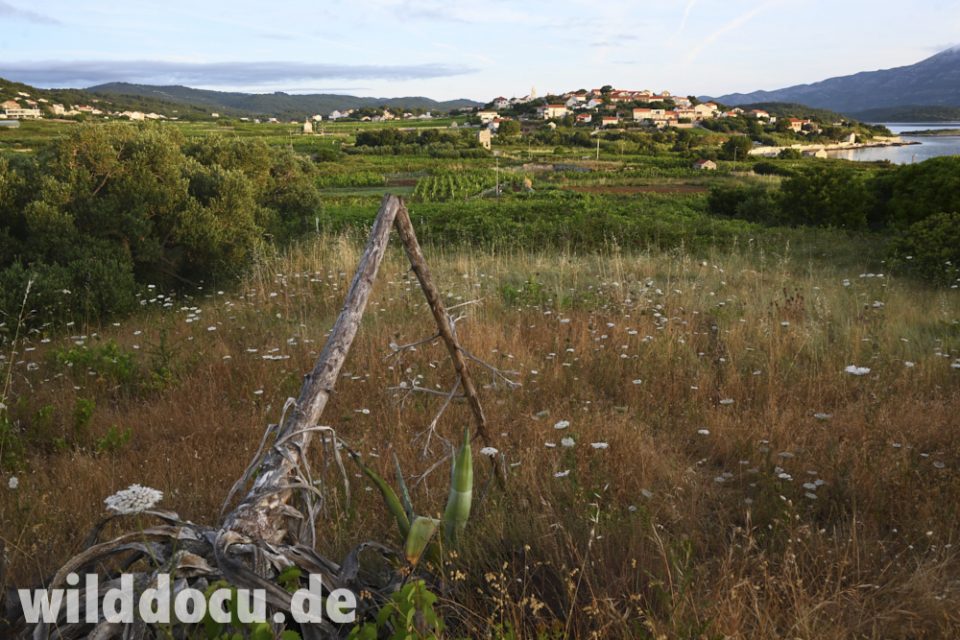
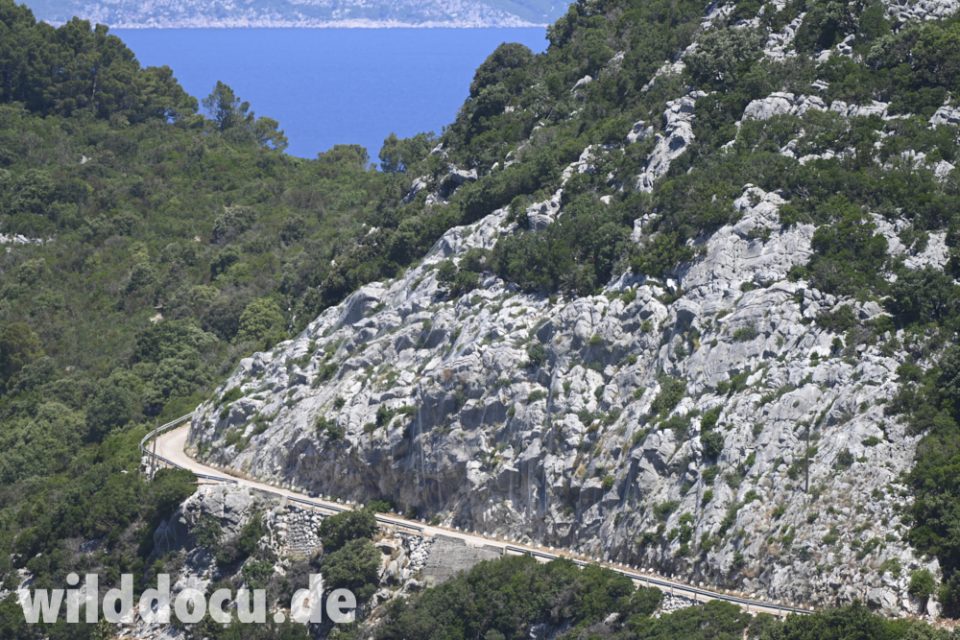
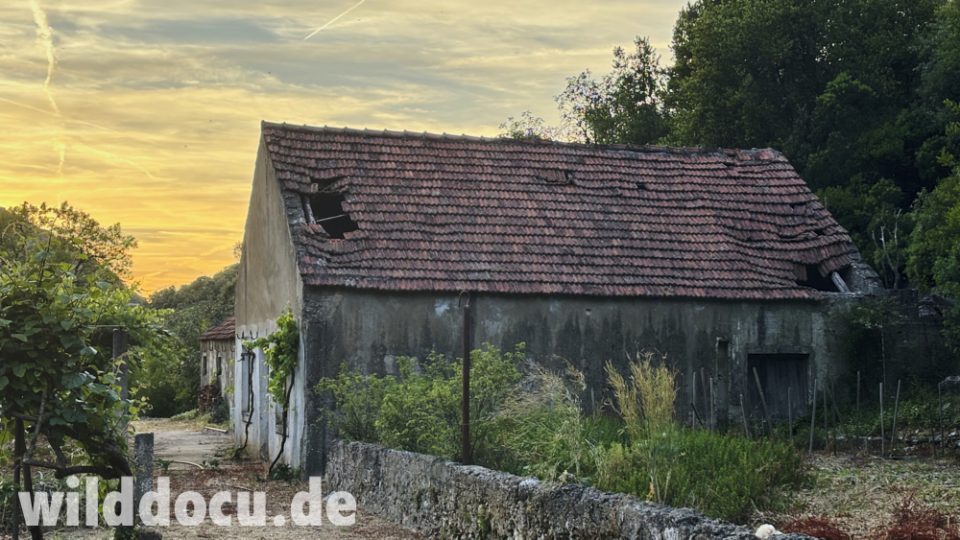
The following day, June 5th, I head out into the area again between 5:30 and 6:30 a.m. (As I later learn, this is likely too early for the creature, which is apparently a late riser.) We drive 30 kilometres across the western part of the island to reach two snorkeling beaches. On the return journey, we spot a roadkill victim on a road that appears to see little traffic. I photograph the surroundings to get an idea of the habitat.
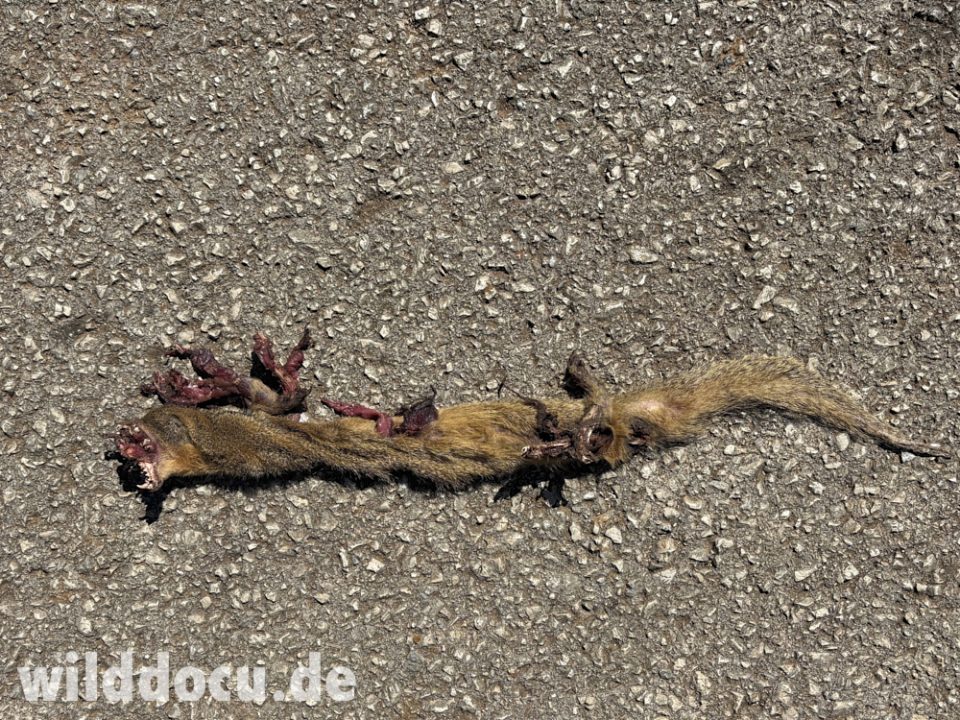
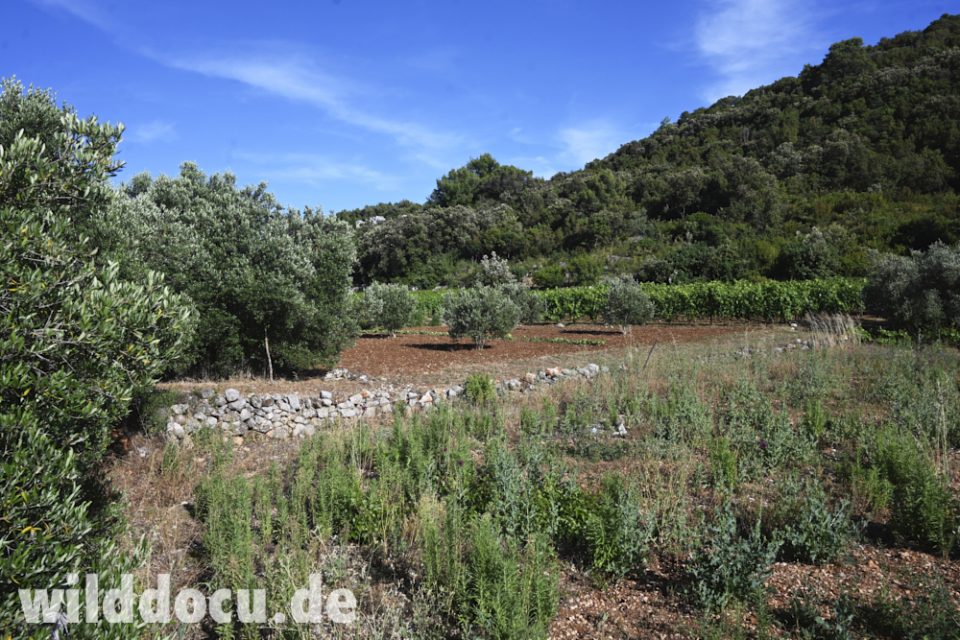
On June 6th, we arrive at the island of Mljet.
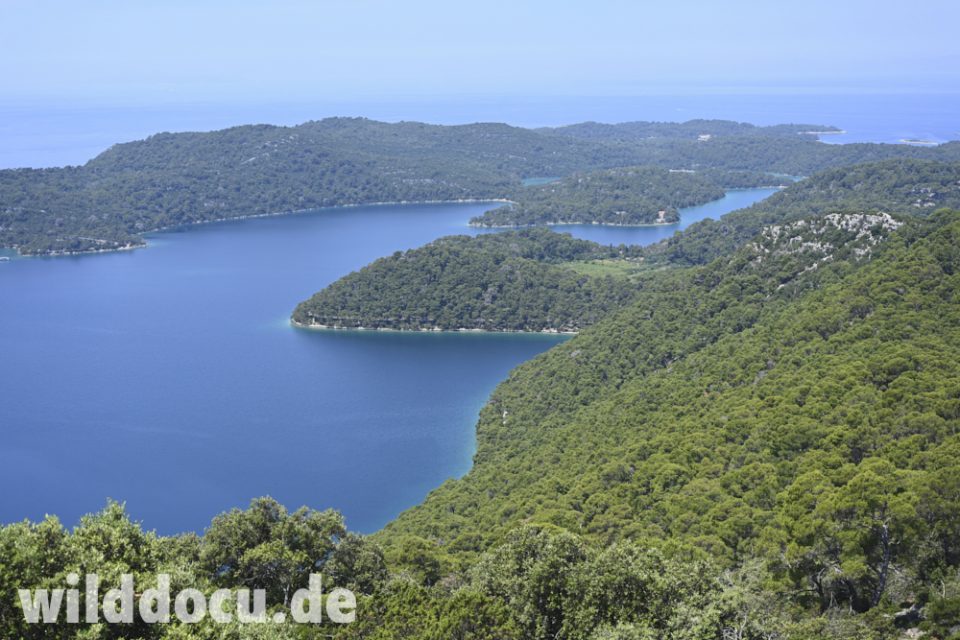
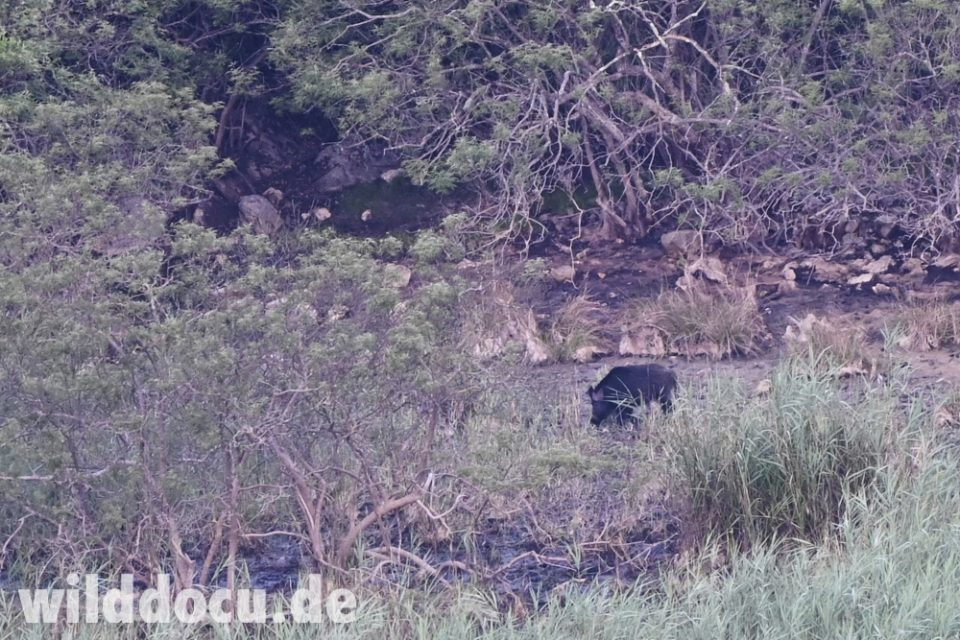
The campsite manager mentions that he spots Small Mongoose along the road during one out of every five trips. „Aah! Now that’s a different set of odds!“ The next day, I walk along the single-lane campsite access road between 5:30 and 8:30 a.m. Bingo! At 7:01 a.m., I spot the first mongoose. After that, I have seven or eight mongoose sightings. I’m not sure how many individual animals are involved – possibly two or three.
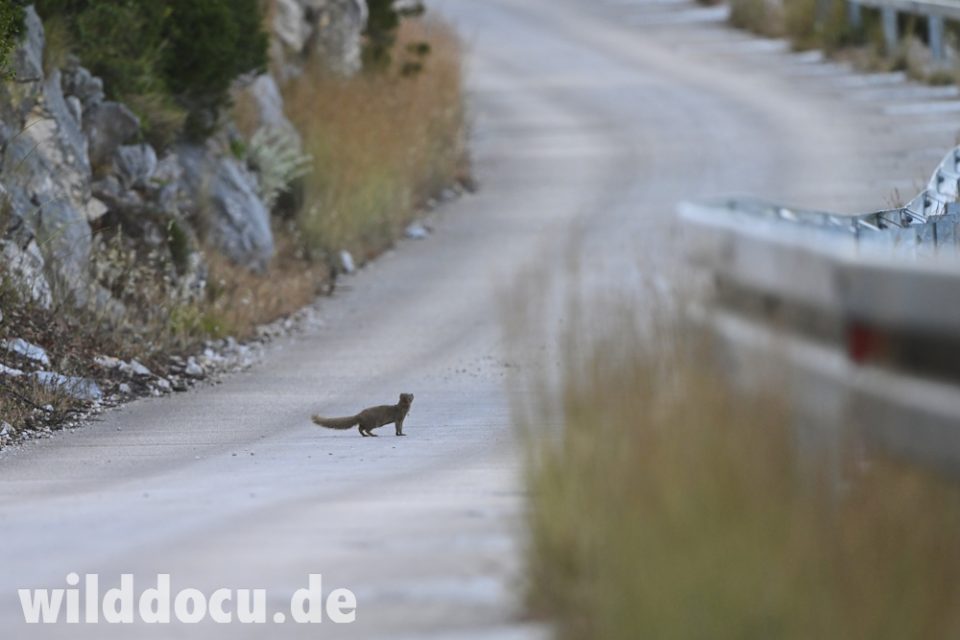
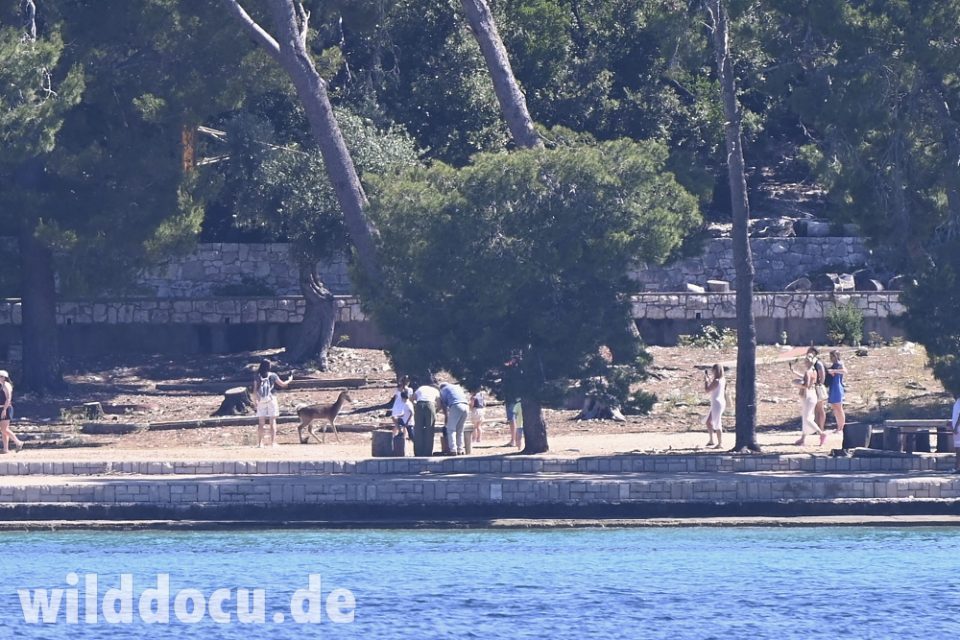
We spend the rest of the day doing other activities and don’t see any more mongooses. While talking to an employee at Mljet national park, I learn that at „Mali most“, a bridge at 42.7831, 17.3510 and a spot where tourists gather for picnics, mongooses sometimes swipe food from the visitors.
On June 7th, I spend the time from 4 to 8:30 a.m. walking again along the campsite-access road – eight kilometres back and forth. I spot my first mongoose at 7:35 a.m. I learn that the mongoose frequently switches sides of the road but doesn’t simply cross it; instead, it tends to move along the road itself. Whenever I see an animal heading in my direction from a distance, I crouch by the roadside, hoping the mongoose comes toward me. It works! While mongooses are shy if you move toward them, they also react with curiosity and will approach to within just a few meters if you sit perfectly still or crouch motionless on the ground.
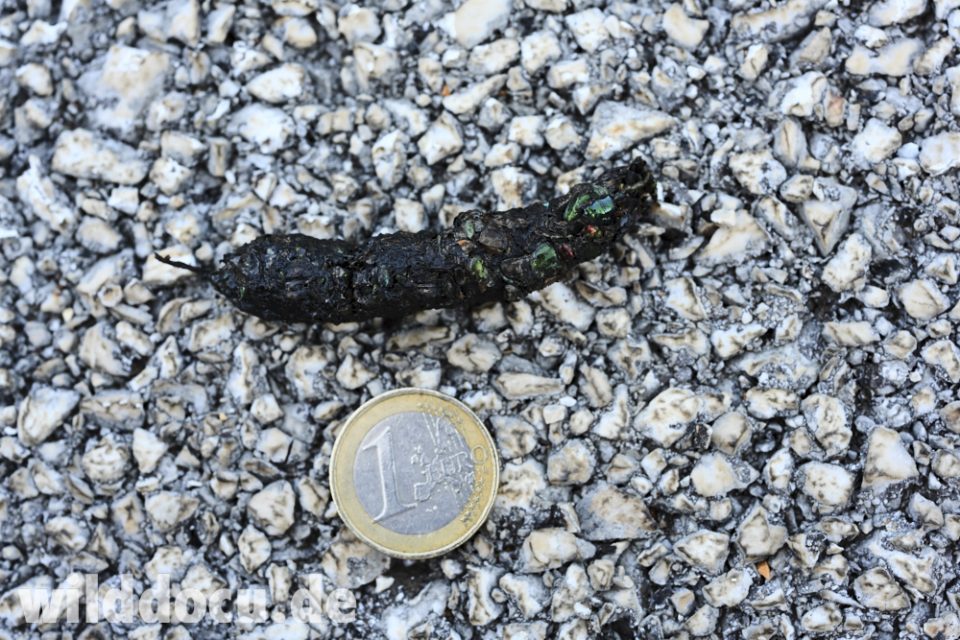
I find plenty of carnivore droppings along the road. Small Indian Mongoose and Stone Marten come into question. Stone Martens weigh between 1100 and 2300 g, the mongooses between 300 and 1000 g (Aulagnier et al., 2008). Accordingly, the size of the droppings varies between species. The mongoose’s droppings have an average diameter of 8 mm (Hussain, 2017), while that of the stone marten is 15 mm (David, 2019). I only find one, which I attribute to the Stone Marten, and about ten smaller ones, mostly black, with a large proportion of insect remains, which I believe are mongoose scats.
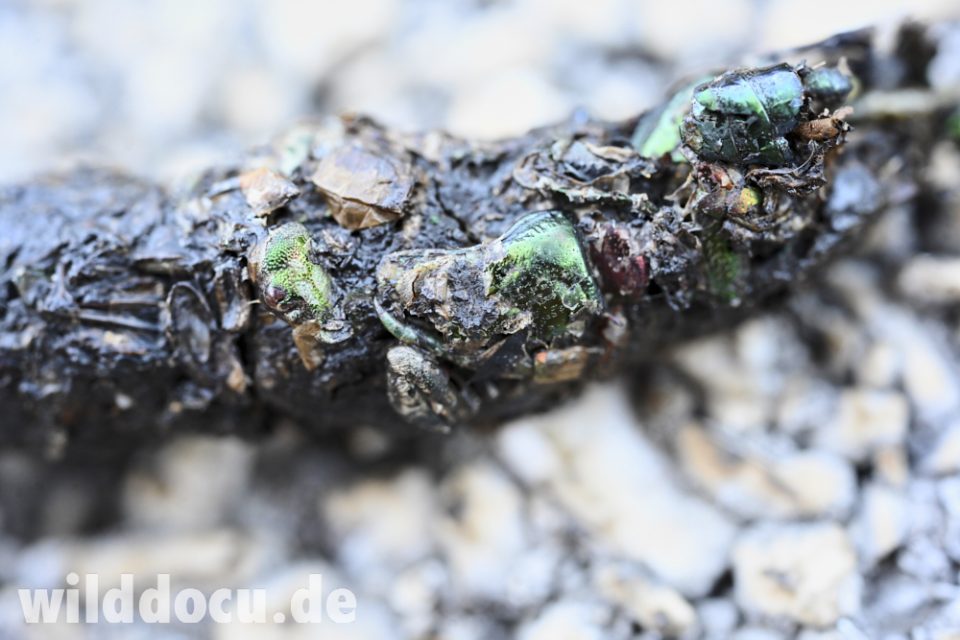
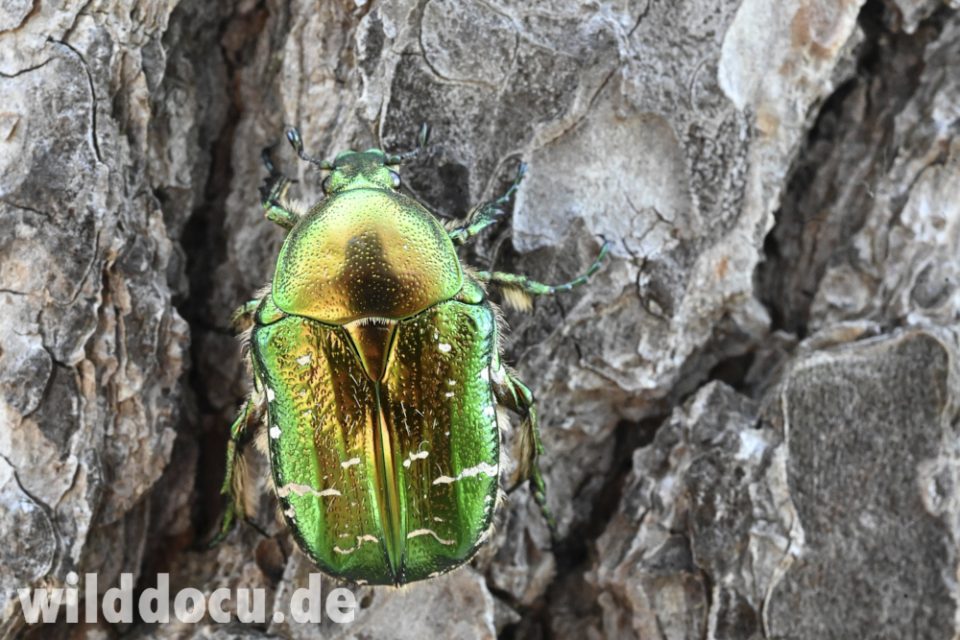
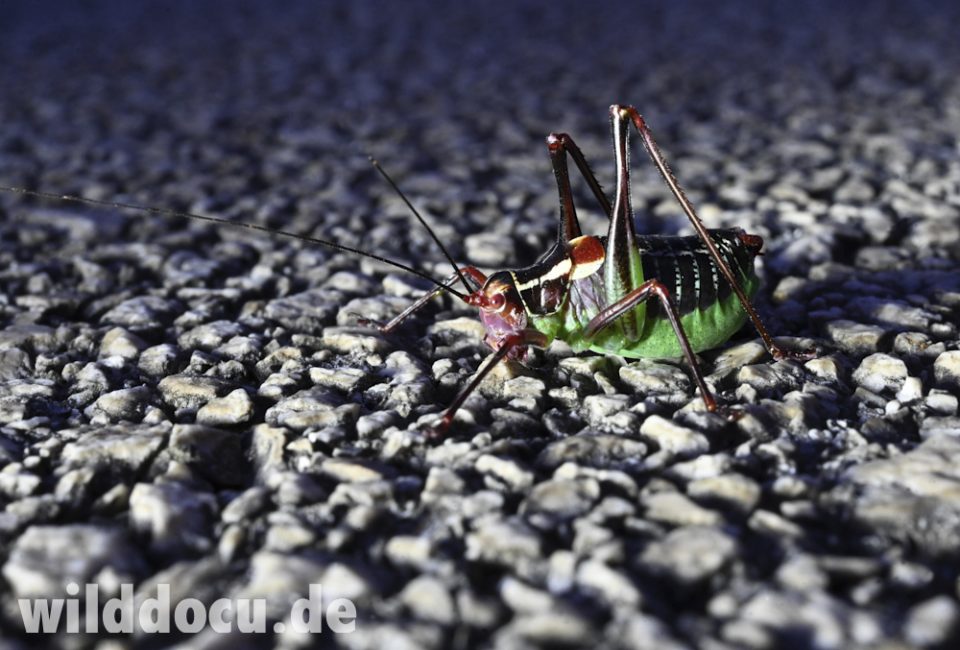
Also notable is the large number of insects – dragonflies, rose chafers (Cetonia aurata), the bush-cricket Barbitistes ocskayi, butterflies, etc.), some of which are attracted by the flowers growing along the roadside. Otherwise, the surrounding landscape is wooded, and flowers are scarce. This concentration of insects along the road results in many becoming roadkills, which in turn attracts other insects (such as ants).
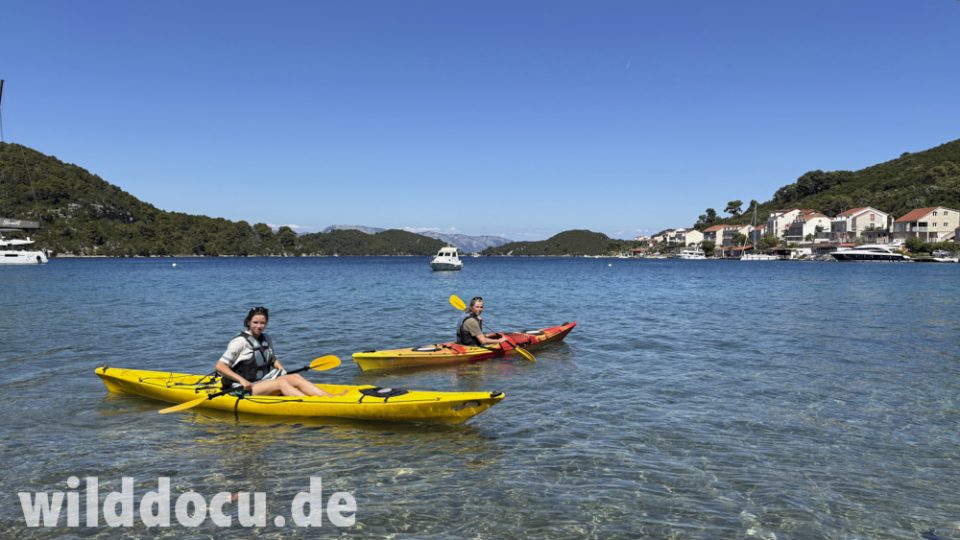
We spend the day on a sea kayaking tour. There are no mongoose sightings on the two-lane road to and from the launch site, nor along the coastal paddling route. It is not until the drive home – around 5 p.m. on the access road to the campsite – that we spot a mongoose again. We see another one the following morning, June 8, as we drive out. The only time we do not see a mongoose is during our morning departure on June 9.
To summarize: We spent four days on Mljet. On three of those four days, we spot the animals in the morning along a relatively quiet, single-lane road set in a natural landscape. On one day, we even see mongooses in both the morning and the evening. In addition to direct sightings, we also find numerous droppings. Insects are abundant along the road, and their body parts can be found in the mongooses‘ droppings.
My hypothesis: In June, the small mongooses on Mljet frequent roads with little traffic. They specifically seek out these areas because the chances of success, both in hunting insects and finding roadkill, are likely higher there. Before and after the flowering season, when fewer insects may be found along the roadside, the small mongooses presumably employ a different foraging strategy.
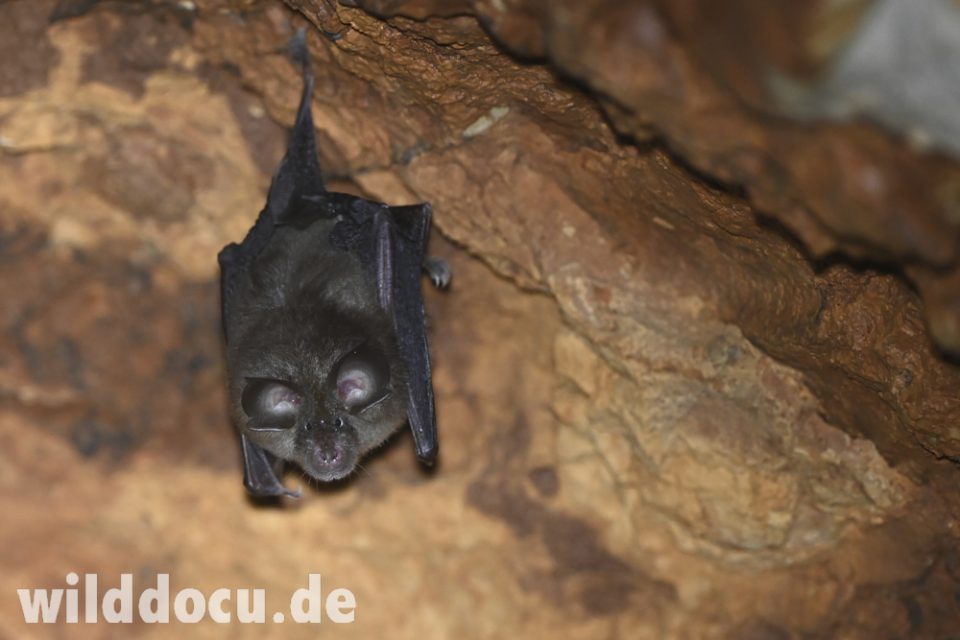
Other mammals observed on Mljet and the region:
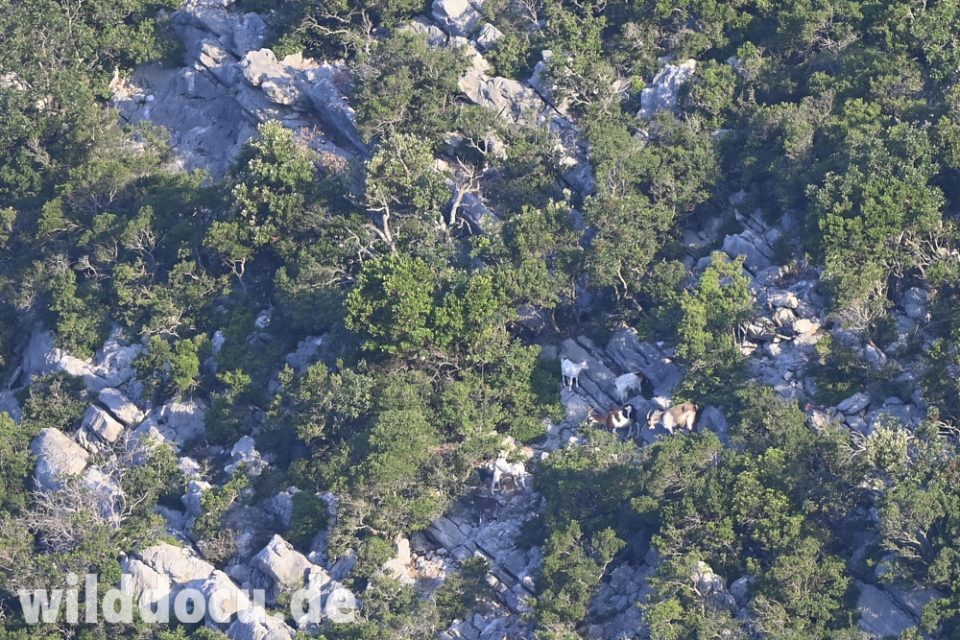
One Balkan Chamois (Rupicapra rupicapra balcanica) in Paklenica National Park
One Roe Deer (Capreolus capreolus) near the campsite on Mljet (startled at 4 a.m.)
Sources
Aulagnier et al., 2008: Mammals of Europe, North Africa and the Middle East. Bloomsbury Wildlife, London, Oxford, New York, New Delhi, Sydney
David, 2019: Fährten- und Spurenkunde. Franck-Kosmos Verlag, Stuttgart
Mahmood and Adil, 2017: „Diet composition of small Indian mongoose (Herpestes javanicus) varies seasonally in its native range“. Animal Biology. 67 (1): 69–80. doi:10.1163/15707563-00002516
Tvrtkovic and Kryštufek, 1990: „Small Indian mongoose Herpestes auropunctatus on the Adriatic islands of Yugoslavia“ (PDF). Bonner Zoologische Beiträge. 41 (1): 3–8.
Schreibe einen Kommentar